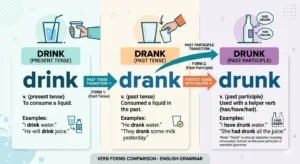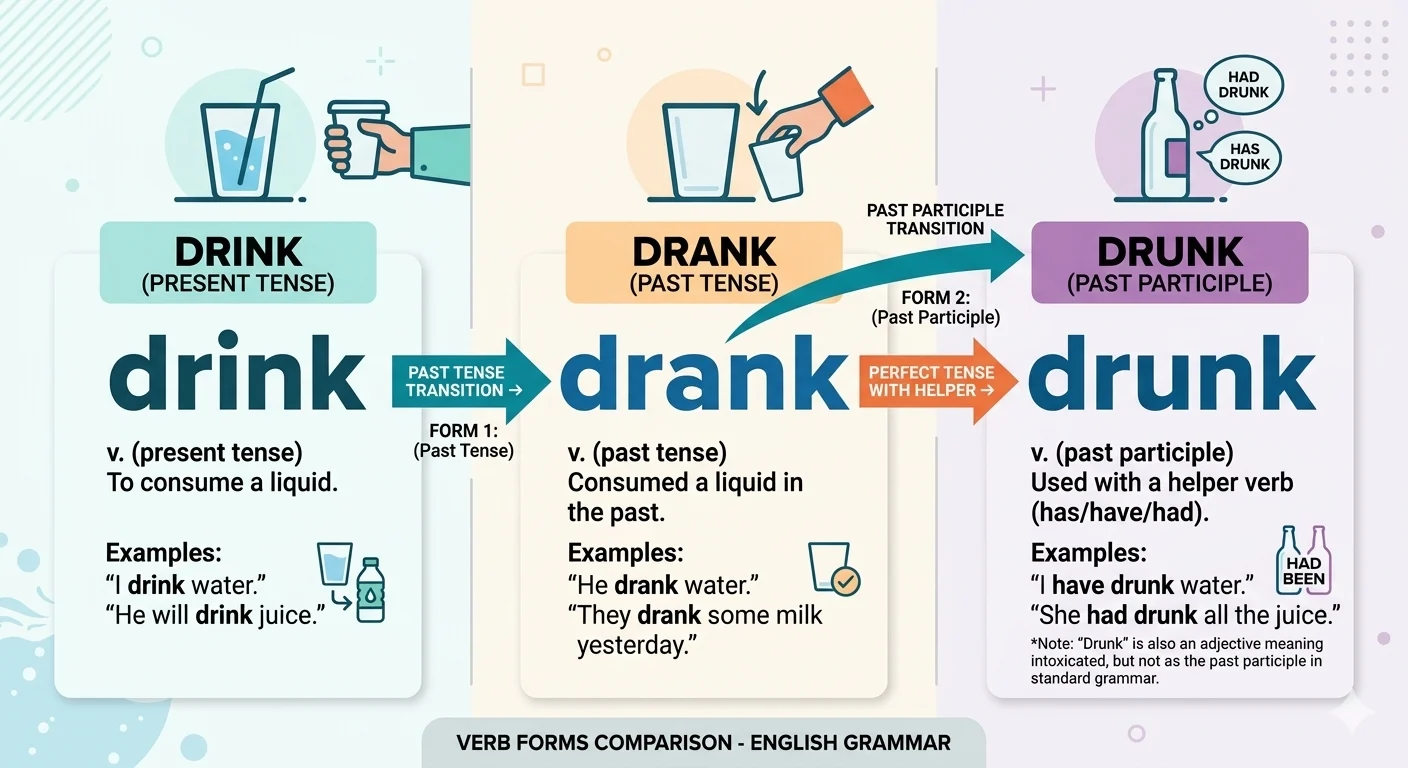
Drank is the past tense of drink.
Drunk is the past participle, used with helping verbs like have, has, or had.
Examples:
- I drank water yesterday. ✅
- She has drunk all the juice. ✅
- I have drank water. ❌
- He has drunk milk. ✅
Think of it this way:
| Verb Form | Example |
|---|---|
| Present | I drink tea |
| Past | I drank tea |
| Past Participle | I have drunk tea |
So if you ask, Is drank the same as drunk? — the answer is no. They serve different grammar roles.
Many English learners and even native speakers get confused about drunk vs drank. You may have heard sentences like “I have drank coffee” or “He has drunk milk,” and wondered which one is correct. The confusion happens because both words come from the same verb — drink — but they are used in different grammatical situations. Small grammar differences can completely change whether a sentence sounds natural or incorrect.
People search for drunk vs drank meaning, drunk vs drank grammar, and drink past tense and past participle because English verb forms are not always logical. This guide clears that confusion in simple language. By the end, you will understand when to use drank vs drunk, how grammar rules work, and how to avoid common mistakes in daily writing, emails, school work, and professional communication.
The Origin of Drunk vs Drank
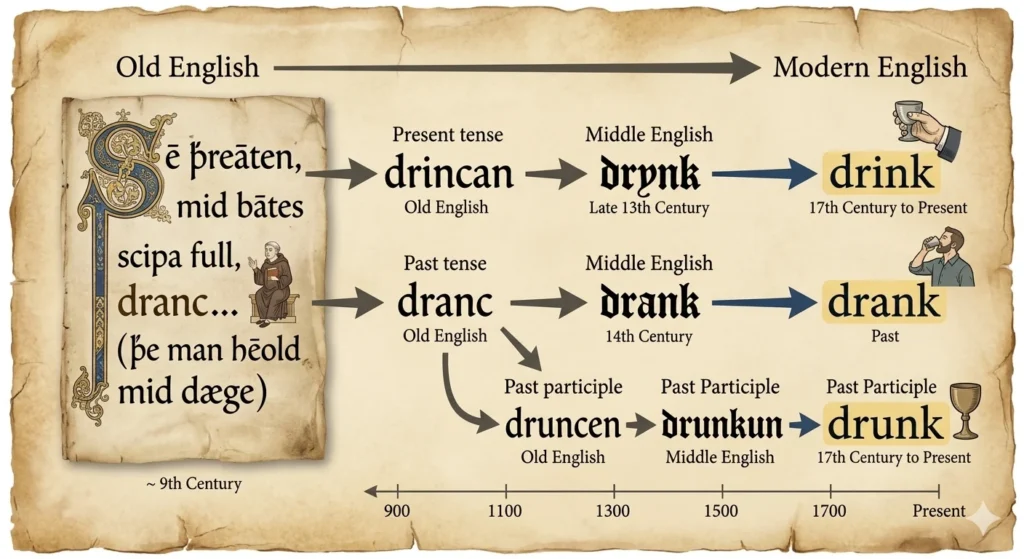
The difference between drunk vs drank comes from Old English verb patterns. English once had strong verb systems where vowels changed to show tense instead of adding “-ed.”
The verb drink followed a pattern called ablaut, where vowel sounds shift:
- drink (present)
- drank (past)
- drunk (past participle)
This pattern is centuries old and similar to:
- sing → sang → sung
- ring → rang → rung
- begin → began → begun
Over time, English simplified many verbs, but common verbs like drink kept their older forms. That is why spelling differences exist today.
Originally, “drunk” was only a participle, but later it also became an adjective meaning intoxicated. This dual meaning increases confusion when learners compare drunk vs drank vs drunken.
British English vs American English Spelling
Unlike some spelling debates, drunk vs drank grammar is mostly the same in British and American English. Both varieties follow identical verb rules.
However, usage style and frequency can vary slightly in speech.
Comparison Table
| Usage Type | American English | British English |
|---|---|---|
| Past tense | drank | drank |
| Past participle | drunk | drunk |
| Informal speech errors | “have drank” sometimes heard | similar informal mistakes |
| Formal writing | strict grammar rules | strict grammar rules |
Both regions consider “have drank” incorrect in formal English.
So whether you write for the US, UK, or global audiences, grammar rules stay consistent.
Needs vs Wants 🪄 Explained in 60 Seconds
Which Spelling Should You Use?
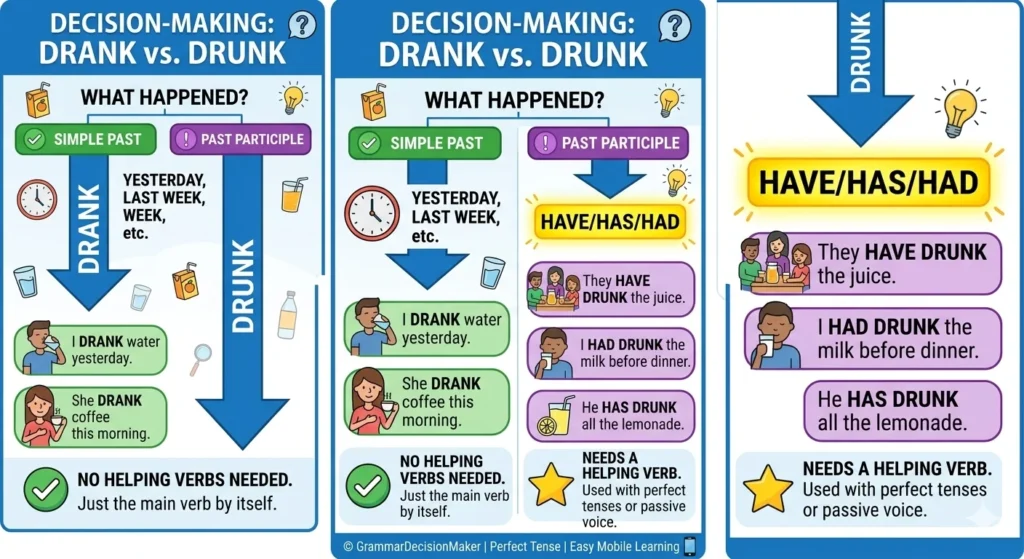
Choosing between drank or drunk depends on sentence structure, not location.
Use drank when:
- Talking about a completed action in the past.
- No helping verb is present.
Example:
- I drank coffee this morning.
Use drunk when:
- A helping verb appears (have, has, had).
- The action connects to another time.
Example:
- I have drunk coffee already.
Audience Advice
| Audience | Best Choice |
|---|---|
| US readers | Follow standard grammar rules |
| UK/Commonwealth readers | Same grammar applies |
| Global audience | Use correct tense for clarity |
If unsure, check whether the sentence includes have/has/had. If yes, choose drunk.
Common Mistakes with Drunk vs Drank
Many learners mix verb forms because spoken English sometimes ignores grammar rules.
Frequent Errors
❌ I have drank milk.
✅ I have drunk milk.
❌ She drunk water yesterday.
✅ She drank water yesterday.
❌ Have you drank coffee?
✅ Have you drunk coffee?
Why Mistakes Happen
- Past tense feels more familiar.
- People confuse adjective “drunk” with verb usage.
- Informal speech spreads incorrect patterns online.
Remember: drank = past, drunk = past participle.
Drunk vs Drank in Everyday Examples
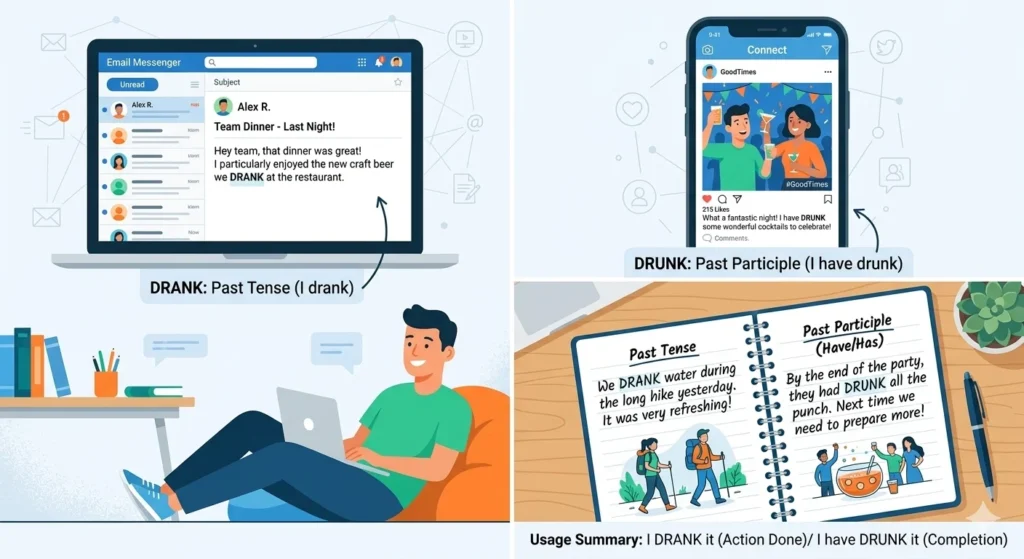
Understanding real-life usage helps grammar stick better.
Emails
- I drank too much coffee before the meeting.
- I have drunk three cups today.
News Writing
- The athlete drank water after the race.
- Officials confirmed he had drunk contaminated water.
Social Media
- Just drank the best smoothie ever!
- I have never drunk this flavor before.
Formal Writing
- Participants drank the solution during testing.
- Each subject had drunk the mixture earlier.
These examples show when to use drunk vs drank sentences naturally.
Drunk vs Drank – Google Trends & Usage Data
Search interest in drunk vs drank grammar remains high worldwide because verb tense confusion affects learners at all levels.
Popular Regions Searching This Topic
- United States — grammar learning and editing needs.
- United Kingdom — academic writing questions.
- India & Pakistan — ESL learners improving fluency.
- Canada & Australia — education and workplace writing.
Most searches include:
- drink past tense and past participle
- have you drank or drunk
- drunk or drank past tense
- drunk vs drank examples
Online discussions, including drunk vs drank reddit conversations, show that even native speakers debate usage, proving how common the confusion is.
Responsibility vs Responsability 😲 The Secret You Missed
Comparison Table: Drink Verb Forms
| Base Verb | Past Tense | Past Participle | Example Sentence |
|---|---|---|---|
| drink | drank | drunk | She has drunk water |
| begin | began | begun | He has begun work |
| sing | sang | sung | They have sung songs |
| ring | rang | rung | The bell has rung |
This pattern helps learners recognize similar verbs quickly.
Drunk vs Drank vs Drunken
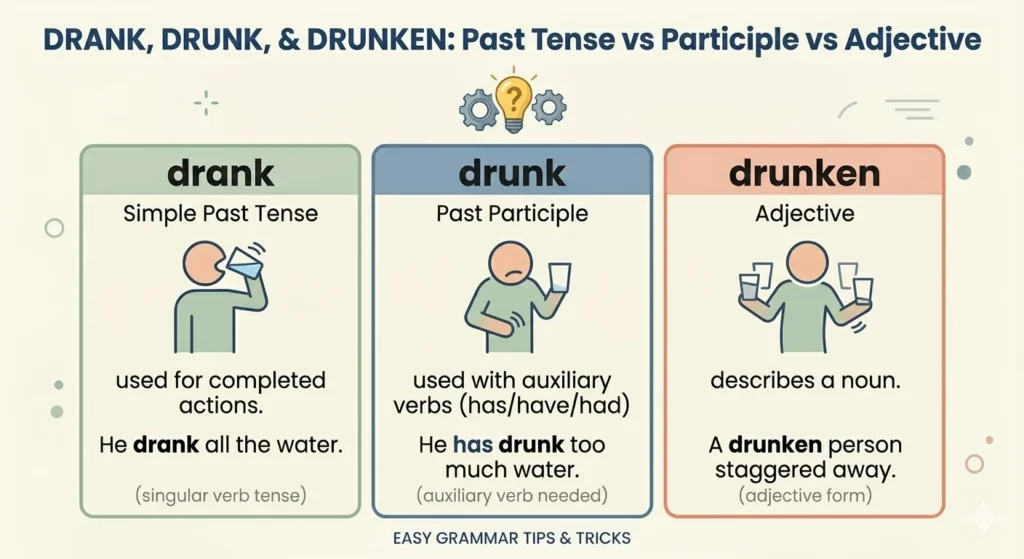
Many people also ask about drunk vs drank vs drunken.
| Word | Function | Example |
|---|---|---|
| drank | past tense verb | I drank juice |
| drunk | past participle/adjective | She has drunk tea |
| drunken | adjective (formal) | a drunken mistake |
“Drunken” is rarely used as a verb form today. It mainly describes a state or behavior.
FAQs
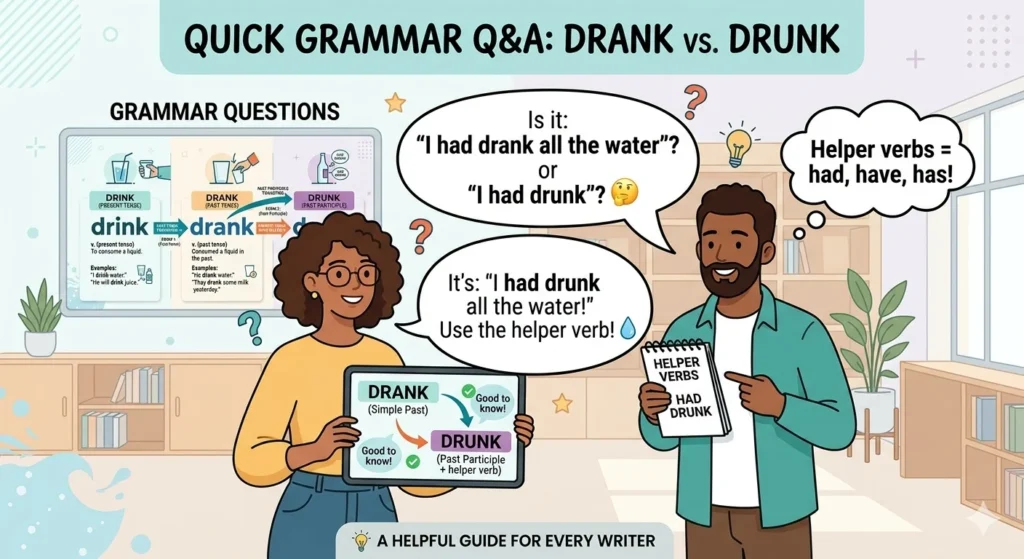
1. Is drank the same as drunk?
No. Drank is past tense, while drunk is the past participle used with helping verbs.
2. Should it be drank or drunk milk?
Say drank milk for past actions. Use have drunk milk with helping verbs.
3. What is the difference between drink drank and drunk?
Drink is present, drank is past tense, and drunk is the past participle.
4. Is it drunk or drank milk?
Correct: “I drank milk yesterday.”
Correct: “I have drunk milk today.”
5. Have you drank or drunk?
Correct grammar: Have you drunk?
6. Which is the past tense: drunk or drank?
The past tense is drank.
7. When to use drunk vs drank?
Use drank without helping verbs. Use drunk after have, has, or had.
Conclusion
Understanding drunk vs drank becomes simple once you learn how English verb tenses work. The key idea is that both words belong to the same verb family but serve different grammatical purposes. Drank describes a completed action in the past, while drunk works as the past participle and needs a helping verb. Many mistakes happen because everyday speech often ignores these rules, but correct usage improves clarity and professionalism in writing.
Remember the three-step pattern: drink, drank, drunk. If your sentence includes have, has, or had, choose drunk. If you describe something that happened yesterday or earlier without a helping verb, choose drank. This rule works across American English, British English, and global communication.
Mastering this small grammar difference strengthens confidence in emails, academic writing, and conversations. With practice, choosing between drank and drunk will feel automatic, helping you communicate clearly and correctly every time.

Nina Allan, a visionary storyteller at SimileHub.com, explores emotion through vivid imagery, helping readers unlock deeper creative expression through language.