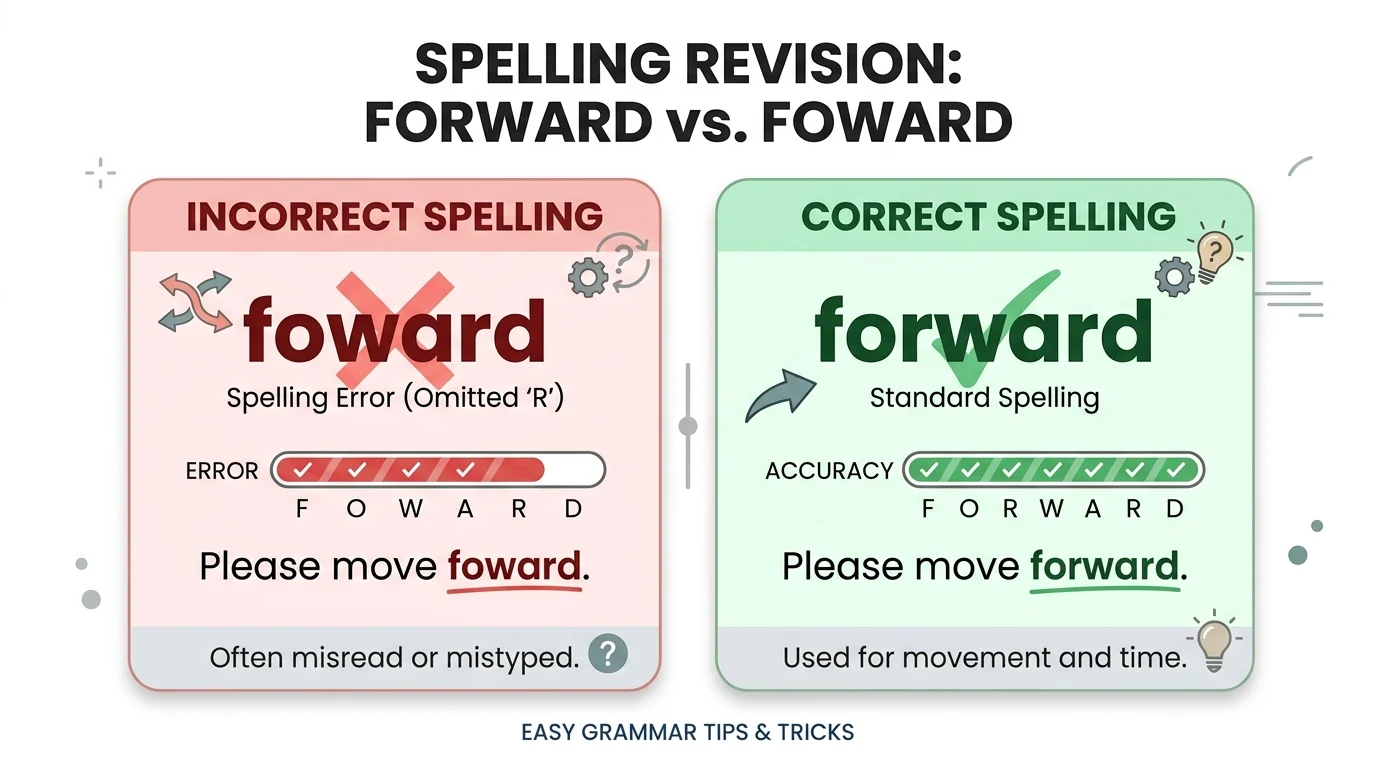
Forward is the correct spelling.
Foward is a misspelling and always incorrect in English.
| Word | Correct? | Meaning |
|---|---|---|
| Forward | ✅ Yes | Ahead/onward |
| Foward | ❌ No | Spelling mistake |
So if you are wondering, Looking forward or foward? — always choose forward.
Have you ever typed a message and paused, wondering, is it spelled foward or forward? You are not alone. Many people search for forward vs foward meaning because both look similar at first glance. The confusion often happens when typing fast.
Some even ask, Is it looking forward or foward? or check forward vs foward reddit threads to see what others say.
Here is the simple truth: only one spelling is correct in standard English. This article clears the confusion in easy words. You will learn the real spelling, the reason people drop the R in forward, and how to use it correctly in emails, social media, news, and formal writing. Let’s move forward with confidence.
The Origin of Forward vs Foward
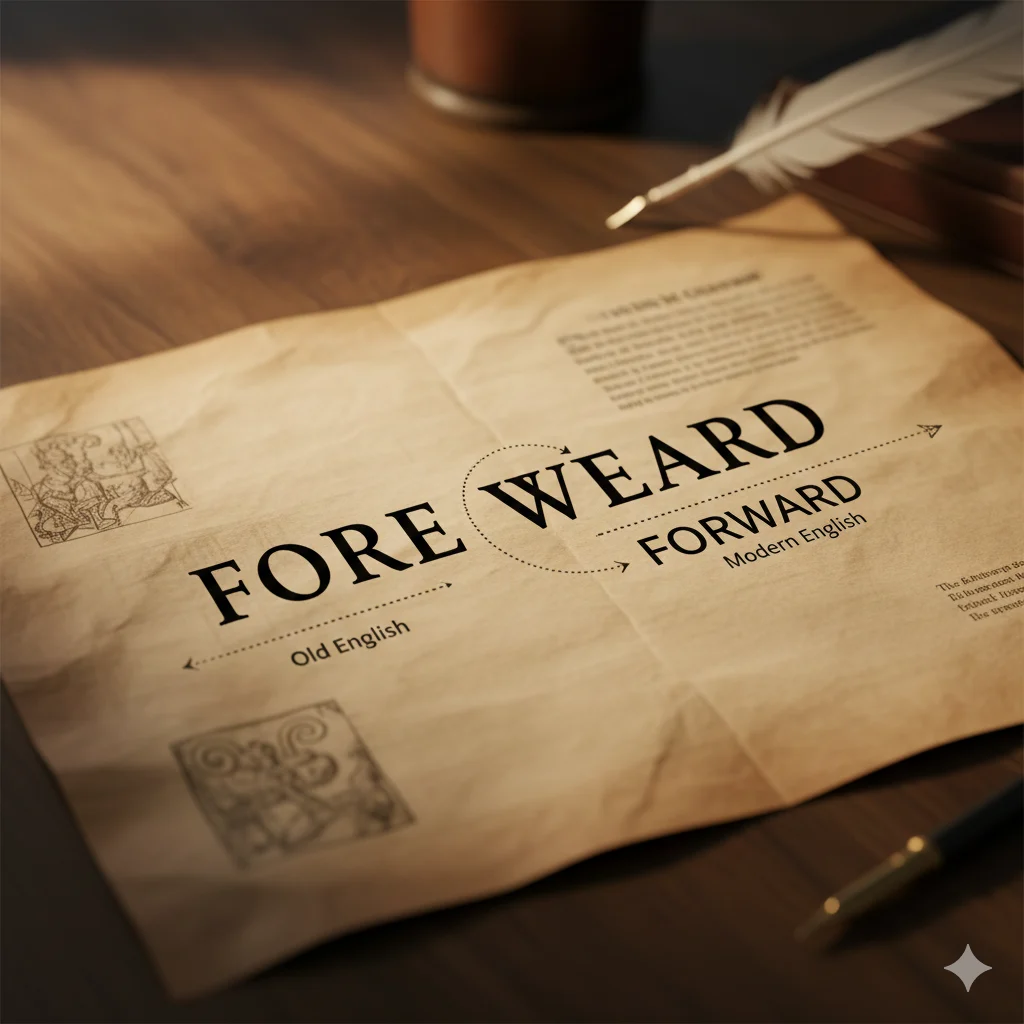
The word forward comes from Old English. It was formed from two parts:
- “fore” meaning before or ahead
- “weard” meaning toward
Over time, “foreweard” became “forward.” The letter R has always been part of the word. That is why the correct forward spelling includes the R.
So why do people write “foward”?
The mistake usually happens because:
- People type quickly and skip the R.
- Some accents make the R sound softer.
- Autocorrect does not always catch it.
If you are asking, Why do people drop the R in forward? — it is usually a typing error, not a rule.
There has never been a correct English version spelled “foward.” It is not British English. It is not American English. It is simply incorrect.
What Does “Forward” Mean?
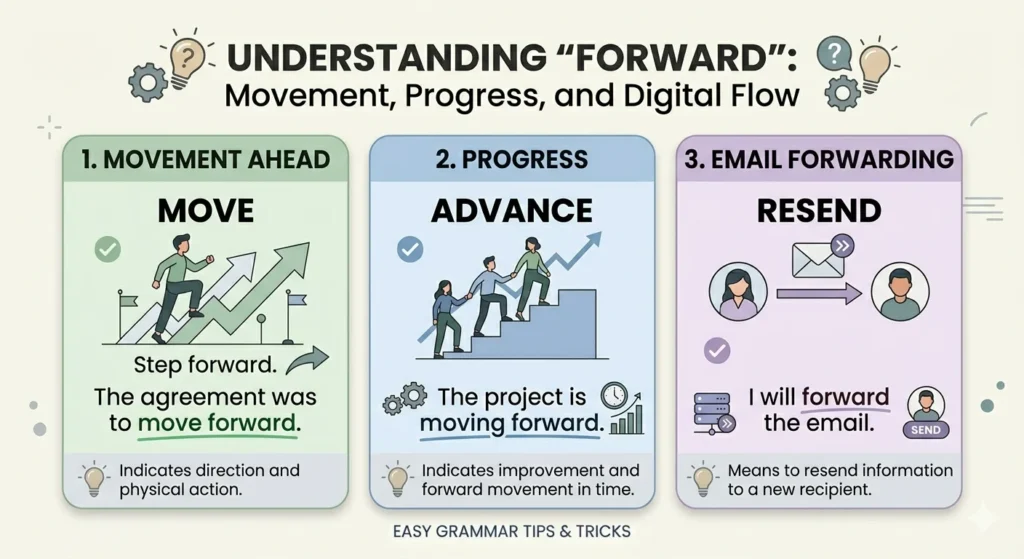
The word forward means moving ahead, progressing, or looking toward the future. It is a common English word used in everyday communication.
The word forward can be used in different ways in grammar.
As an adverb
It shows movement toward the front.
Example:
She stepped forward to speak.
As an adjective
It describes something that is ahead.
Example:
He made a forward move in his career.
As a verb (email use)
It means sending a message to another person.
Example:
Please forward this email to the manager.
British English vs American English Spelling
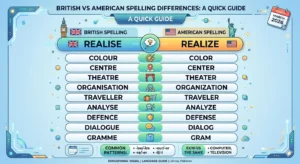
Some English words have different spellings in the UK and the US. For example:
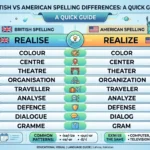
| British English | American English |
|---|---|
| Colour | Color |
| Favourite | Favorite |
| Centre | Center |
But what about forward vs foward?
The answer is simple: both British and American English use forward. There is no spelling difference.
Comparison Table
| Variation | Is It Correct? | Used In UK? | Used In US? |
|---|---|---|---|
| forward | Yes | Yes | Yes |
| foward | No | No | No |
So if you are thinking there may be a regional rule, there is not. The spelling stays the same in all major English-speaking countries.
Accident vs Incident: The Secret Meaning Revealed 🤫
Which Spelling Should You Use?

You should always use forward.
If Your Audience Is:
- In the United States → Use forward
- In the United Kingdom → Use forward
- In Canada or Australia → Use forward
- Writing for a global audience → Use forward
There is no situation where “foward” is correct.
If you want your writing to look professional, always double-check the forward spelling. Even one missing letter can make your message look careless.
Common Mistakes with Forward vs Foward
Here are frequent errors people make:
1. Dropping the R
Wrong: I am foward thinking.
Correct: I am forward thinking.
2. In Emails
Wrong: I look foward to your reply.
Correct: I look forward to your reply.
3. In Social Media Posts
Wrong: Moving foward with positivity.
Correct: Moving forward with positivity.
4. Confusing Pronunciation
Some people search for forward vs foward pronunciation. The word is pronounced with two clear R sounds:
FOR-werd.
There is no correct pronunciation without the R.
If you are asking, Why do people say foward instead of forward? — they usually speak quickly, and the R sounds softer. But the spelling never changes.
Why Do People Misspell “Forward” as “Foward”?
Many people accidentally write foward instead of forward. This usually happens for a few simple reasons.
Fast typing
When people type quickly, they sometimes skip the letter R in the middle of the word.
Pronunciation habits
In some accents, the R sound is softer, so people may not notice the missing letter while writing.
Typing errors
Sometimes autocorrect tools do not immediately catch the mistake.
However, dictionaries confirm that “foward” is always incorrect. The correct spelling is forward.
Forward vs Foward in Everyday Examples
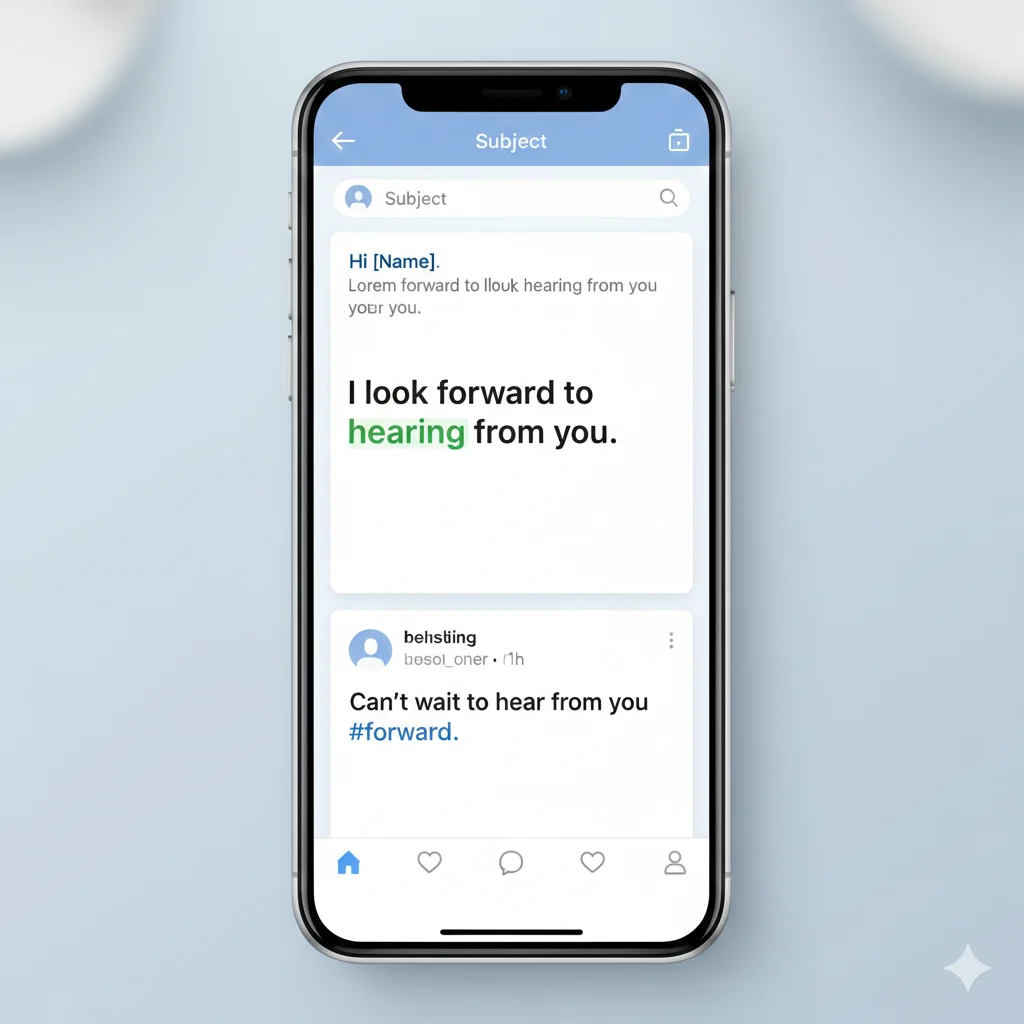
Let’s see how the correct word appears in daily life.
In Emails
“I look forward to hearing from you.”
This is very common in business writing.
In News
“The company plans to move forward with the project.”
On Social Media
“Let’s move forward and stay positive.”
In Formal Writing
“We must look forward to future growth.”
If you search forward vs foward reddit, you will see many users confirm that “foward” is a typo.
Looking Forward or Foward?
Always write:
“I am looking forward to the event.”
Never remove the R.
Doxxed vs Doxed: What Dictionaries Say 📖
Common Phrases with “Forward”
The word forward appears in many common phrases.
Examples include:
- Look forward to – I look forward to meeting you.
- Move forward – The company will move forward with the project.
- Step forward – She stepped forward to help.
- Push forward – The team pushed forward despite challenges.
These phrases are commonly used in emails, conversations, and professional writing.
Forward vs Foward – Google Trends & Usage Data
Search data shows that “forward” is searched millions of times globally. It is used in business, sports, grammar, and daily speech.
The misspelling “foward” is also searched often. Why? Because people want to check if they spelled it right.
Popular Countries Searching This Topic:
- United States
- United Kingdom
- India
- Pakistan
- Canada
Most searches include questions like:
- Is it spelled foward or forward?
- Forward vs foward meaning
- Forward pronunciation British
- Forward pronunciation American
Both British and American pronunciation include the R. The sound may be slightly stronger in American English, but the spelling stays the same.
Keyword Comparison Table
| Word | Meaning | Correct? | Notes |
|---|---|---|---|
| forward | Ahead, onward | Yes | Standard spelling |
| foward | None | No | Typing mistake |
There is no difference in meaning because only one word exists in English.
FAQs
1. What is the difference between foward and forward?
There is no difference in meaning. “Foward” is incorrect. “Forward” is correct.
2. Is it spelled foward or forward?
It is spelled forward with two R letters.
3. Is it looking forward or foward?
The correct phrase is “looking forward.”
4. Why do people drop the R in forward?
People type fast or pronounce the R softly. It is not a grammar rule.
5. Forward vs foward meaning?
Only forward has a real meaning. It means ahead or onward.
6. Forward pronunciation British vs American?
Both accents pronounce the R. American English may stress it more.
7. Why do people say foward instead of forward?
It is usually a typing error or speech habit. It is not correct spelling.
Conclusion
The confusion around forward vs foward is simple but common. Many people pause while typing and wonder if they missed a letter. The clear answer is this: forward is the only correct spelling. “Foward” is always a mistake.
There is no British or American spelling difference. There is no hidden grammar rule. The word comes from Old English and has always included the letter R. If you drop it, the word becomes incorrect.Quick Spelling Tip to Remember
A simple way to remember the correct spelling is this:
The word forward always contains two “R” letters.
Think of it like this:
Fo + R + Ward
If the middle R disappears, the spelling becomes incorrect.
When writing emails, social media posts, business messages, or academic papers, always double-check your spelling. A small error can change how professional you appear. If you remember one thing from this guide, let it be this: always move forward with the R included. That simple habit will keep your writing clean, clear, and correct every time.

D.M. Thomas, a thoughtful wordsmith at SimileHub.com, blends imagination with emotion, crafting rich imagery that guides readers into deeper, vivid expression.