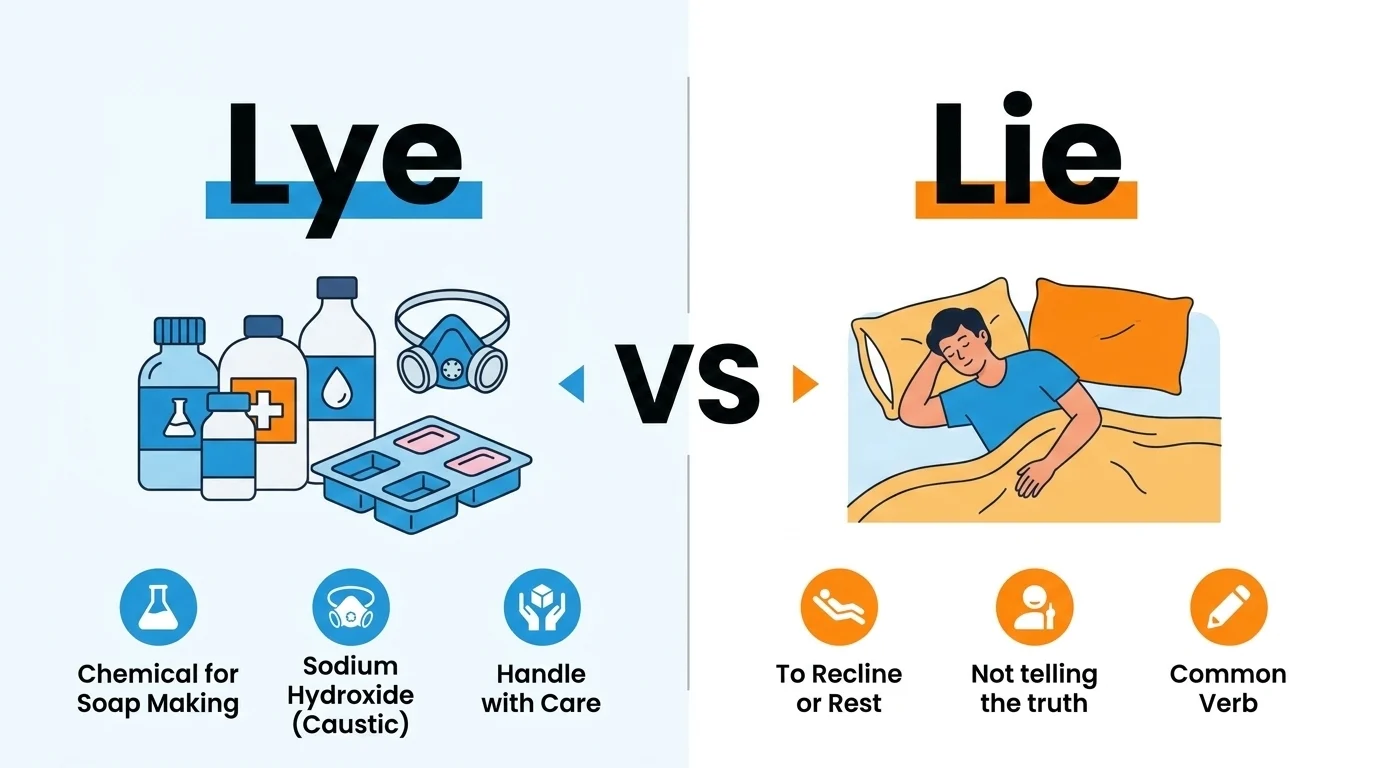
The difference between lye vs lie is simple:
- Lie is a verb or noun related to resting or telling something untrue.
- Lye is a chemical substance used in soap making, cleaning, and food preparation.
Examples:
- I want to lie down for a few minutes.
- Please lie on the floor during the exercise.
- Soap makers often use lye to create natural soap.
When asking questions like Is it lie or lye in bed? or Is it lie or lye on the floor?, the correct word is lie, because it means to rest or recline.
English spelling can be confusing, especially when two words look almost the same but mean very different things. One common example is lye vs lie. Many people search for this because they are unsure which word to use in sentences like “lie in bed” or when talking about chemicals like soap-making ingredients.
The confusion happens because lie is a verb with several meanings, while lye is a noun used in chemistry. Even though they sound exactly the same, they are not interchangeable. Using the wrong one can make your writing look incorrect or confusing.
This guide will clearly explain the difference between lye vs lie, where each word comes from, how they are used in daily writing, and the most common mistakes people make. By the end, you will easily know when to use lie, when lye is correct, and how to avoid grammar errors.
The Origin of lye vs lie
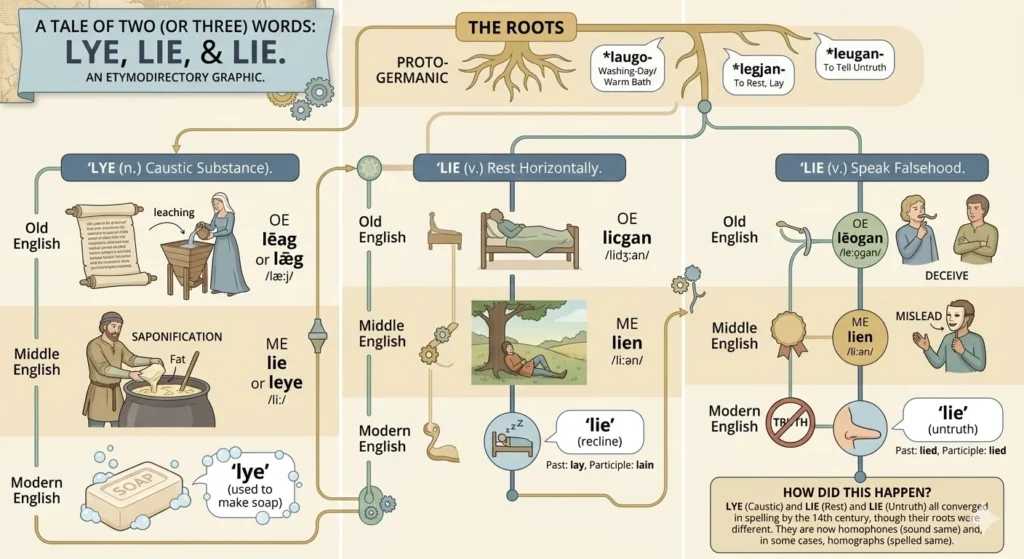
Understanding the origin of these words helps explain why they are so different even though they sound alike.
Lie comes from Old English words that meant “to rest” or “to remain in a flat position.” Over time, it developed two main meanings. One refers to resting or reclining, and the other refers to telling something that is not true.
Examples of the verb meaning:
- I will lie down after lunch.
- The book lies on the table.
The other meaning of lie refers to dishonesty:
- He told a lie to avoid trouble.
On the other hand, lye comes from an Old English word meaning “alkaline solution.” Historically, it was made by mixing wood ashes with water. People used this mixture for cleaning, soap making, and even preparing certain foods.
Because their histories are completely different, lie and lye meaning are not connected even though they sound the same.
British English vs American English Spelling
Unlike many spelling differences between British and American English, lye vs lie is not a regional spelling variation. Both countries use the same spelling rules for these words.
The confusion comes from pronunciation. Since both words sound identical, writers sometimes mistakenly replace one with the other.
Spelling Comparison
| Word | Meaning | Example Sentence |
|---|---|---|
| lie | to rest or recline | I will lie on the couch. |
| lie | something untrue | That statement was a lie. |
| lye | strong alkaline chemical | Soap makers use lye. |
Examples in different contexts:
| Context | Correct Sentence |
|---|---|
| Everyday speech | I need to lie down for a minute. |
| News writing | The witness admitted the story was a lie. |
| Chemistry | The recipe requires a small amount of lye. |
Both British and American writers follow these same rules.
Smores vs S’mores: Why Most People Write It Wrong 😬
Which Spelling Should You Use?
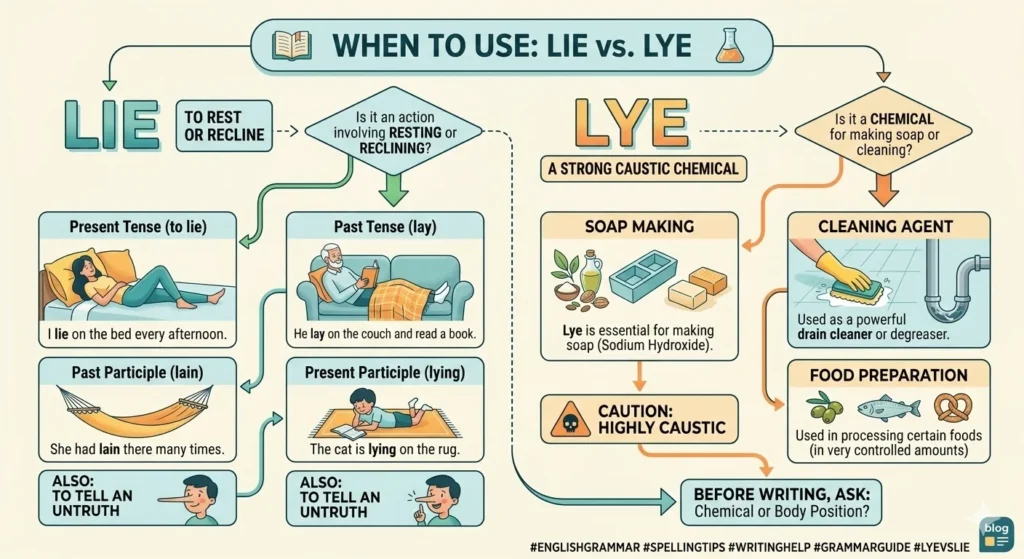
Choosing between lye vs lie depends completely on the meaning of your sentence.
Use lie when talking about:
- resting or reclining
- something being in a position
- telling something untrue
Examples:
- I will lie in bed for a while.
- The keys lie on the desk.
- That story was a lie.
Use lye only when referring to the chemical substance.
Examples:
- Soap making often requires lye.
- Traditional pretzels are dipped in lye water.
For global audiences, the rule is simple: if the sentence is about resting or truth, use lie. If the topic is chemistry or soap making, use lye.
Common Mistakes with lye vs lie
Many people make errors when writing sentences that involve resting or reclining.
Mistake 1
Incorrect: I will lye down for a nap.
Correct: I will lie down for a nap.
Mistake 2
Incorrect: Please lye on the floor.
Correct: Please lie on the floor.
Mistake 3
Incorrect: The story was a lye.
Correct: The story was a lie.
Another common confusion involves lie vs lay. These verbs look similar but follow different grammar patterns.
Basic rule:
- Lie does not take an object.
- Lay requires an object.
Examples:
- I will lie down.
- I will lay the book on the table.
Understanding lye vs lie vs lay helps avoid many grammar errors.
lye vs lie in Everyday Examples
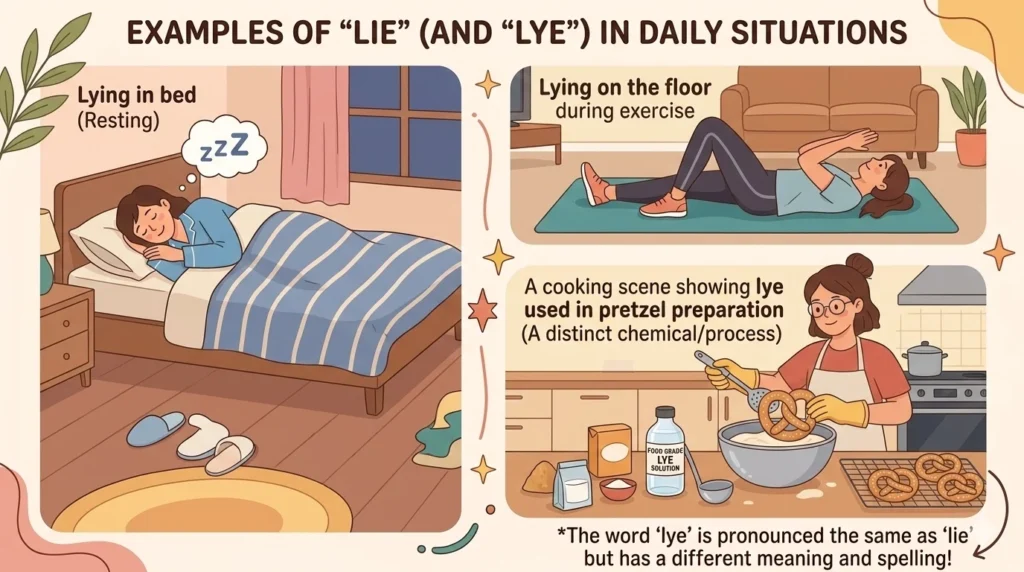
These words appear in many forms of everyday communication. Here are examples from different situations.
Email Example
I feel tired today, so I might lie down after lunch.
Social Media Example
Sometimes I just want to lie in bed and watch movies all day.
News Example
The politician admitted the statement was a lie.
Cooking Example
The recipe explains how lye helps create the traditional crust on pretzels.
Workplace Example
The documents lie on the manager’s desk.
These examples show how lie meaning changes depending on the sentence, while lye keeps a specific chemical meaning.
lye vs lie – Google Trends & Usage Data
Search interest for lye vs lie grammar and similar questions often increases when students study English grammar or when writers want to avoid spelling mistakes.
Most searches come from:
- United States
- United Kingdom
- Canada
- Australia
- India
- Pakistan
In English learning communities, people frequently search questions like:
- Lye or lie down
- Lie vs lying
- Lie or lye or lay
Grammar learners usually want to understand which spelling is correct when talking about resting or positioning.
In almost every everyday situation, lie is used much more frequently than lye, because the chemical term appears mostly in cooking or chemistry discussions.
Cummerbund vs Cumberbund: Why Most People Get It Wrong 😬
lye vs lie Comparison Table
| Word | Part of Speech | Meaning | Example |
|---|---|---|---|
| lie | verb | to recline or rest | I want to lie down. |
| lie | noun | something untrue | That was a lie. |
| lying | verb form | present participle | He is lying on the couch. |
| lay | verb | to place something | She will lay the book down. |
| lye | noun | alkaline chemical | Lye is used in soap making. |
This table helps clarify lie vs lying, lie vs lay, and lye vs lie examples in one place.
FAQs
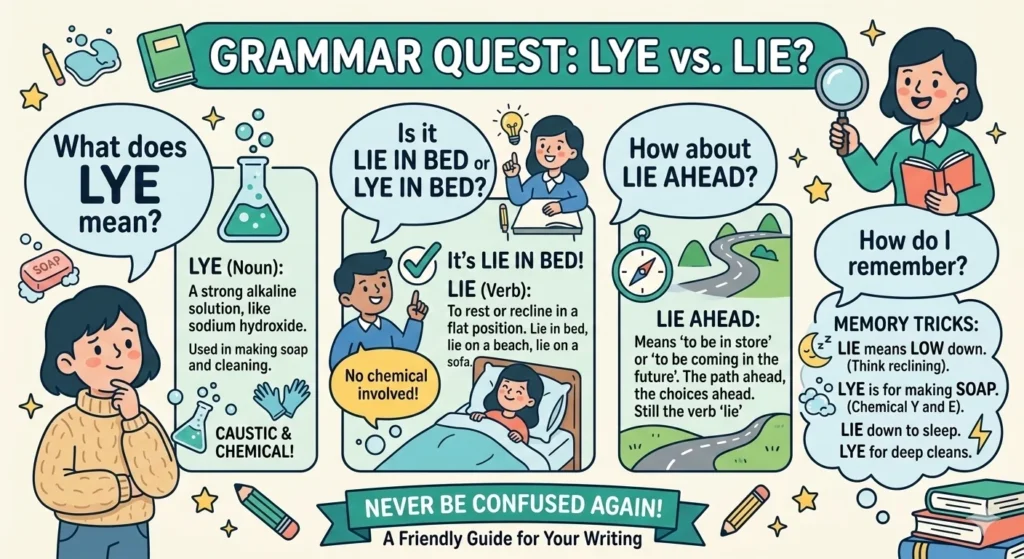
Is it lie or lye in bed?
The correct phrase is lie in bed because the verb refers to resting or reclining.
Is it lie or lye on the floor?
The correct sentence is lie on the floor because it describes a body position.
What are two meanings of lie?
The word lie has two main meanings. It can mean to rest in a flat position, or it can mean telling something untrue.
What is the difference between lie and lay?
Lie means to recline and does not need an object. Lay means to place something and always requires an object.
Lye or lie down which is correct?
The correct phrase is lie down because the action refers to resting.
What does lye mean?
Lye is a strong alkaline chemical used in soap making, cleaning, and some food preparation processes.
What is the difference between lye vs lie vs lay?
Lie means to recline, lay means to place something somewhere, and lye is a chemical substance.
Conclusion
Understanding lye vs lie becomes easy once you focus on their meanings. Even though the words sound the same, they belong to completely different categories. Lie is a verb and noun used in everyday language. It can describe resting in a flat position, such as when you lie on the bed or lie on the floor. It can also refer to something untrue, such as when someone tells a lie.
Lye, however, is a scientific term. It refers to a strong alkaline chemical used in soap making, cleaning products, and some food preparation techniques. Outside of these contexts, the word rarely appears in daily conversation.
Many grammar mistakes happen when people confuse lie vs lay, or when they accidentally replace lie with lye in sentences about resting. Remember this simple rule: if the sentence is about relaxing, position, or truth, the correct word is lie. If the sentence is about chemistry or soap making, the correct word is lye.
By understanding these differences and practicing with examples, you can confidently use the right spelling in emails, social media, and formal writing.

Sarah Hall, a passionate voice at SimileHub.com, blends poetic depth with clear guidance to help writers craft vivid imagery and unforgettable expressions.