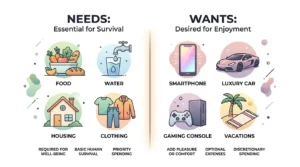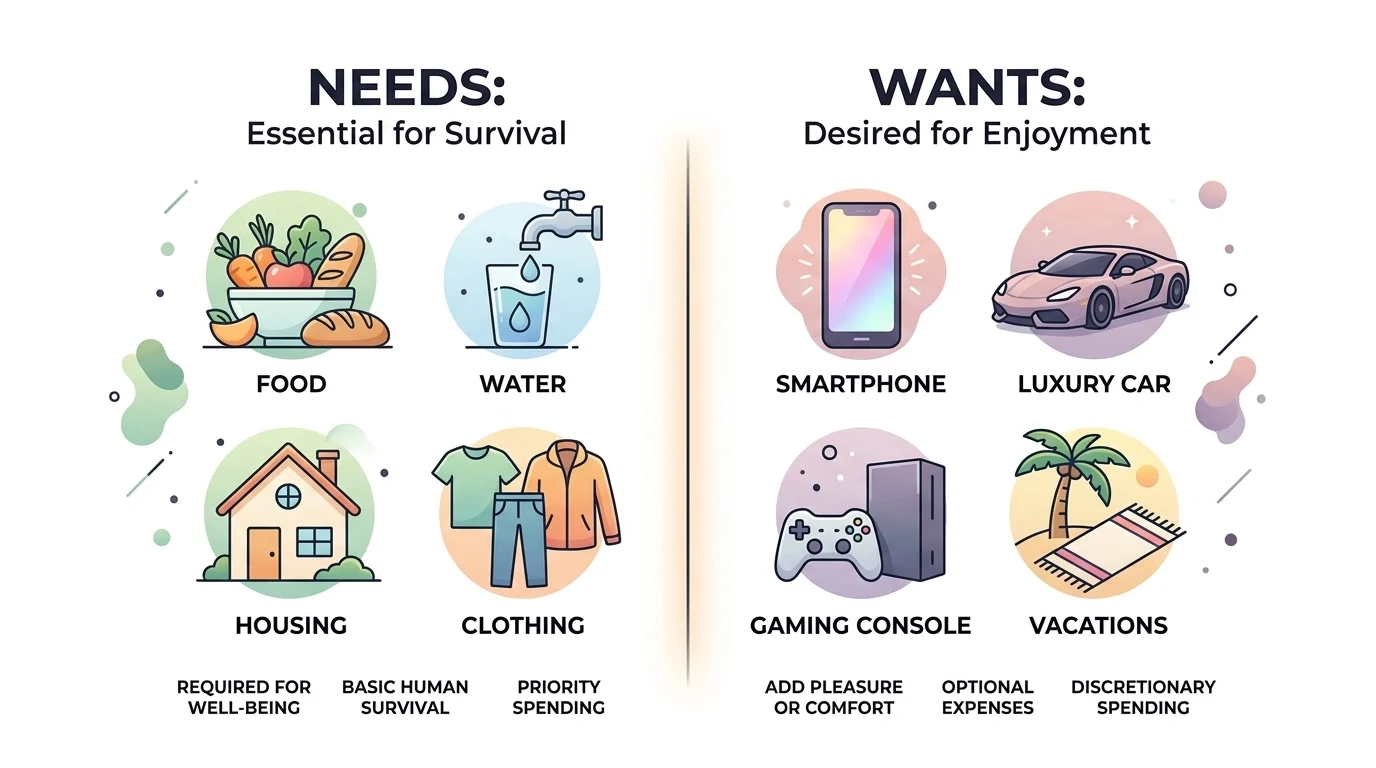
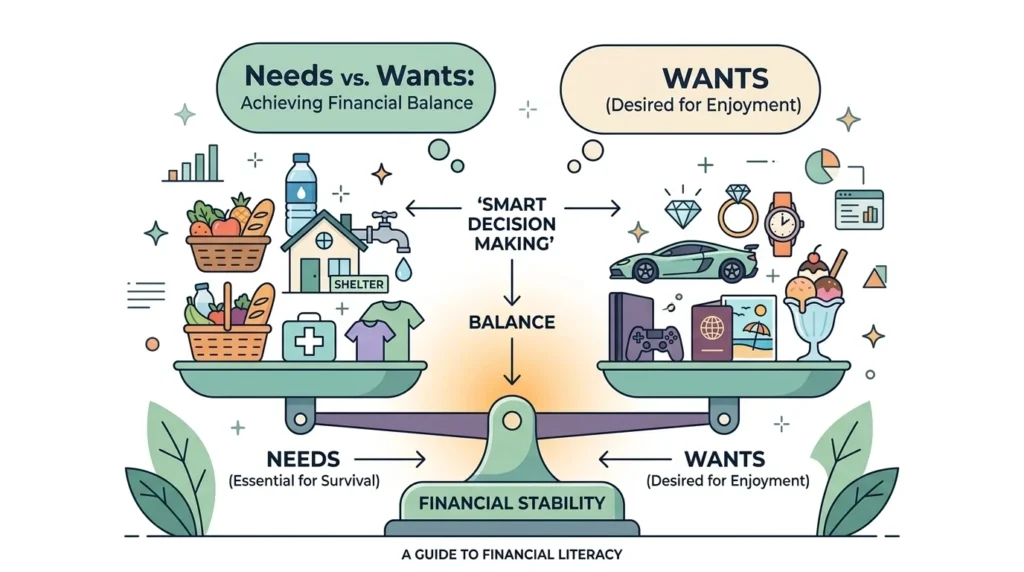
Needs vs wants means the difference between things you must have to live and things you would like to have but can live without.
Needs
- Necessary for survival and basic living
- Examples: food, water, shelter, healthcare, basic clothing
Wants
- Not required for survival
- Examples: gaming console, designer clothes, expensive phone
Example:
Need: Buying groceries for dinner.
Want: Buying luxury chocolate for fun.
In budgeting, people first pay for needs and then spend leftover money on wants.
This idea is used in economics, budgeting, and financial education to help people manage money wisely.
People often ask about needs vs wants because the difference affects money, decisions, and daily life. When you shop, plan a budget, or teach children about money, you must know what is truly necessary and what is simply desired. Many people mix the two. They think a want is a need, and this can cause overspending or poor choices.
In simple words, needs are things required for survival and basic living, while wants are things that make life more comfortable or enjoyable. Food, shelter, and clothing are needs. A new phone or luxury car is usually a want.
Understanding this difference helps people control spending, manage a budget, and make smarter choices. It is also a key idea in economics, psychology, and financial literacy. This guide explains the meaning of needs vs wants, gives clear examples, shows common mistakes, and explains how the concept is used in everyday life.
The Origin of Needs vs Wants
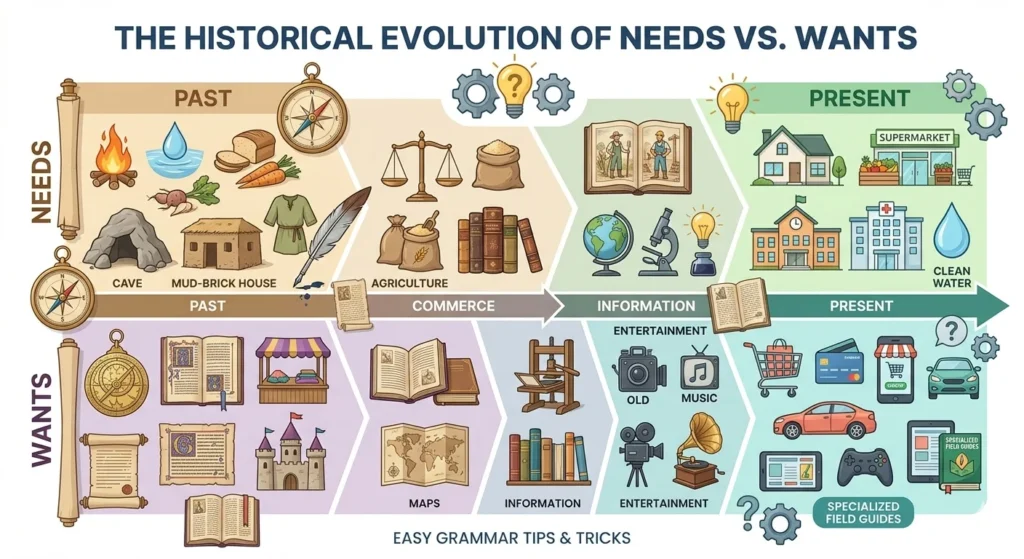
The concept of needs vs wants comes from early economic thinking about human behavior and survival. Economists wanted to explain why people spend money on certain things first.
The word need comes from Old English neodian, meaning something necessary or required. It describes things a person must have to survive or function properly.
The word want originally meant “to lack something.” Over time, its meaning changed. Today it usually means something people desire rather than something they require.
Economists later used the terms to explain consumer behavior. They noticed that people always buy essential goods first. After that, they spend money on comfort or pleasure items.
This idea also became important in financial education. Teachers use it to help students learn budgeting and responsible spending.
Today, the needs vs wants concept is used in economics, psychology, education, and personal finance.
British English vs American English Spelling
Unlike some words, needs vs wants does not change spelling between British and American English. The difference lies mostly in usage style and context.
In both regions, the meaning remains the same.
| Term | American English Usage | British English Usage | Meaning |
|---|---|---|---|
| Need | Very common in budgeting advice | Same usage | Something essential |
| Want | Used in finance and psychology | Same usage | Something desired |
| Needs vs Wants | Used in finance education | Used in education and economics | Comparing essentials and desires |
Example sentences:
American style:
You should separate needs vs wants in your monthly budget.
British style:
Learning the difference between needs vs wants helps people spend wisely.
Even though spelling is identical, financial education programs in different countries may explain the concept with different examples.
Marrying vs Marring ⚠️ Why Writers Get This Wrong
Which Spelling Should You Use?
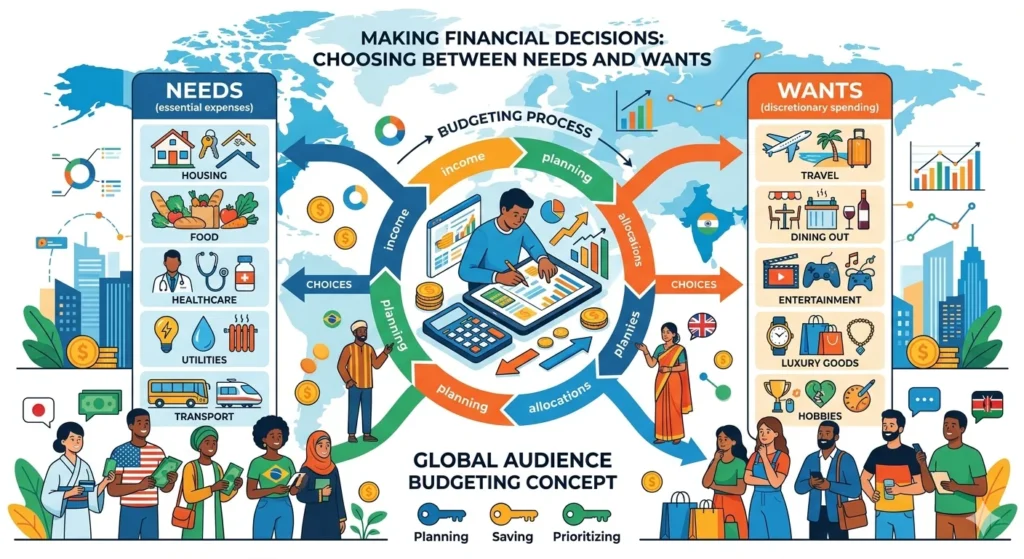
Since needs vs wants is spelled the same everywhere, the choice depends more on your audience and writing context.
For American readers
Use examples related to US budgeting systems, such as monthly household expenses, credit cards, and financial planning.
For UK and Commonwealth readers
Examples may include council housing, transport costs, and education expenses.
For global readers
Use universal examples like food, housing, clothing, and entertainment.
The most important rule is clarity. Readers should quickly understand the difference between necessary items and optional ones.
For blogs, schools, and financial literacy websites, the phrase needs vs wants is commonly used to teach budgeting and decision making.
Common Mistakes with Needs vs Wants
Many people confuse needs and wants. This can lead to poor financial decisions.
Here are some common mistakes.
Mistake 1: Calling every important item a need
Example: “I need the newest smartphone.”
Correction: A phone may be a need, but the newest model is usually a want.
Mistake 2: Ignoring basic needs in a budget
Some people spend money on entertainment before paying for essentials.
Mistake 3: Mixing comfort with necessity
Example: Expensive clothing is a want. Basic clothing is a need.
Mistake 4: Emotional spending
People often buy things they want because of stress or social pressure.
Mistake 5: Teaching children unclear examples
Kids should learn simple examples so they understand the difference.
Correct understanding helps people save money and make better choices.
Needs vs Wants in Everyday Examples
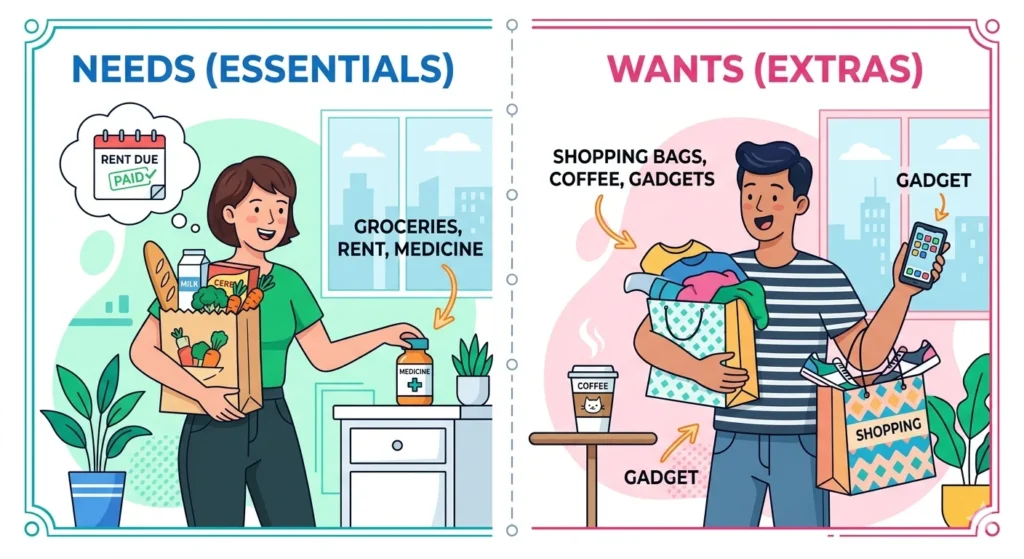
The concept of needs vs wants appears in many daily situations.
In Emails
Example:
“We must focus on needs vs wants when planning the office budget.”
In News
Financial experts often explain how households should separate needs vs wants during economic challenges.
In Social Media
People discuss minimalism and budgeting using the needs vs wants idea.
Example post:
“I stopped buying things I want and focused only on things I need.”
In Formal Writing
Economics textbooks explain consumer behavior using needs vs wants examples.
Example:
“Consumers first satisfy basic needs before purchasing luxury goods.”
This concept also appears in psychology, financial literacy programs, and family budgeting advice.
Needs vs Wants – Google Trends & Usage Data
Interest in needs vs wants has increased over the years, especially in financial education and budgeting content.
Countries where the topic is commonly searched include:
- United States
- Canada
- United Kingdom
- Australia
- India
The search popularity often rises during times of economic uncertainty. When people worry about money, they look for ways to control spending.
The topic is also popular in education. Teachers search for activities and worksheets to explain needs vs wants to children and adults.
Another reason for its popularity is the growth of personal finance blogs and budgeting tools. Many guides explain how to create a needs vs wants budget.
The phrase is widely used in economics, consumer behavior studies, and financial literacy training.
Comparison Table: Needs vs Wants
| Category | Needs | Wants |
|---|---|---|
| Definition | Essential for survival | Desired but not necessary |
| Priority | High priority | Lower priority |
| Examples | Food, shelter, water | Luxury car, designer shoes |
| Budget role | Paid first | Paid after needs |
| Emotional value | Survival and safety | Comfort and pleasure |
| Economic role | Basic goods | Luxury or non-essential goods |
20 Examples of Needs and Wants
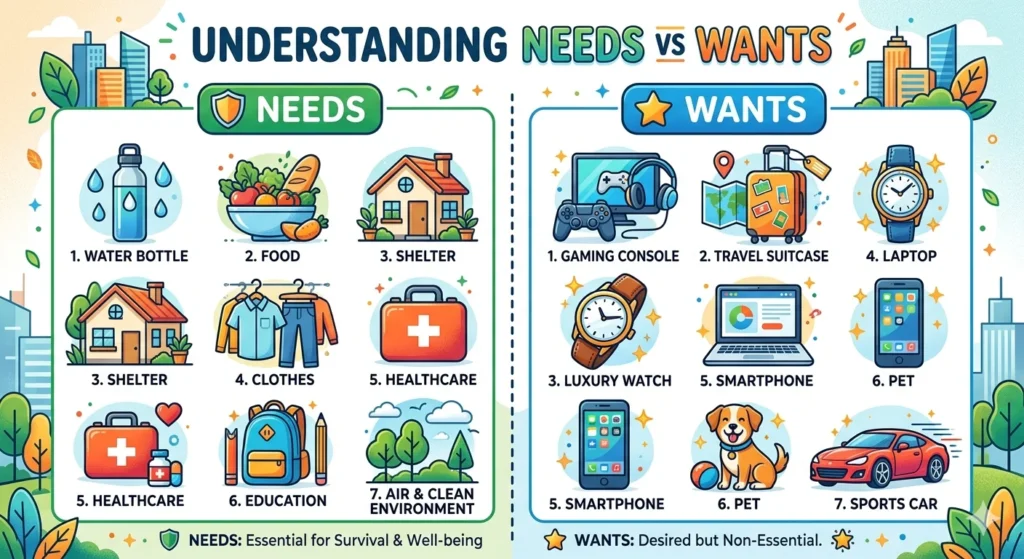
Needs examples:
Food
Water
Shelter
Basic clothing
Healthcare
Electricity
Transportation for work
Education
Medicine
Safety
Wants examples:
Gaming console
Luxury car
Designer clothes
Expensive watch
High-end phone
Vacation trip
Fancy restaurant meals
Streaming subscriptions
Decorative home items
Premium gadgets
These examples help people understand real-life differences between essential and optional spending.
Foremen vs Foreman: The Mistake Many Make 😬
Needs vs Wants in Economics
In economics, needs vs wants explains how consumers make decisions. Basic goods satisfy human survival. Luxury goods satisfy comfort and status.
Economists say that needs have high priority demand, while wants depend on income and personal preference.
Example:
Need: Buying bread and milk.
Want: Buying premium chocolate or imported snacks.
Businesses also study consumer needs vs wants to design products and marketing strategies.
Needs vs Wants Psychology
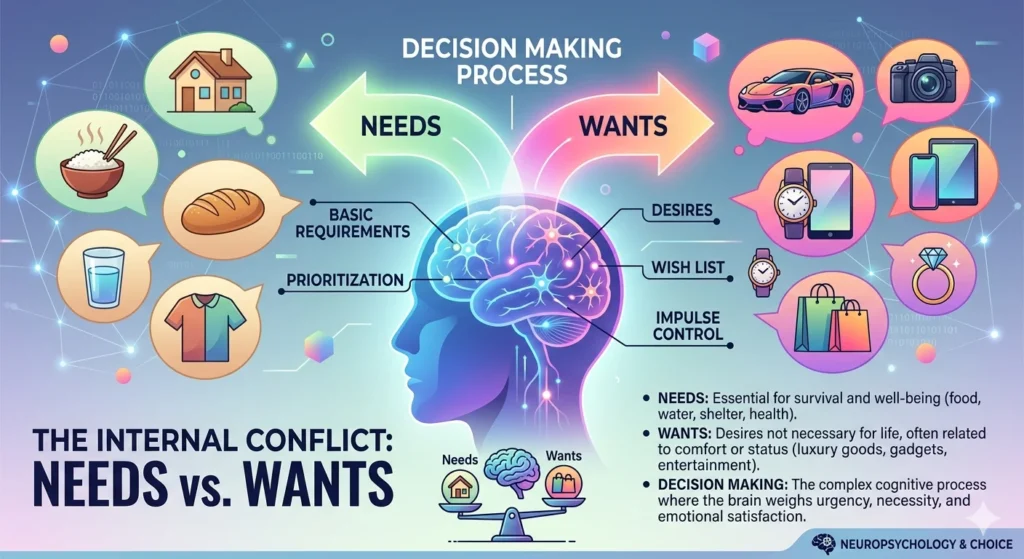
Psychology studies how human desires influence decisions. Sometimes people believe a want is a need because of emotional triggers.
Advertising can make people feel they need a product even if it is optional.
For example:
Someone may think they need the newest phone because everyone else has it.
Understanding this psychological effect helps people control impulse spending and make rational choices.
Needs vs Wants for Kids
Teaching needs vs wants for kids is an important part of financial literacy.
Simple examples help children understand the difference.
Needs for kids:
Food
School supplies
Clothes
Home
Wants for kids:
Toys
Video games
Candy
New gadgets
Teachers often use activities and worksheets to help children practice sorting items into needs and wants categories.
Needs vs Wants Budgeting
Budgeting experts often recommend a simple rule:
Pay for needs first, then spend on wants.
Example monthly needs:
Rent
Groceries
Utilities
Transport
Example wants:
Movies
Dining out
Shopping
Travel
This method helps people avoid debt and maintain financial stability.
Needs vs Wants in a Relationship
The concept is also useful in relationships.
People have emotional needs such as trust, respect, and communication. These are essential for healthy relationships.
Wants may include preferences like hobbies, entertainment choices, or lifestyle desires.
Understanding the difference helps couples communicate better and avoid conflict.
FAQs
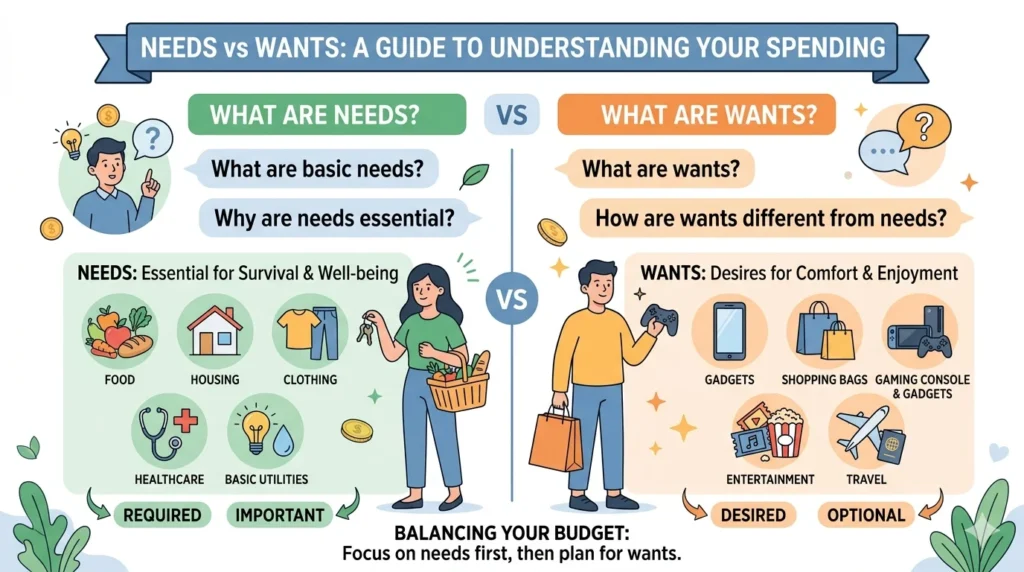
What is the definition of needs vs wants?
Needs vs wants means the difference between essential things required for survival and optional things that bring comfort or pleasure.
What are five examples of needs?
Food, water, shelter, clothing, and healthcare are common examples of needs.
What are five examples of wants?
Luxury clothing, expensive electronics, vacations, gaming systems, and designer accessories are examples of wants.
Why is needs vs wants important in budgeting?
It helps people spend money wisely by paying for essentials before buying optional items.
How do teachers explain needs vs wants to kids?
Teachers use simple examples, charts, and activities where children sort items into needs and wants categories.
Are wants always unnecessary?
Not always. Wants can improve happiness and comfort, but they are not required for survival.
Is a car a need or a want?
It depends on the situation. If someone needs it to reach work where no transport exists, it may be a need. Otherwise, it can be a want.
Conclusion
Understanding needs vs wants is one of the most important lessons in money management and decision making. Needs are the things people must have to survive and live safely, such as food, shelter, healthcare, and basic clothing. Wants, on the other hand, are items that bring comfort, enjoyment, or luxury but are not essential for survival.
Learning the difference helps people build stronger financial habits. When individuals separate needs from wants, they can create better budgets, avoid unnecessary spending, and save money for the future. This concept is also widely used in economics, psychology, and financial literacy education. It helps explain how consumers make choices and why certain products are purchased first.
Teaching the idea early is also valuable. Children who understand needs vs wants develop healthier spending habits as adults. They learn to prioritize essentials before entertainment or luxury items.
In everyday life, the rule is simple: take care of needs first, then enjoy wants responsibly. This balance creates financial stability and smarter decision making.

Ali Smith, a passionate language artist at SimileHub.com, turns simple words into vivid imagery, helping writers express emotions with beauty and clarity.