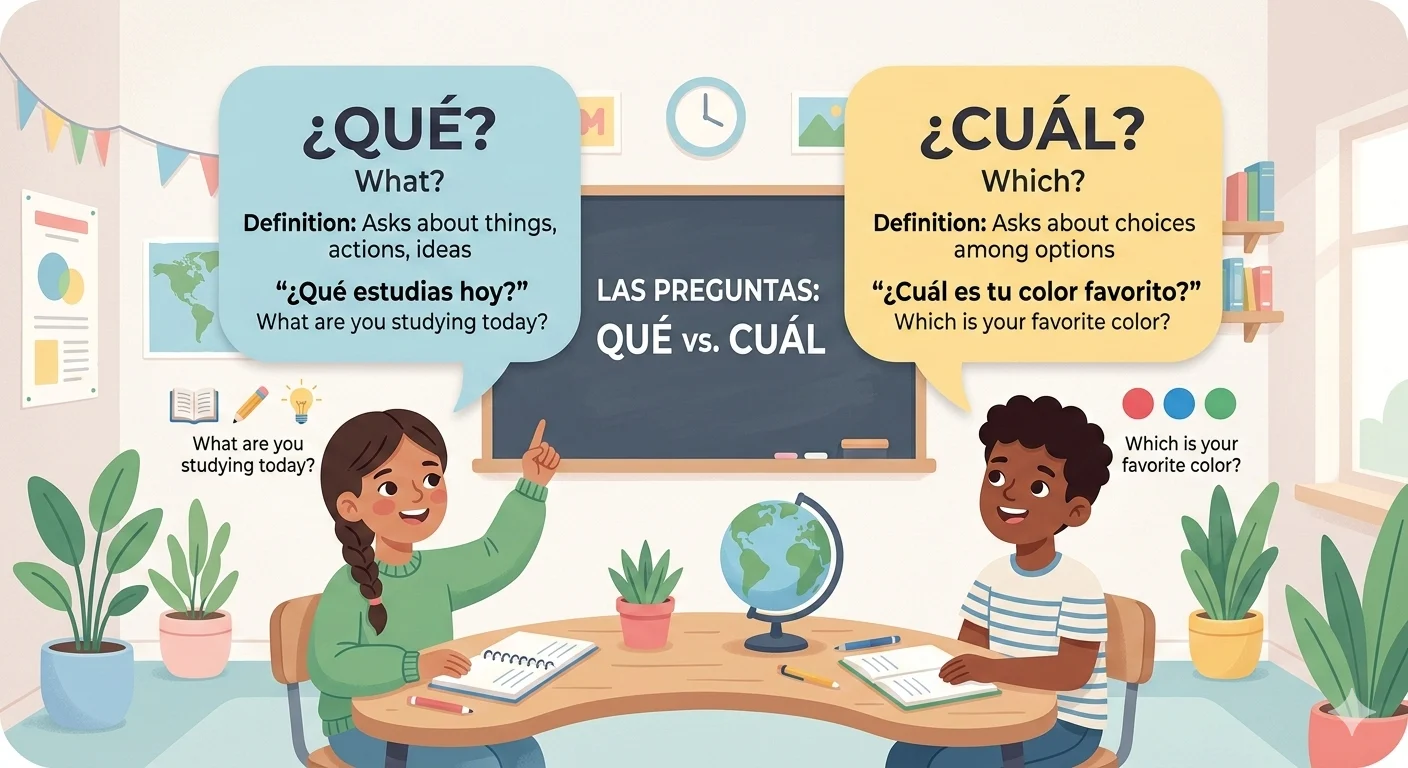
Use qué when asking for definitions, explanations, or general information. Use cuál when choosing from options or identifying something specific.
Simple Rule
- Qué = What (general question)
- Cuál = Which / What (selection or identification)
Examples
- ¿Qué quieres? → What do you want?
- ¿Cuál prefieres? → Which do you prefer?
- ¿Qué es esto? → What is this?
- ¿Cuál es tu número? → What is your number?
In English grammar terms, qué asks what something is, while cuál asks which one among choices. Understanding this difference makes Spanish questions clearer and more natural.
Many Spanish learners pause when choosing between que vs cual. Both words often mean “what” in English, yet native speakers use them differently. This small choice can completely change how natural your Spanish sounds. People search for this topic because textbooks give rules, but real conversations feel confusing. Why do we say ¿Qué quieres? but ¿Cuál prefieres? And why is it ¿Cuál es tu nombre? instead of ¿Qué es tu nombre?
This guide solves that confusion in simple steps. You will learn clear rules, real examples, pronunciation tips, and everyday usage. By the end, you will know exactly when to use que vs cual in Spanish, how they work in English grammar comparisons, and how to avoid common learner mistakes. Whether you are a beginner or improving fluency, this explanation will make Spanish questions feel easy and natural.
The Origin of Que vs Cual
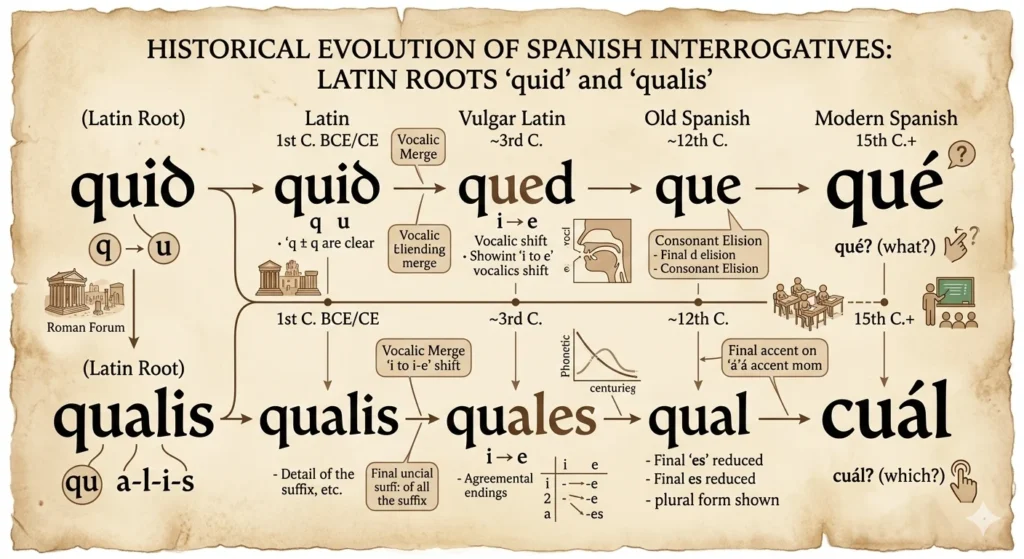
The words qué and cuál come from Latin, the root language of Spanish.
- Qué comes from Latin quid, meaning “what.” It was used for asking about identity or explanation. Over time, Spanish kept this meaning almost unchanged.
- Cuál comes from Latin qualis, meaning “of what kind” or “which one.” This origin explains why it relates to selection or comparison.
Historically, Spanish speakers needed two different question words because communication required clarity. One word asked about meaning, while the other helped choose between options.
Accent marks also developed later. The written accent in qué and cuál shows they are interrogative words. Without accents, they become different grammatical forms:
- que = that / which (connector word)
- cual = relative pronoun
This spelling difference helps readers quickly recognize questions and exclamations. Understanding the history explains why learners cannot replace one with the other freely.
British English vs American English Spelling
Unlike many English words, que vs cual do not change spelling between British and American English. However, learners often compare them through English translations like what and which, which behave slightly differently across contexts.
English varieties influence how learners interpret Spanish questions. American English often uses “what” casually, while British English sometimes prefers structured phrasing closer to “which.”
Comparison Table
| Spanish Word | Meaning in English | American English Style | British English Style |
|---|---|---|---|
| Qué | What (general) | What is this? | What is this? |
| Cuál | Which / specific what | Which one do you want? | Which one would you like? |
| Qué es | Asking definition | What is it? | What is it? |
| Cuál es | Asking identification | Which is it? | Which is it? |
The spelling remains the same globally, but interpretation depends on how English speakers think about questions.
Blowed Vs Blew: The Shocking Grammar Truth 😲
Which Spelling Should You Use?

Spanish spelling does not change by region, but usage depends on audience and communication style.
For US Spanish Learners
Focus on conversational clarity. Use qué for explanations and cuál when options exist. American learners often overuse qué, so practice recognizing choices.
For UK and Commonwealth Learners
Pay attention to formal question structure. British-style English thinking often makes learning cuál easier because “which” feels more natural.
For Global Communication
Follow universal Spanish grammar rules:
- Use qué for definitions.
- Use cuál for selections or identification.
Spanish remains consistent across Spain, Latin America, and international contexts, so once you learn the rule, you can use it everywhere confidently.
Common Mistakes with Que vs Cual
Many learners struggle because English uses “what” in situations where Spanish requires cuál.
Mistake 1: Using qué for personal information
❌ ¿Qué es tu nombre?
✅ ¿Cuál es tu nombre?
Reason: The name already exists; you are identifying it, not defining it.
Mistake 2: Forgetting the accent mark
❌ que quieres
✅ qué quieres
Without the accent, the meaning changes completely.
Mistake 3: Using cuál before nouns incorrectly
❌ ¿Cuál libro quieres?
✅ ¿Qué libro quieres?
Use qué directly before nouns.
Mistake 4: Confusing que vs cual vs cuales
- cuál = singular (which one)
- cuáles = plural (which ones)
Example:
- ¿Cuáles prefieres? → Which ones do you prefer?
Mistake 5: Translating word-for-word from English
English habits cause confusion. Always think about whether you are asking for explanation or selection.
Que vs Cual in Everyday Examples
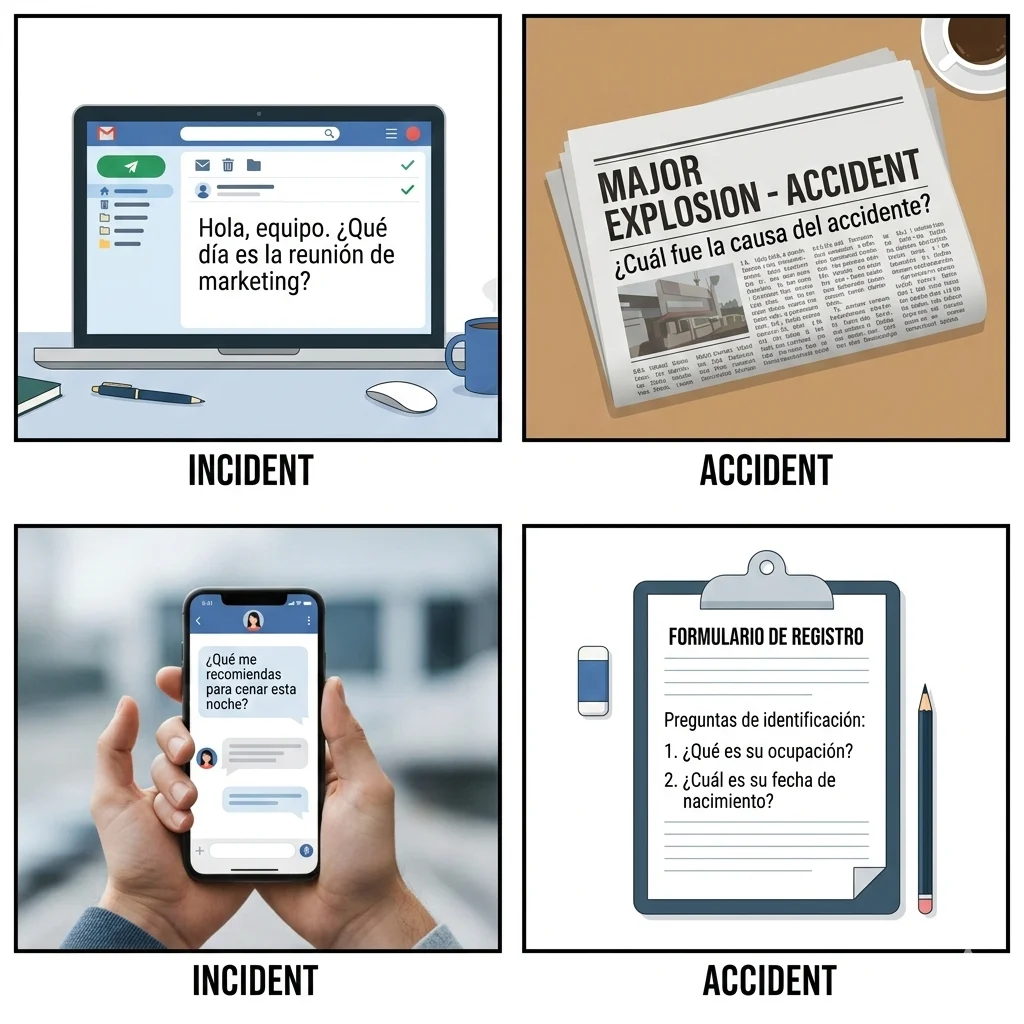
Understanding grammar becomes easier with real-life situations.
Emails
- ¿Qué necesitas para el proyecto?
- ¿Cuál es la fecha final?
News Headlines
- ¿Cuál es la causa del cambio climático?
- ¿Qué dicen los expertos?
Social Media
- ¿Qué estás viendo hoy?
- ¿Cuál película recomiendas?
Formal Writing
- ¿Cuál es el objetivo del estudio?
- ¿Qué significa este término?
These examples show how both words appear naturally across communication styles.
Que vs Cual – Google Trends & Usage Data
Search popularity shows that learners frequently look up when to use que vs cual in Spanish because translation apps rarely explain the difference clearly.
Usage Patterns by Region
- United States: High searches from Spanish learners and students.
- Latin America: Searches focus on grammar clarification.
- Europe: Learners compare English grammar with Spanish structures.
Educational searches often include phrases like:
- qué vs cuál practice
- que vs cual quiz
- que vs cual rules
- como vs que vs cual
This trend proves learners want practical understanding rather than memorized rules.
Context-Based Popularity
| Context | Word Used More |
|---|---|
| Definitions | Qué |
| Choices | Cuál |
| Classroom learning | Both equally |
| Conversation practice | Cuál increasing |
As Spanish learning grows globally, understanding this difference becomes one of the most searched beginner grammar topics.
Skiier vs Skier 💡 The Simple Rule You Need
Que vs Cual Comparison Table
| Feature | Qué | Cuál |
|---|---|---|
| Main Meaning | What | Which / specific what |
| Usage | Definitions | Selection |
| Before Noun | Yes | No |
| Example | ¿Qué comida quieres? | ❌ |
| Identification | Rare | Common |
| Plural Form | — | Cuáles |
| English Equivalent | What | Which |
FAQs About Que vs Cual
1. What is cual in English?
Cuál usually means which or sometimes what when identifying something specific.
2. When to use cual or que?
Use qué for explanations and cuál when choosing from known options.
3. Why is it cual es tu nombre and not que?
Because a name already exists. You are identifying it, not asking for a definition.
4. Is que a proper word?
Yes. Que without an accent means “that” or “which,” while qué with an accent means “what.”
5. How do you pronounce qué vs cuál?
- qué → sounds like “keh”
- cuál → sounds like “kwal”
6. What in Spanish: qué or cuál?
Both can mean “what,” but context decides which one is correct.
7. How can I practice qué vs cuál?
Practice with quizzes, conversation exercises, and real questions like food choices, preferences, and personal information.
Conclusion

Understanding que vs cual is a major step toward sounding natural in Spanish. At first, both words seem identical because English often translates them as “what.” However, Spanish separates meaning more clearly. Qué asks for explanation, definition, or general information. Cuál helps identify or choose among options.
Remember the simple idea: if you are asking what something is, choose qué. If you are asking which one it is, choose cuál. This single distinction solves most learner confusion. Pay attention to accent marks, avoid direct English translation, and notice how native speakers form questions in daily conversations.
Practice using both words in emails, social media posts, and spoken questions. Over time, the difference becomes instinctive rather than memorized. Spanish grammar becomes easier when you focus on meaning instead of translation. With consistent practice and real examples, you will confidently decide between qué vs cuál every time you speak or write Spanish.

Sarah Hall, a passionate voice at SimileHub.com, blends poetic depth with clear guidance to help writers craft vivid imagery and unforgettable expressions.