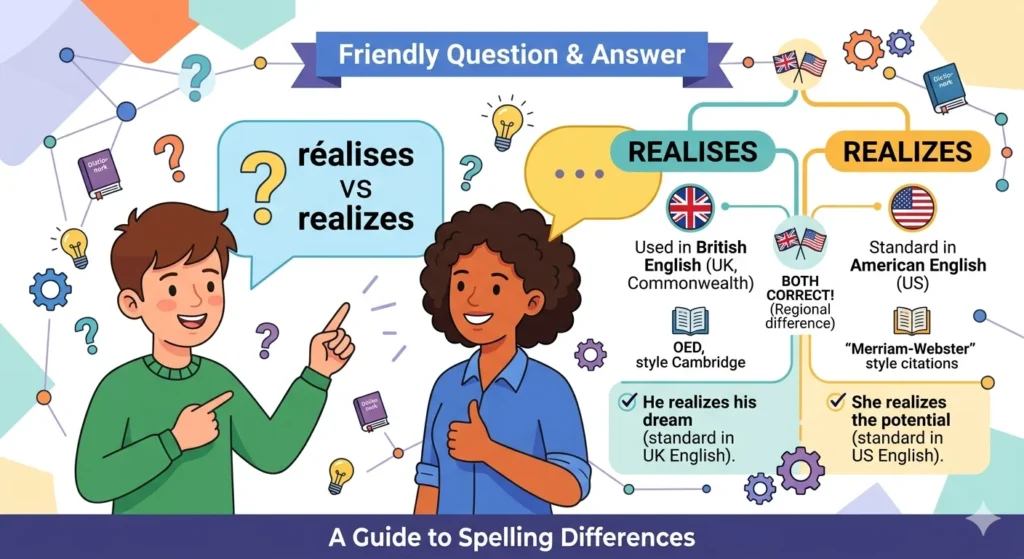
Both “realises” and “realizes” are correct. The difference depends on the type of English you are using:
- Realises → British English
- Realizes → American English
Examples:
- 🇬🇧 British English: She realises her mistake too late.
- 🇺🇸 American English: She realizes her mistake too late.
👉 So if you’re asking:
Which is correct, realised or realized?
Both are correct—just choose based on your audience.
👉 I just realised or realized?
- UK/Commonwealth → I just realised it.
- US → I just realized it.
👉 Realize or realise past tense:
- Realised (UK)
- Realized (US)
Have you ever typed a sentence and suddenly paused—is it “realises” or “realizes”? 🤔 You’re not alone. This tiny spelling difference confuses millions of writers every day. Whether you’re drafting an email, writing a blog post, or posting on social media, choosing the wrong version can make your writing feel inconsistent or even incorrect.
People search for “realises vs realizes” because both spellings look right—and the truth is, they are. The confusion comes from differences between British English and American English, not from grammar mistakes. Still, using the wrong version for your audience can affect your credibility, especially in professional or academic writing.
In this guide, you’ll get a clear, quick answer, plus deeper insight into origins, usage, and real-life examples. By the end, you’ll confidently know which spelling to use, when to use it, and why it matters.
The Origin of Realises vs Realizes
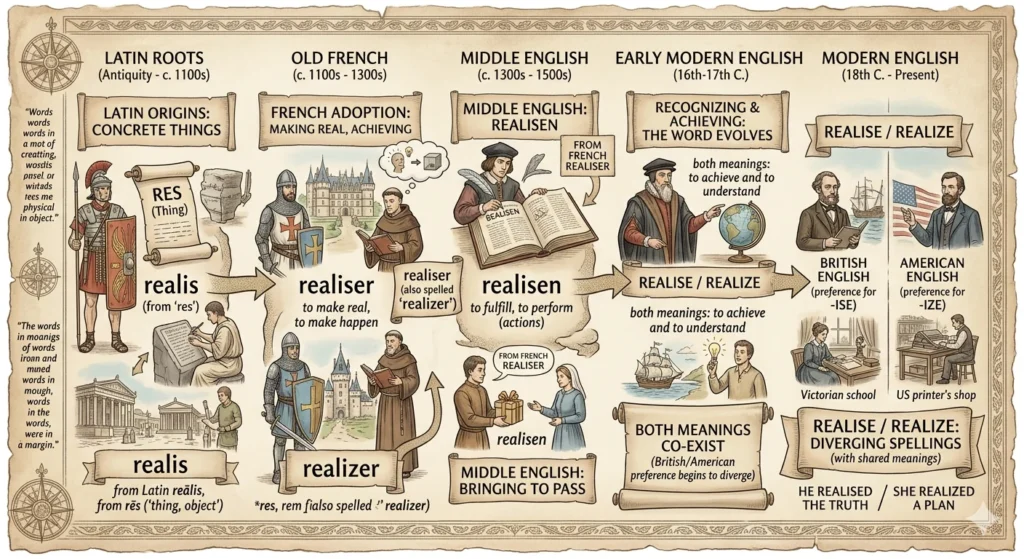
The word comes from the verb “realise/realize,” which means:
👉 Realise meaning: to understand something clearly or become aware of it.
Example:
- He didn’t realise the truth until later.
Word History:
- Originates from French “réaliser”
- Root traces back to Latin “realis” meaning “actual” or “real”
Why Two Spellings Exist
The split happened due to spelling standardization:
- British English kept “-ise” endings
- American English adopted “-ize” endings for consistency
Interestingly, Oxford English Dictionary allows both:
👉 Realise or realize Oxford dictionary?
Both are accepted, but -ize is often preferred in formal Oxford style.
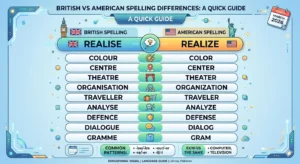
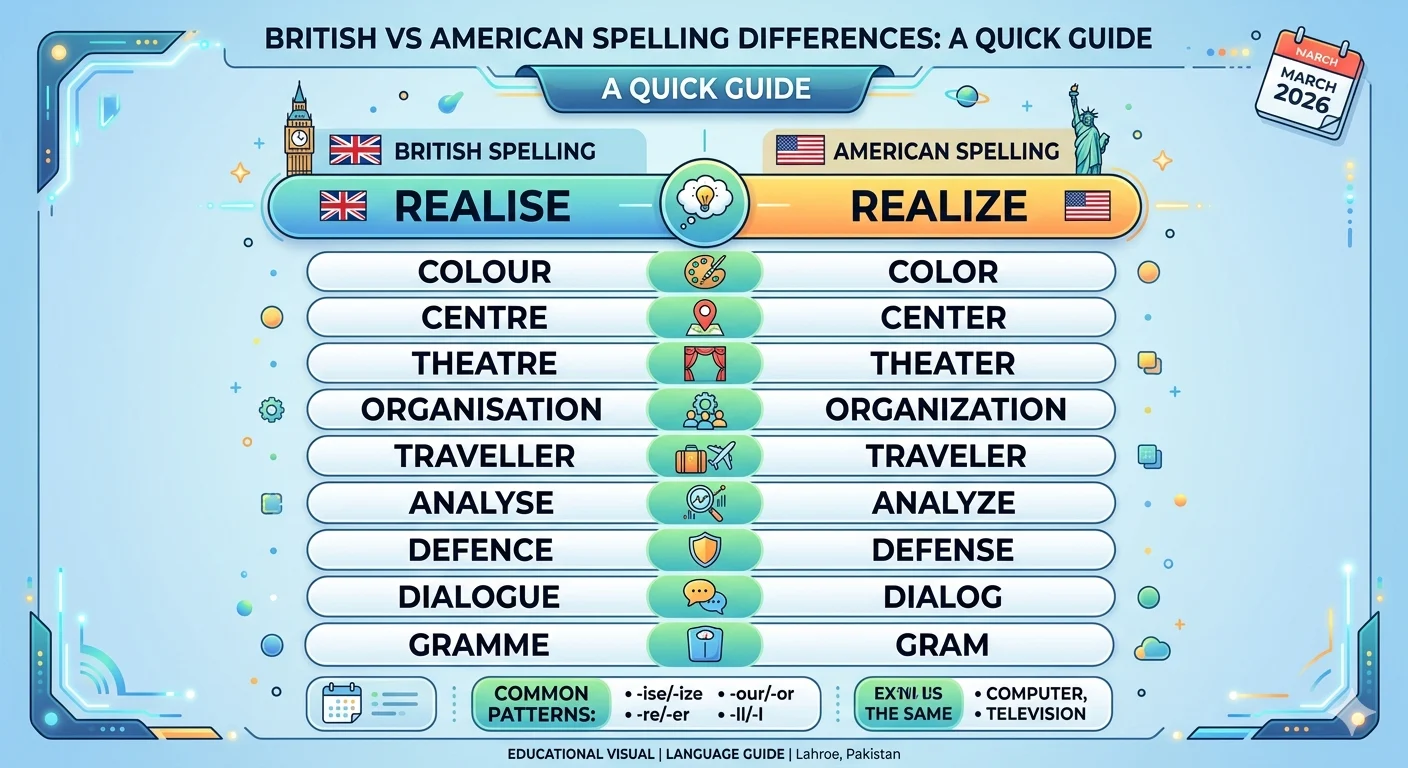
British English vs American English Spelling
The difference between realises vs realizes is part of a larger spelling pattern.
| Feature | British English | American English |
|---|---|---|
| Verb ending | -ise | -ize |
| Example | realise | realize |
| Past tense | realised | realized |
| Continuous | realising | realizing |
More Examples:
- Organise vs Organize
- Recognise vs Recognize
- Analyse vs Analyze
👉 Realise or realize UK?
In the UK, both exist, but “realise” is more common.
👉 Realizing or realising synonym?
Both mean the same: becoming aware, understanding, noticing.
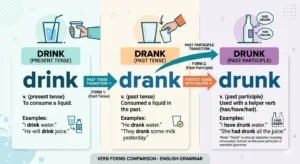
Drunk Vs Drank ✍️ The Real Difference Explained Fast
Which Spelling Should You Use?
Choosing between realises vs realizes depends on your audience.
Use “Realises” if:
- You write for UK, Pakistan, India, Australia
- You follow British English style guides
Use “Realizes” if:
- Your audience is in the United States
- You write for American companies or platforms
For Global Content:
Pick one style and stay consistent.
👉 Pro Tip:
If your blog targets international readers, British English (“realise”) is widely accepted across Commonwealth countries.
Common Mistakes with Realises vs Realizes
Here are mistakes many writers make:
❌ Mixing styles
- She realizes her mistake and later realises the truth.
✔ Fix: Stick to one style
❌ Wrong tense confusion
- He realize yesterday
✔ Fix: He realized (US) / realised (UK) yesterday
❌ Confusing meaning
👉 What is the meaning of realises?
It means “to become aware,” not “to make real.”
❌ Confusing with “aware”
👉 What is the difference between realise and aware?
- Realise → action (moment of understanding)
- Aware → state (already knowing)
✔ Example:
- I realised the problem. (moment)
- I am aware of the problem. (state)
Realises vs Realizes in Everyday Examples
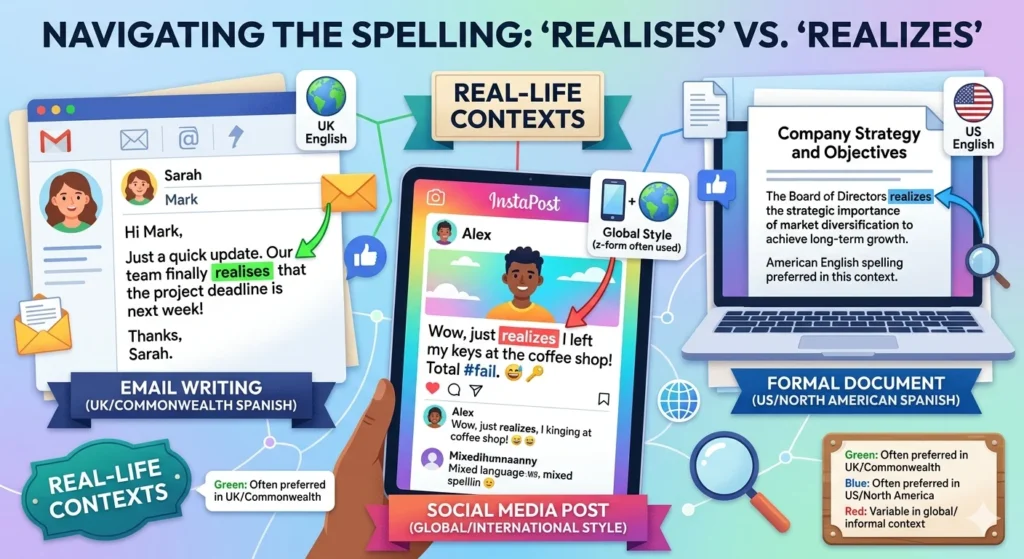
Let’s see how these words appear in daily life:
📧 Emails
- UK: I realised the error in the report.
- US: I realized the error in the report.
📰 News Writing
- The company realised its losses late. (UK)
- The company realized its losses late. (US)
📱 Social Media
- I just realised I forgot my keys 😅
- I just realized I forgot my keys 😅
🎓 Formal Writing
- Academic (UK): The researcher realises the significance.
- Academic (US): The researcher realizes the significance.
👉 Realise meaning and sentence:
- She realises her potential after years of doubt.
Realises vs Realizes – Google Trends & Usage Data
Search trends show clear regional preferences:
- 🇺🇸 United States → “realizes” dominates
- 🇬🇧 UK & Commonwealth → “realises” preferred
- 🌍 Global mix → both used widely
Key Insight:
- American websites use “realizes” more often
- International blogs often prefer “realise”
👉 Tip:
Use both variations naturally in content to capture wider search traffic.
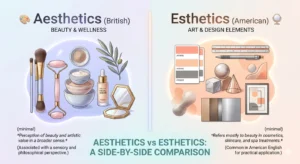
Aesthetics Vs Esthetics 🧠 One Small Difference
Comparison Table: Realises vs Realizes
| Aspect | Realises | Realizes |
|---|---|---|
| Region | UK, Commonwealth | USA |
| Spelling style | British English | American English |
| Meaning | Same | Same |
| Example | She realises it | She realizes it |
| Past tense | Realised | Realized |
| Continuous | Realising | Realizing |
FAQs About Realises vs Realizes
1. Which is correct, realised or realized?
Both are correct. Use realised (UK) or realized (US) depending on your audience.
2. Is “realised” just a British spelling?
Yes, mainly. It’s the preferred spelling in British English.
3. What is the meaning of realises?
It means to become aware of something or understand it clearly.
4. I just realised or realized—what’s correct?
Both are correct. Choose based on region:
- UK → realised
- US → realized
5. Realize or realise past tense?
- UK → realised
- US → realized
6. Realised or realised pronunciation?
Pronunciation is the same in both versions:
👉 /ˈrɪə.laɪz/ or /ˈriː.ə.laɪz/
7. Realising or realizing—which one is better?
Neither is better. Use:
- Realising (UK)
- Realizing (US)
Conclusion
The difference between realises vs realizes is simple but important. Both spellings mean the same thing—to become aware or understand something. The only real difference lies in regional spelling preferences.
If you write for a British or international audience, “realises” will feel natural and correct. If your readers are American, “realizes” is the better choice. The key is consistency—don’t mix both styles in the same piece.
Understanding this distinction helps you write with clarity and confidence. It also improves your professionalism, especially in emails, blogs, and academic work. Even small spelling choices can shape how your writing is perceived.
So next time you pause and wonder—realises or realizes?—you’ll know exactly what to do. Pick your audience, stay consistent, and your writing will always feel polished and correct.

Sarah Hall, a passionate voice at SimileHub.com, blends poetic depth with clear guidance to help writers craft vivid imagery and unforgettable expressions.