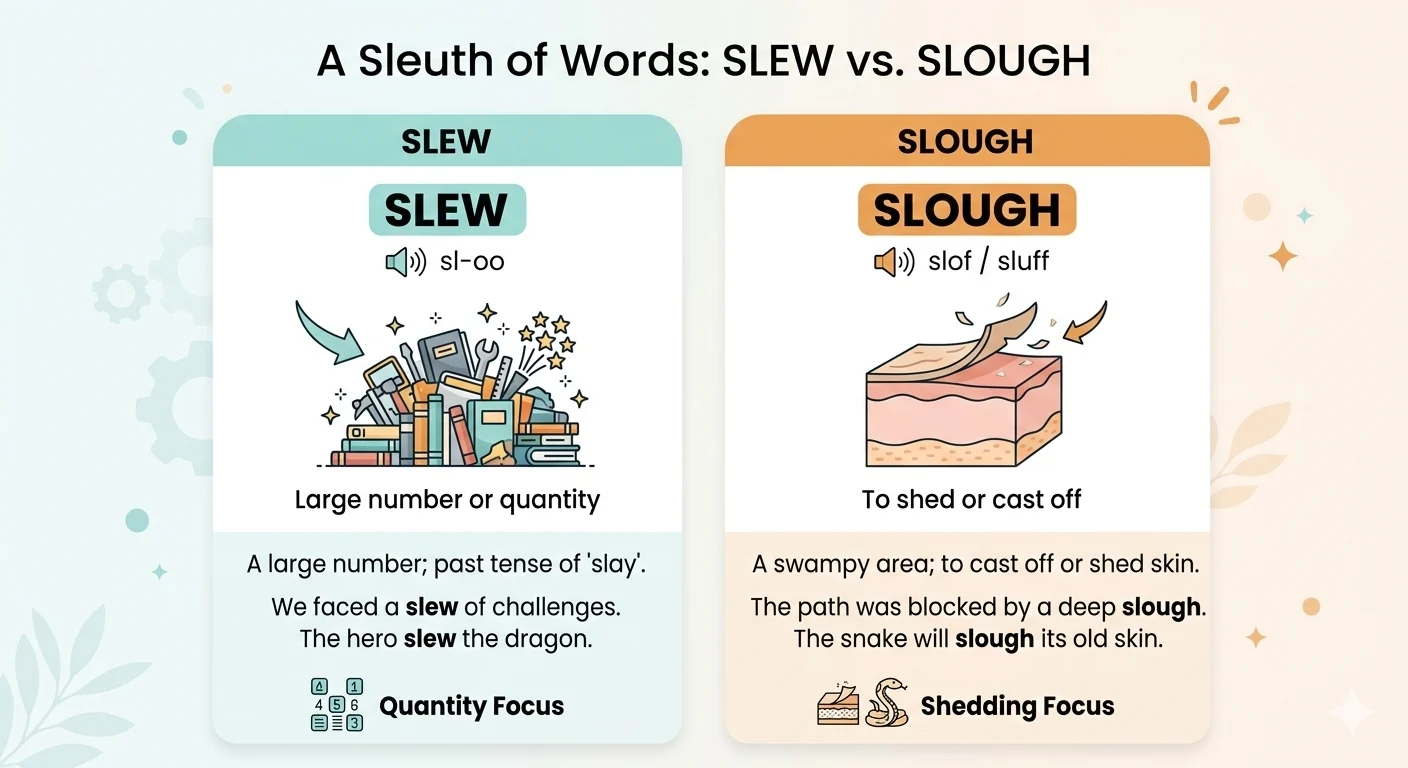
Slew and slough are completely different words with different meanings and pronunciations.
- Slew usually means a large number or to turn or slide suddenly.
- Slough means to shed or remove something, a swampy area, or appears in certain place names with unique pronunciation.
Examples
- She received a slew of emails this morning.
- The car slewed across the wet road.
- Snakes slough their skin as they grow.
- The traveler crossed a muddy slough of water.
If you mean “many,” the correct word is slew, not slough.
English words often look similar but carry very different meanings, and slew vs slough is a perfect example of this confusion. Many writers, students, and even native speakers search this topic because both words appear in news articles, books, and everyday speech — yet they sound different and mean completely different things. People often ask questions like Is it a slew or a slough? or wonder why one word can even have multiple pronunciations. The confusion increases when phrases like a whole slew of things or place names such as Slough of Despond appear in reading.
This guide solves that confusion in simple language. You will learn the meanings, origins, pronunciation rules, spelling differences, and correct usage through clear examples. By the end, you will confidently understand when to use each word and avoid common mistakes.
The Origin of Slew vs Slough
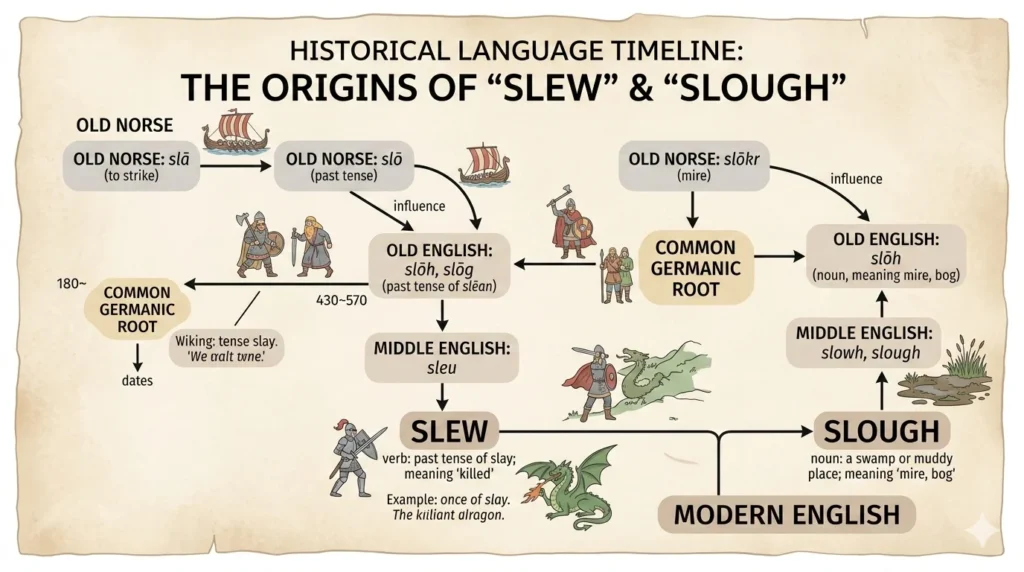
Understanding history makes the difference clearer.
Origin of Slew
The word slew comes from Old Norse slœgja, meaning “to turn.” Over time, English speakers began using it to describe sudden sideways movement. Later, in American English, it developed an informal meaning: a large quantity. That is why phrases like slew of people or slew meaning many became common in newspapers and conversation.
Origin of Slough
Slough has Old English roots from slōh, referring to mud or marshland. The word later gained another meaning: shedding dead skin or tissue. In medical and biological contexts, it still means removal or peeling away.
The spelling differences exist because English borrowed words from different languages at different times. Even though the words look alike today, they evolved separately.
British English vs American English Spelling
Unlike many spelling debates, slew vs slough is not mainly about British or American spelling. Instead, pronunciation and usage vary more than spelling.
| Feature | Slew | Slough |
|---|---|---|
| Main Meaning | Many or sudden movement | Shed skin, swamp, or place name |
| Common in US | Very common | Less common |
| Common in UK | Common | Common in geography |
| Pronunciation | /sloo/ | /sluff/, /slow/, or /sloo/ (depends on context) |
| Informal Use | Yes | Rare |
Pronunciation Differences
- Slew always sounds like sloo.
- Slough changes pronunciation:
- sluff (to shed skin)
- slow (town in England)
- sloo (wetland meaning in some regions)
This variety causes major confusion for learners.
Que vs Cual 📘 The Hidden Difference Made Simple
Which Spelling Should You Use?
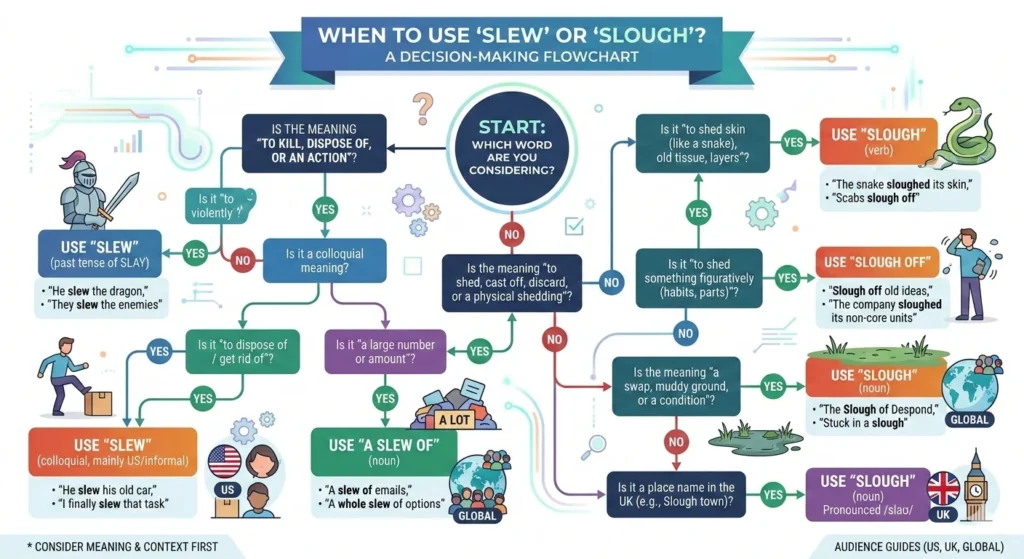
Choosing the correct word depends on meaning and audience.
Use Slew When:
- You mean many or a large number.
- Writing emails, blogs, or social media posts.
- Saying phrases like a whole slew of things or slew of people.
Use Slough When:
- Talking about biology or shedding skin.
- Describing wetlands or geography.
- Referring to specific names like Slough of Despond.
Audience Advice
| Audience | Recommended Usage |
|---|---|
| US readers | Prefer slew for quantity |
| UK readers | Both appear, but meanings differ |
| Global audience | Use slew for clarity |
| Academic writing | Use precise meaning only |
If unsure, remember: quantity equals slew.
Common Mistakes with Slew vs Slough
Many errors happen because writers rely on spelling similarity.
Mistake 1: Using slough to mean many
❌ I have a slough of assignments.
✅ I have a slew of assignments.
Mistake 2: Mispronouncing slough
People often say it like slew, which is not always correct.
Mistake 3: Confusing verb meanings
- Slew = turned sharply.
- Slough = shed or removed.
Mistake 4: Mixing slang meanings
Both words have informal uses, but only slew commonly means “many.”
Mistake 5: Spelling confusion with slue
Some writers type slue instead of slew.
Slew vs Slough in Everyday Examples

Seeing real-life contexts makes usage easier.
Emails
- We received a slew of responses after the announcement.
News Writing
- The storm caused a slew of delays across the city.
Social Media
- I bought a whole slew of things during the sale.
Formal Writing
- The snake begins to slough its outer skin annually.
Casual Conversation
- There were a slew of people at the concert.
Slew vs Slough – Google Trends & Usage Data
Search behavior shows strong differences in usage.
- Slew is searched mostly in North America and online writing contexts.
- Slough trends higher in the UK due to geographic references.
- Learners worldwide search pronunciation questions, especially about Pronounce Slough of Despond.
People commonly search:
- slew meaning many
- slew of water
- slew or slue
- slew vs slough meaning
The data suggests confusion comes mainly from pronunciation and informal quantity usage.
Pizzaria Vs Pizzeria 🍕 Why Everyone Confused?
Comparison Table: Slew vs Slough vs Slue
| Word | Meaning | Part of Speech | Pronunciation | Example |
|---|---|---|---|---|
| Slew | Many; turned suddenly | Noun/Verb | sloo | A slew of messages arrived |
| Slough | Shed skin; swamp | Noun/Verb | sluff/slow/sloo | The snake sloughs skin |
| Slue | Variant spelling of slew | Verb | sloo | The boat slued sideways |
Understanding Slang Meanings

What does “slew” mean in slang?
In informal English, slew means “a lot” or “many.”
Example: I have a slew of ideas for the project.
What does “slough” mean in slang?
Slough rarely appears in slang. Sometimes people use it metaphorically to mean removing emotional baggage, but this is uncommon.
Pronunciation Guide: Slough of Despond

The phrase Slough of Despond comes from classic literature and is pronounced:
“sluff of dih-SPOND.”
It represents a place of sadness or struggle, not quantity.
Expanded Usage Examples
A Whole Slew of Things
Used to describe many items casually:
- She packed a whole slew of things for the trip.
Slew of People
Common in journalism:
- A slew of people attended the event.
Slew Meaning Many
Often replaces “many” in conversational English.
Slew of Water
Used when describing movement:
- The boat hit a slew of water during the storm.
FAQs
1. Is it a slew or a slough?
Use slew when you mean many. Use slough for shedding skin or swampy land.
2. What is a slew of something?
It means a large number or quantity of things or people.
3. What does slough mean in slang?
It rarely has slang meaning; mostly it means shedding or marshland.
4. What does slew mean in slang?
It informally means “a lot” or “many.”
5. Slew vs slough vs slue — what is the difference?
Slew means many or turning; slough means shedding or swamp; slue is a spelling variant of slew.
6. Slew or slue — which is correct?
Modern English prefers slew.
7. Why is slough pronounced differently?
Because it developed multiple meanings from Old English roots and place names.
Conclusion
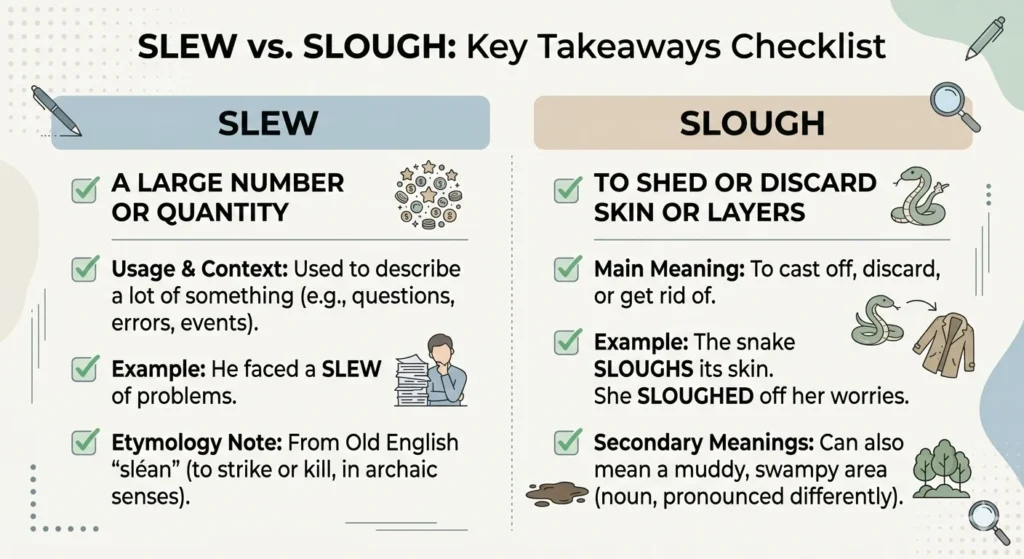
Understanding slew vs slough becomes easy once you focus on meaning instead of spelling similarity. Slew is the word you need when talking about large numbers, especially in everyday speech, journalism, or informal writing. Phrases like a whole slew of things or slew of people are widely accepted and easy for global readers to understand. On the other hand, slough belongs to specialized contexts such as biology, geography, or literature. Its multiple pronunciations make it confusing, but remembering that it relates to shedding or marshland helps prevent mistakes.
Writers often confuse these words because English mixes influences from many languages. However, clarity improves when you match the word to its purpose. If your sentence means “many,” choose slew. If it refers to shedding or wetlands, choose slough. With practice and awareness of pronunciation differences, you can use both words confidently and accurately in emails, articles, and daily communication.

Ali Smith, a passionate language artist at SimileHub.com, turns simple words into vivid imagery, helping writers express emotions with beauty and clarity.