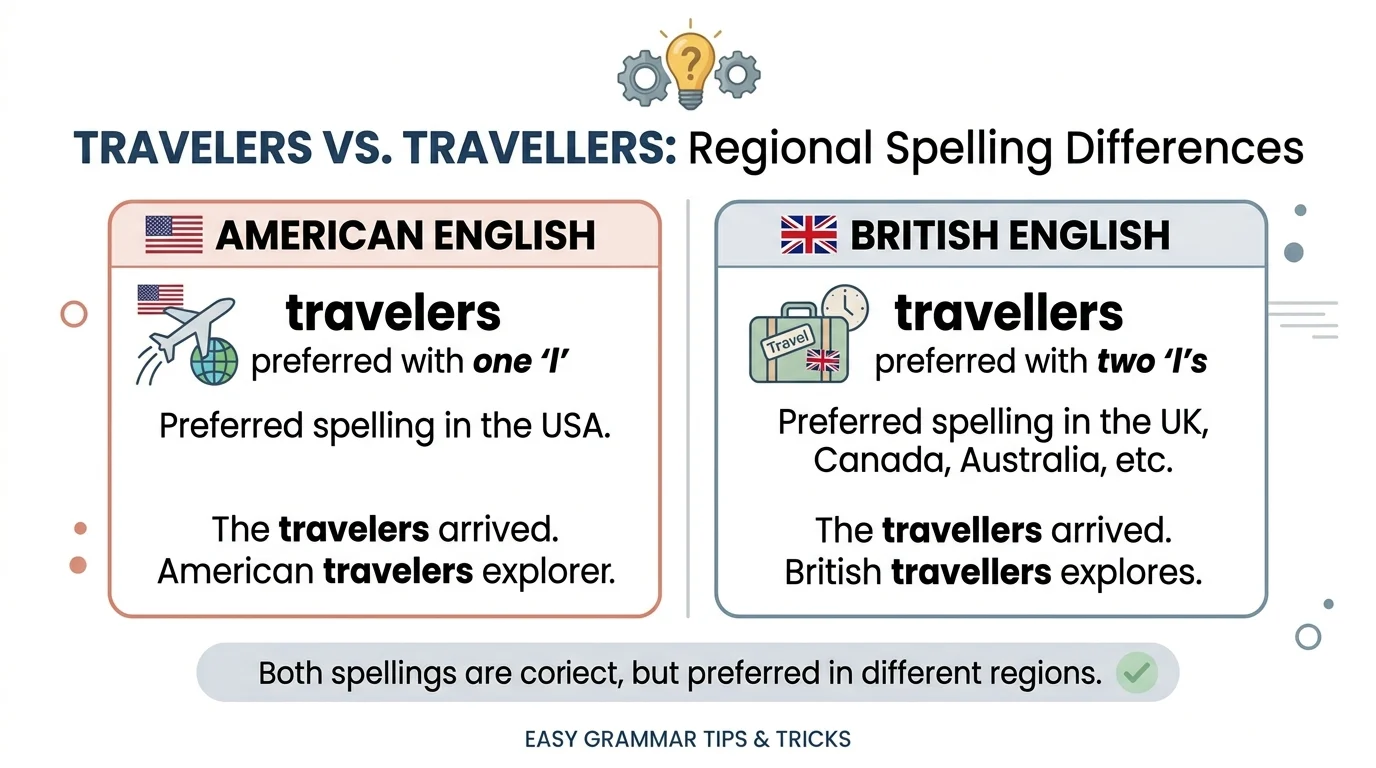
Travelers is American English spelling, while travellers is British English spelling. Both mean people who travel.Both spellings are correct.
Travelers is American English.
Travellers is British English.
Examples:
- American: Many travelers visit New York every year.
- British: Many travellers visit London every year.
Travelers vs Travellers — Quick Difference
| American | British |
|---|---|
| travelers | travellers |
The meaning is the same: people who travel from one place to another.
You are writing an email, a school paper, or a blog post. Then you pause. Is it travelers or travellers? One word, two spellings, same meaning — and lots of confusion. Many people search this because English changes across countries. What looks wrong in one place is perfectly correct in another. This small spelling difference can affect exams, professional writing, and even search results online.
If you use the wrong version for your audience, it may look like a mistake. The good news? The rule is simple once you see it. This guide clears the confusion, shows examples, and explains where each spelling belongs. By the end, you will feel confident choosing the right word every time you write.
The Origin of travelers vs travellers
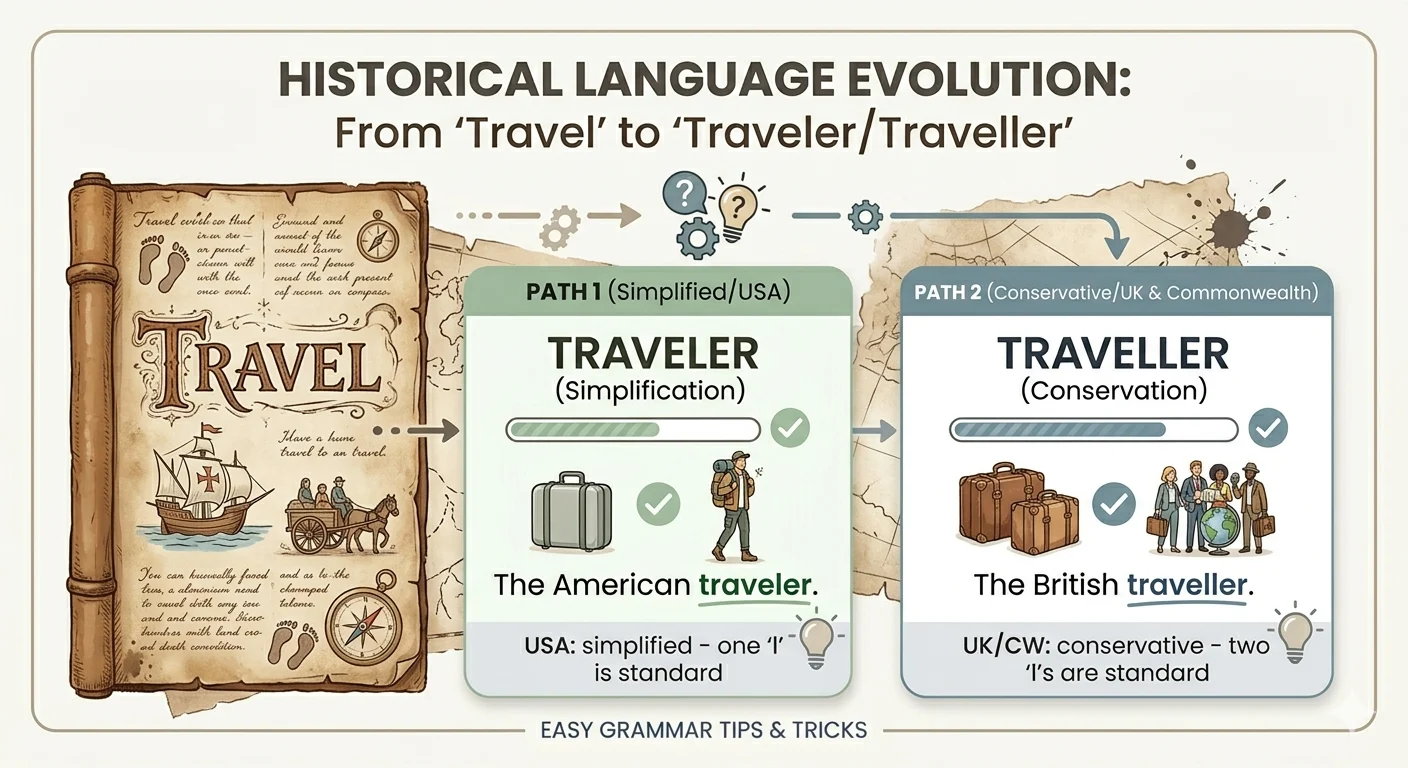
The word comes from the verb travel, which means to go from one place to another. It entered English from Old French many centuries ago. Over time, English spelling changed in different regions.
British English often keeps double consonants when adding endings like -er or -ing. So travel becomes traveller and travelling.
American English simplified many spellings in the 1800s. Language reformers wanted writing to be shorter and easier. So Americans dropped one L in some words. That is how traveler and traveling became standard in the United States.
Both forms grew naturally. No spelling is more correct. The difference is regional, not grammatical.
British English vs American English Spelling
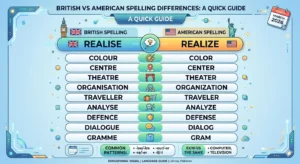
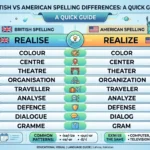
English has two main spelling systems: British and American. This word follows the same pattern seen in many others.
| British English | American English |
|---|---|
| traveller | traveler |
| travelling | traveling |
| cancelled | canceled |
| labelled | labeled |
| modelling | modeling |
British English often doubles the final consonant before adding a suffix. American English often uses a single consonant.
Key idea: If your audience is American, use travelers. If British or international outside the US, travellers is common.
Seams vs Seems: The Secret Difference You Must Know 🤫
Which Spelling Should You Use?
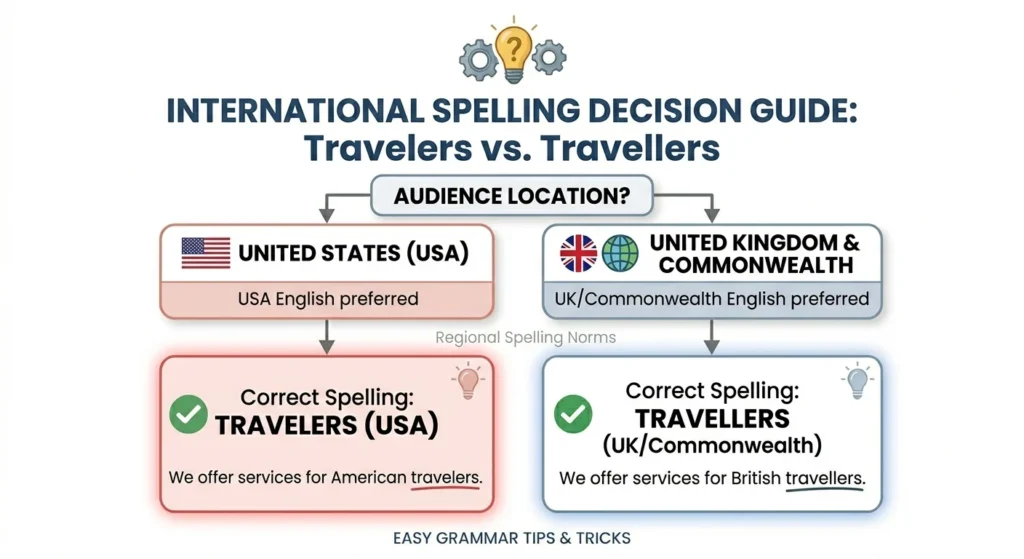
Choose based on your audience.
Use travelers when:
- Writing for the United States
- American schools or exams
- US websites or companies
- American news style
Use travellers when:
- Writing for the UK
- Australia, Canada, New Zealand
- British exams
- UK news or publications
For global audiences: Pick one style and stay consistent. Many international brands choose American spelling, but British spelling is also widely accepted.
Consistency matters more than the choice.
Common Mistakes with travelers vs travellers
- Mixing both spellings in one article
Wrong: Travelers need insurance. Many travellers forget.
Right: Use one style only. - Thinking one spelling is wrong
Both are correct. The difference is location. - Spelling errors
Wrong: travlers, travelars, traveleers
Correct: travelers or travellers - Using the wrong version for exams
British exam? Use travellers.
American test? Use travelers. - Confusing traveller vs tourist
A traveller is anyone who travels. A tourist travels for pleasure.
travelers vs travellers in Everyday Examples
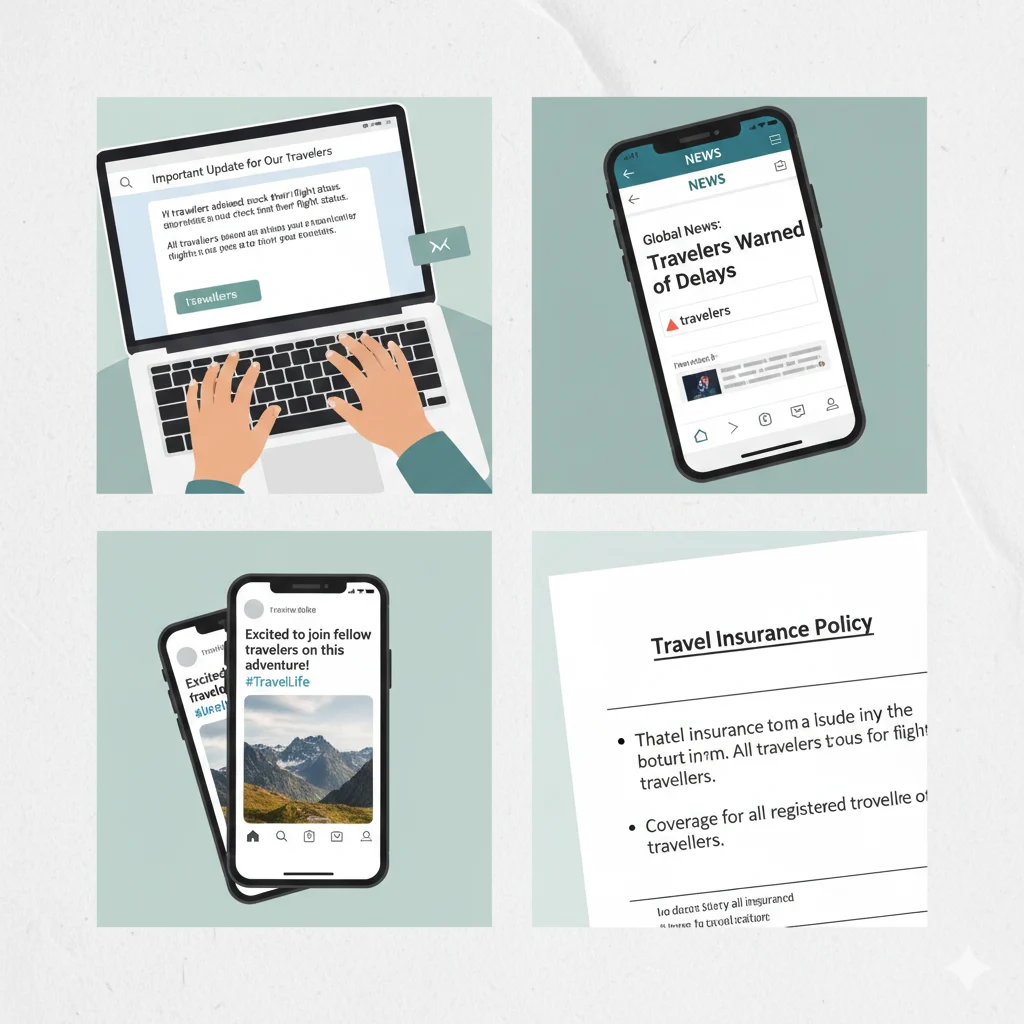
Email:
Dear travelers, please arrive two hours early.
British email:
Dear travellers, please arrive two hours early.
News:
Airlines expect more travelers this summer.
Social media:
Solo travellers share tips online.
Formal writing:
Insurance is important for international travelers.
Gaming and culture:
In Genshin Impact, the main character is called the Traveller in global English style.
travelers vs travellers – Google Trends & Usage Data
Search popularity depends on country. The United States searches mostly use travelers. The UK, Australia, and many Commonwealth countries search for travellers. Online stores, airlines, and travel blogs adjust spelling for their audience.
American websites often rank higher for travelers. British tourism sites prefer travellers. The difference helps search engines understand location and audience.
In global topics like travel safety, both spellings appear. Search engines treat them as the same meaning.
Wife’s vs Wives – Are You Using It Wrong? 🤔
Keyword Variations Comparison
| Term | Meaning | Region |
|---|---|---|
| travelers | people who travel | US |
| travellers | people who travel | UK/Commonwealth |
| traveller meaning | definition of the word | global search |
| traveller synonym | words like tourist, explorer | global |
| travellers vs travelers uk | spelling question | UK users |
| traveler spelling in American English | spelling rule | US |
| traveller or traveler synonym | vocabulary help | global |
FAQs
Is it travelers or travellers?
Both are correct. The spelling depends on the country.
Does traveller have two L’s?
Yes, in British English it has two L’s.
Is “travellers” the correct term?
Yes, in British English it is correct.
How do you spell traveller in the UK?
Travellers with double L.
Traveler spelling in American English?
Travelers with one L.
Traveller vs tourist difference?
A tourist travels for fun. A traveller may travel for any reason.
Are both spellings accepted online?
Yes, but choose one style for consistency.
Conclusion
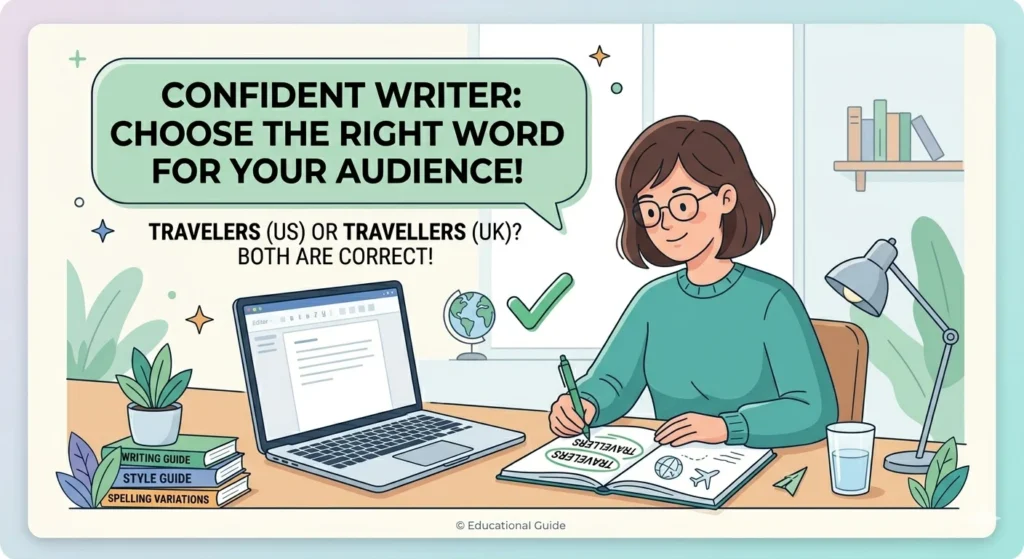
The difference between travelers and travellers is simple but important. Both words mean people who travel. The only change is regional spelling. American English uses one L. British English uses two L’s. This rule matches other words like canceled and cancelled. Always think about your audience before choosing. Exams, professional writing, and websites should match their language style.
Mixing spellings can look unprofessional, even though both are correct. Search engines also notice spelling and connect it with location. When writing for global readers, pick one version and stay consistent from start to finish. Understanding this small rule helps you write clearly and confidently. Now you never need to pause and wonder again which spelling to use.

Tessa Hadley, a reflective voice at SimileHub.com, transforms everyday moments into vivid imagery, guiding writers to create powerful, expressive comparisons.