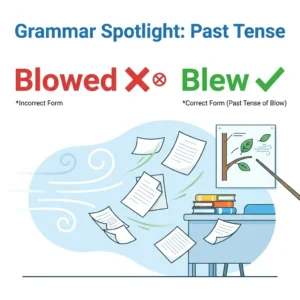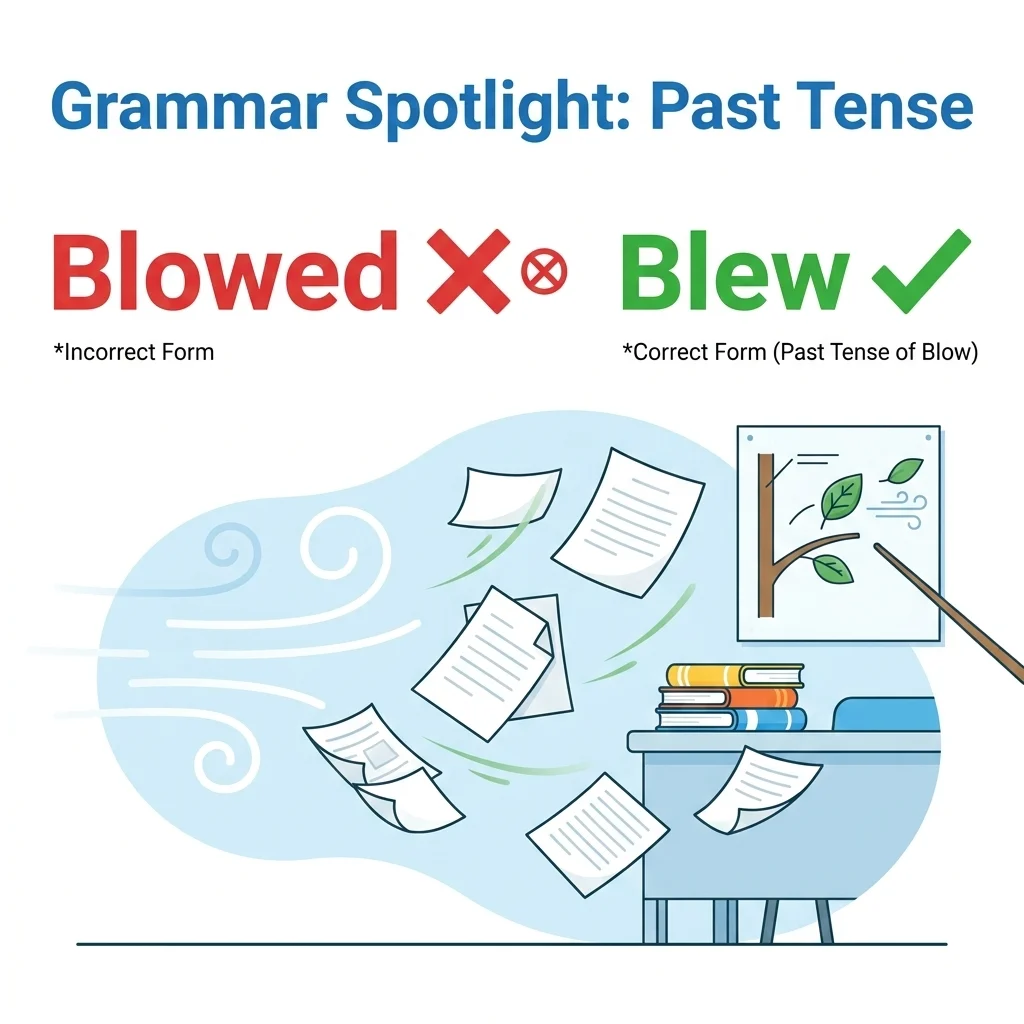
“Blew” is correct. “Blowed” is incorrect in standard English.
The past tense of blow is blew, not blowed.
✔ He blew out the candles.
✔ The wind blew hard last night.
❌ He blowed out the candles.
Many people search “blowed vs blew” because they hear “blowed up” in movies, songs, or casual speech. But in proper grammar, blew is the correct past tense.
If you’re wondering:
- Is it blowed up or blew up? → ✅ Blew up
- Blowed or blew past tense? → ✅ Blew
- Is it blew or blown? → Past = blew, Past participle = blown
Now let’s understand why this confusion happens.
Have you ever typed “blowed up” and felt unsure? You’re not alone. Thousands of people search blowed vs blew every month because English verbs can be tricky. Some verbs add “-ed” for past tense, like worked or played. So it feels natural to say blowed. But English is full of irregular verbs — and blow is one of them.
This article clears the confusion in simple words. You will learn the correct past tense, why “blowed” sounds common but is wrong, how British and American English treat it, and how to use it correctly in emails, school work, and social media.
We will also answer common questions like:
- What does “blowed” mean?
- What is the meaning of blowed or blew?
- Is it blowed up or blew up?
- Blew pronunciation?
- Blue and blew pronunciation difference?
Let’s make it clear once and for all.
Blowed vs Blew – Explained
The verb blow is irregular.
| Base Form | Past Tense | Past Participle |
|---|---|---|
| Blow | Blew | Blown |
Correct Examples:
- The balloon blew away.
- She blew the whistle.
- The storm blew the roof off.
Incorrect:
- The balloon blowed away.
- He blowed up the fire.
Is it blowed up or blew up?
✔ The bomb blew up.
❌ The bomb blowed up.
Is it blew or blown?
- Yesterday, he blew the candles. (Past)
- He has blown the candles. (Past participle)
The Origin of Blowed vs Blew
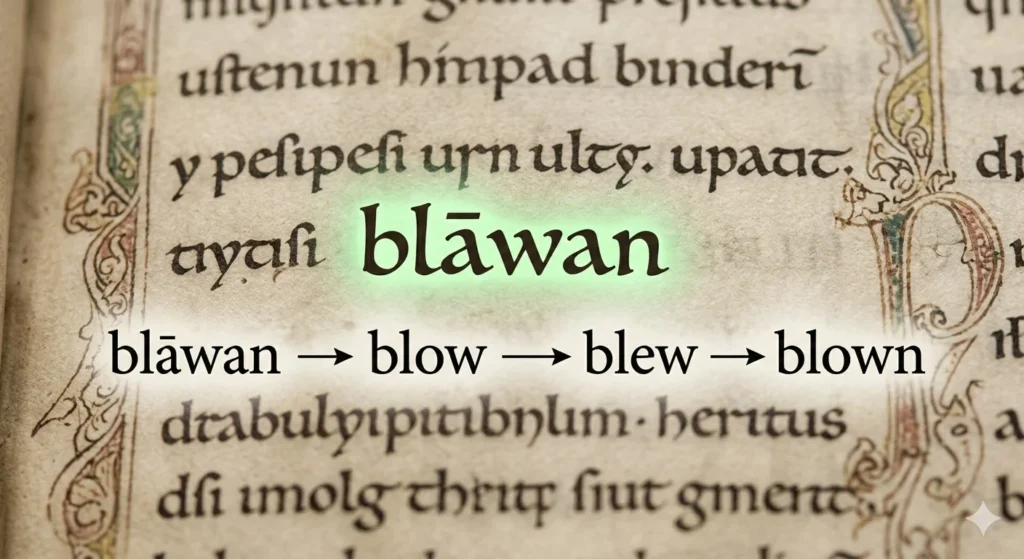
The verb blow comes from Old English blāwan. In early English, many verbs changed vowels instead of adding “-ed.” These are called strong verbs.
Examples of strong verbs:
- Sing → Sang → Sung
- Go → Went → Gone
- Blow → Blew → Blown
Over time, English kept these irregular forms. That is why we say blew, not blowed.
“Blowed” sometimes appears in dialect speech, storytelling, or informal talk. It is not standard grammar.
This is similar to:
- Past tense of cut → Cut (not cutted)
- Go → Went (not goed)
English keeps many old patterns.
British English vs American English Spelling
Good news: There is no difference between British and American English here.
Both use:
- ✔ Blew
- ✔ Blown
- ❌ Blowed (informal only)
Unlike words such as color/colour, the past tense of blow is the same worldwide.
Comparison Table
| Version | American English | British English | Correct? |
|---|---|---|---|
| Blew | ✔ Yes | ✔ Yes | Correct |
| Blown | ✔ Yes | ✔ Yes | Correct |
| Blowed | ❌ No | ❌ No | Incorrect |
So whether you are in the US, UK, Pakistan, or anywhere else, use blew.
Being vs Beeing: The Shocking Truth Revealed ⚡
Which Spelling Should You Use?

If you are writing for:
- 🇺🇸 US audience → Use blew
- 🇬🇧 UK audience → Use blew
- 🌍 Global readers → Use blew
Use blown with “has,” “have,” or “had.”
Examples:
- The wind blew all night.
- The tire has blown out.
- The engine had blown before we arrived.
Never use “blowed” in:
- Exams
- Emails
- Business writing
- News articles
- Academic papers
You may hear it in movies or casual speech, but avoid it in formal writing.
Common Mistakes with Blowed vs Blew
1. Saying “Blowed up”
Wrong: The car blowed up.
Correct: The car blew up.
2. Mixing Blew and Blown
Wrong: He has blew it.
Correct: He has blown it.
3. Confusing Blue and Blew
Blue = color
Blew = past of blow
They sound the same. This causes spelling mistakes.
Blew Pronunciation
Blew = /bluː/
Blue = /bluː/
Same sound. Different meaning.
Blowed vs Blew in Everyday Examples
In Emails
✔ The system blew up after the update.
✔ The wind blew papers everywhere.
In News
“The explosion blew out windows across the street.”
In Social Media
“The storm blew my umbrella away!”
Blew sentence for class 1
- The wind blew fast.
- He blew a balloon.
Blowed or Blew in a sentence
Correct: She blew the whistle.
Incorrect: She blowed the whistle.
Blowed vs Blew – Google Trends & Usage Data
Search data shows that:
- “Blew” is widely used in all English-speaking countries.
- “Blowed” appears mostly in informal or regional searches.
- Many users search “Is it blowed up or blew up?” which shows confusion.
Countries where “blew” is most used:
- United States
- United Kingdom
- Canada
- Australia
“Blowed” appears more in casual speech searches, especially in storytelling contexts.
This proves that standard English strongly prefers blew.
Injust vs Unjust: The Shocking Grammar Secret 🔥
Comparison Table – Blowed vs Blew
| Feature | Blowed | Blew |
|---|---|---|
| Grammar Status | Incorrect (standard English) | Correct |
| Past Tense | ❌ No | ✔ Yes |
| Formal Writing | ❌ Avoid | ✔ Use |
| Spoken Dialect | Sometimes | Yes |
| Exams | ❌ Wrong | ✔ Correct |
FAQs About Blowed vs Blew
1. Is it blowed up or blew up?
It is blew up. “Blowed up” is incorrect.
2. What does “blowed” mean?
“Blowed” is a nonstandard form sometimes used in dialect speech. It is not correct grammar.
3. What is the meaning of blowed or blew?
“Blew” means the past of blow. Example: The wind blew.
“Blowed” has no correct standard meaning.
4. Is it blew or blown?
Past tense = blew
Past participle = blown
5. Blowed or blew past tense?
Correct past tense is blew.
6. Blue and blew pronunciation difference?
They sound the same. Same pronunciation, different meanings.
7. What is the past tense of cut?
It is cut, not cutted.
Conclusion
The confusion between blowed vs blew happens because English usually adds “-ed” to form the past tense. So “blowed” feels natural. But English has many irregular verbs, and blow is one of them. The correct past tense is blew, and the past participle is blown.
Both British and American English use the same form. There is no spelling difference worldwide. “Blowed” may appear in informal speech or storytelling, but it is not correct in exams, professional writing, or formal communication.
If you remember one simple rule, remember this:
Blow → Blew → Blown
Never use “blowed” in standard English.
Now you can confidently answer:
- Is it blowed up or blew up? → Blew up.
- Is it blew or blown? → Depends on the sentence.
- Blowed or blew past tense? → Blew.
Clear grammar builds strong writing. Use the correct form and write with confidence.

Ali Smith, a passionate language artist at SimileHub.com, turns simple words into vivid imagery, helping writers express emotions with beauty and clarity.