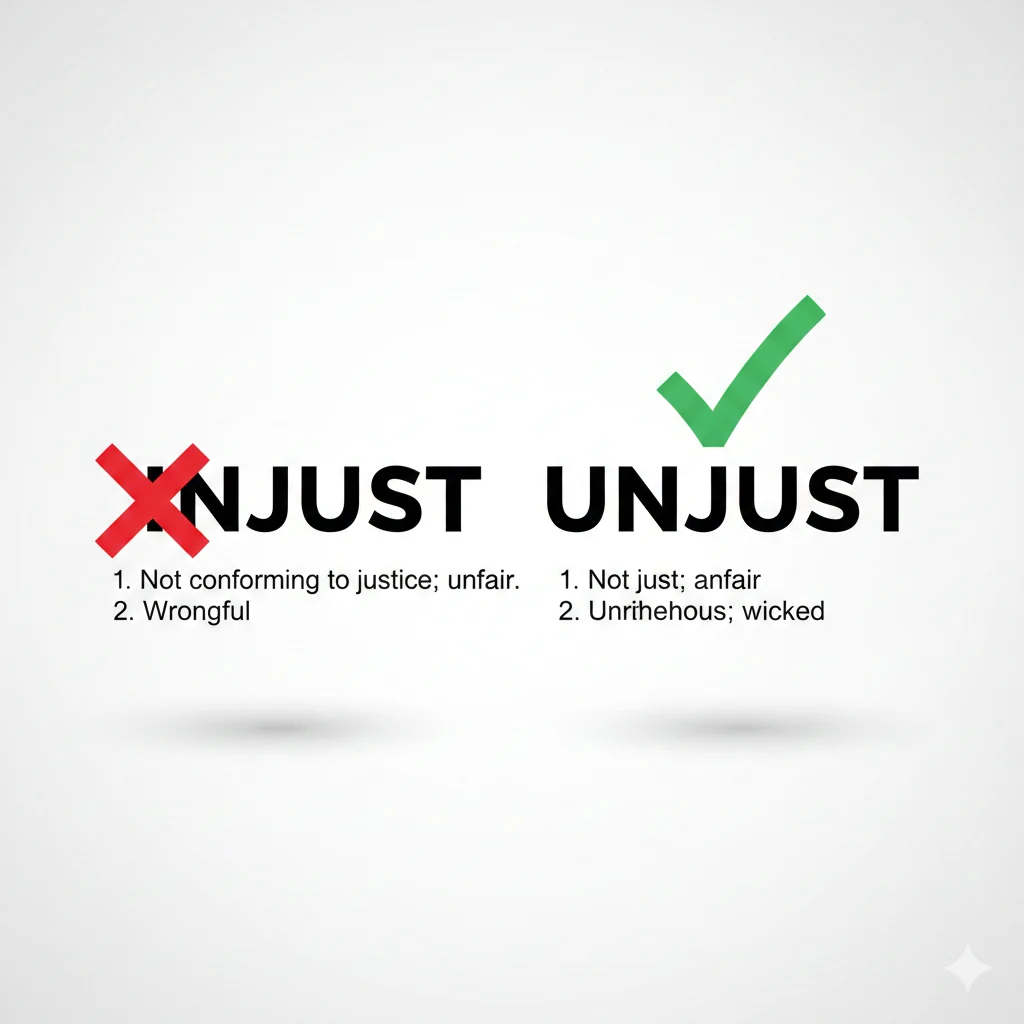
Injust vs Unjust: Unjust is the correct and widely used English word for something unfair, while injust is an obsolete or nonstandard form that is rarely used in modern English.
Have you ever seen the word injust and wondered whether it is a spelling mistake or a real English word? You’re not alone. Many writers, students, and English learners get confused when comparing Injust vs Unjust because the two words look nearly identical but are not used the same way.
The confusion often leads to writing errors that can make your work appear less accurate or less professional. The good news is that the difference is surprisingly simple. In modern English, unjust is the standard and accepted word used to describe something unfair, unreasonable, or contrary to justice. In contrast, injust is an outdated form that rarely appears in contemporary writing.
Understanding this distinction can help you avoid common grammar mistakes, write with greater confidence, and choose the correct word every time. It can also save you from second-guessing yourself when editing essays, articles, emails, or professional documents.
In this guide, you’ll learn the exact difference between Injust vs Unjust, why one word is preferred over the other, where the confusion comes from, and how to use the correct term with confidence in modern English.
The Origin of Injust vs Unjust
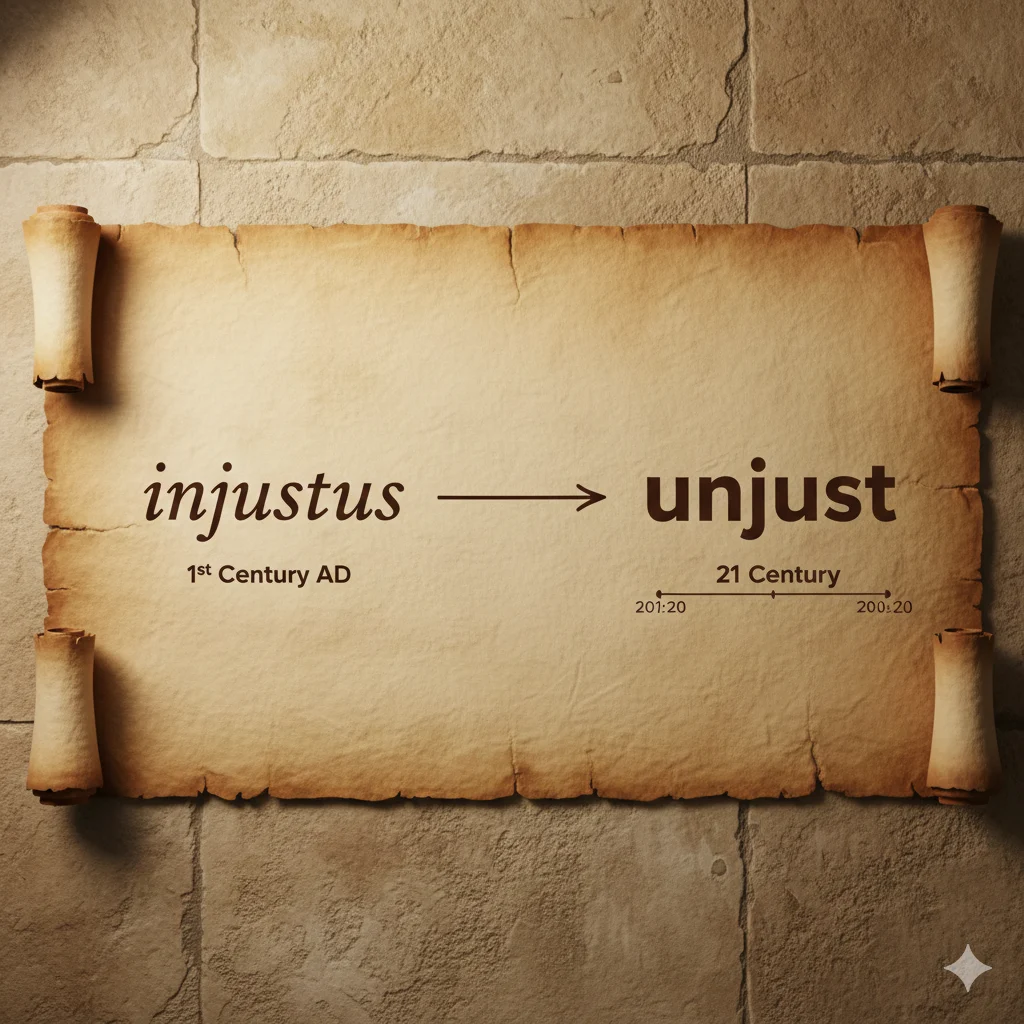
The word unjust comes from Latin. It comes from “injustus,” which means not just or unfair. Over time, English kept the spelling unjust instead of injust.
In early Latin, the prefix “in-” meant “not.” But when English adopted many Latin words, spelling changes happened. In some words, “in-” stayed. In others, it changed or blended with sound patterns.
That is why we have:
- unjust (correct form)
- injustice (noun form)
- unjustified (related adjective)
But we do not have injust as a proper word.
People sometimes create injust by removing letters from injustice. Others think it follows patterns like incorrect or incomplete. But English spelling does not always follow strict logic. That is why injust never became standard.
If you are wondering what is the meaning of injust, the answer is simple: it has no official meaning in modern English.
British English vs American English Spelling
Some users think injust vs unjust might be a British and American English spelling issue. But it is not.
Both British English and American English use unjust. Neither version accepts injust.
Here is a simple comparison:
| Word Form | American English | British English | Correct? |
|---|---|---|---|
| unjust | Yes | Yes | ✅ Yes |
| injust | No | No | ❌ No |
| injustice | Yes | Yes | ✅ Yes |
| unjustice | No | No | ❌ No |
Unjustice is another common misspelling. The correct noun form is injustice.
There is no spelling difference between the US and UK for unjust or injustice. So if you are writing for any audience, unjust is always correct.
Kids vs Kid’s: Why One Apostrophe Changes Everything ✍️
Which Spelling Should You Use?
The answer depends on correctness, not country.
If you are writing for:
- United States → Use unjust
- United Kingdom → Use unjust
- Canada or Australia → Use unjust
- Global audience → Use unjust
Never use injust in formal writing, emails, essays, or business documents.
If you mean the noun, use injustice.
If you mean the adjective, use unjust.
For example:
- The law is unjust.
- The law caused injustice.
Understanding the difference between injustice and unjust is important. Unjust describes something. Injustice names the unfair situation.
Common Mistakes with Injust vs Unjust

Here are frequent errors and how to fix them.
1. Writing “injust” instead of “unjust”
Wrong: The rule is injust.
Correct: The rule is unjust.
2. Confusing injustice and unjustice
Wrong: This is an unjustice.
Correct: This is an injustice.
Many people search for unjustice or injustice meaning. Remember: unjustice is incorrect. Injustice means unfair treatment.
3. Mixing unjust and unjustified
Some ask, what is the difference between unjust and unjustified?
Unjust means unfair.
Unjustified means not supported by reason.
Example:
The punishment was unjust.
The anger was unjustified.
4. Confusing injustice and unjust
What’s the difference between injustice and unjust?
Unjust = adjective (describes something unfair)
Injustice = noun (the unfair act or situation)
5. Searching for injust meaning
If you search unjust meaning, you will find the correct definition: unfair or morally wrong.
If you search for injust meaning, you will not find a real definition because it is not a valid word.
Injust vs Unjust in Everyday Examples

Let us look at how these words appear in daily life.
Emails
Formal:
We believe this policy is unjust and needs review.
News
Citizens protested against unjust laws.
Social Media
That decision feels unjust.
Academic Writing
The court ruling was unjust and led to public anger.
Conversation
It is unjust to blame her without proof.
Now look at noun use:
The community suffered a great injustice.
If you need the injustice adjective form, use unjust.
Injust vs Unjust – Google Trends & Usage Data
Search behavior shows that unjust is widely used in English-speaking countries like the United States, United Kingdom, Canada, and Australia.
Injust appears mostly in:
- Typing errors
- Autocorrect mistakes
- Non-native English writing
Many people also search:
- Is injust a word
- Unjust noun form
- Injustice adjective
- Unjust synonym
Common unjust synonyms include unfair, biased, wrongful, and cruel.
The noun form of unjust is injustice. There is no accepted noun called unjustice.
Sometimes strange searches appear like unjust undead unluck or unjust jewelry. These are often random keyword combinations or gaming terms, not standard dictionary meanings.
In real usage, unjust dominates formal and informal writing.
Being vs Beeing: The Shocking Truth Revealed ⚡
Comparison Table: Injust vs Unjust Variations
| Term | Part of Speech | Meaning | Correct? |
|---|---|---|---|
| unjust | Adjective | Not fair | ✅ Yes |
| injustice | Noun | Unfair act | ✅ Yes |
| unjustified | Adjective | Not justified | ✅ Yes |
| unjustice | Noun (wrong) | Misspelling | ❌ No |
| injust | None | Not a real word | ❌ No |
This table makes the difference clear and simple.
FAQs
1. Is injust a word?
No. Injust is not a standard English word.
2. What is the meaning of injust?
It has no official meaning. It is usually a spelling mistake of unjust.
3. What’s the difference between injustice and unjust?
Unjust describes something unfair. Injustice is the unfair act or situation.
4. What is the difference between injustice and unjustice?
Injustice is correct. Unjustice is incorrect spelling.
5. What is the difference between unjust and unjustified?
Unjust means unfair. Unjustified means not supported by reason.
6. What is the unjust noun form?
The noun form of unjust is injustice.
7. What is an unjust synonym?
Common synonyms include unfair, biased, wrongful, and immoral.
Conclusion

The confusion between injust vs unjust is easy to understand. The words look similar. But only one is correct. Unjust is a real English adjective that means unfair or morally wrong. Injust is not a standard word and should not be used in formal writing.
If you need a noun, use injustice. If you need an adjective, use unjust. Never write unjustice. It is a spelling error. Also remember the difference between unjust and unjustified. One means unfair. The other means lacking reason.
English spelling can feel tricky, especially when prefixes like in- and un- appear similar. But in this case, the rule is simple. Always choose unjust. Avoid injust completely.
Now you can write emails, essays, and posts with confidence. No more spelling confusion. No more doubt. Just clear and correct English.

Tessa Hadley, a reflective voice at SimileHub.com, transforms everyday moments into vivid imagery, guiding writers to create powerful, expressive comparisons.