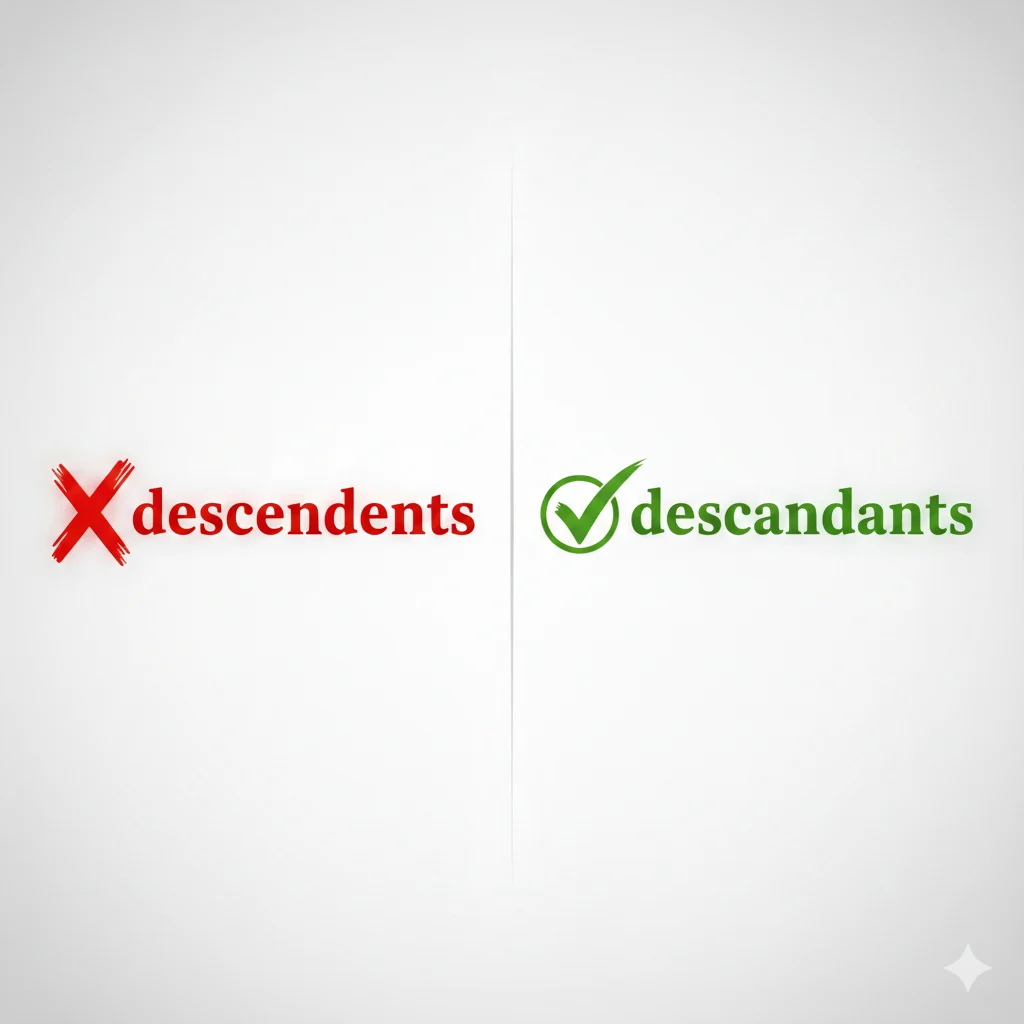
Descendants is the correct and accepted spelling in modern English. It refers to children, grandchildren, and future family members of a person. The word descendents is considered a common spelling mistake and should be avoided in exams, formal writing, and everyday English.
Many people get confused between descendents vs descendants. They look almost the same. They sound the same when spoken. And spellcheck often does not help. Because of this, students, writers, and even professionals make mistakes with these words.
So what is the real difference between descendents and descendants?
Which one is correct in modern English?
And which one should you use in exams, essays, family history, or daily writing?
Don’t worry 😊
This guide explains descendents vs descendants in very simple English. Even a class 4 student can understand it easily.
By the end of this article, you will clearly know:
- The meaning of each word
- The correct spelling to use
- Real-life examples
- Common mistakes and how to avoid them
Let’s make this confusing grammar topic easy and memorable.
What Does Each Word Mean?
Meaning of Descendants
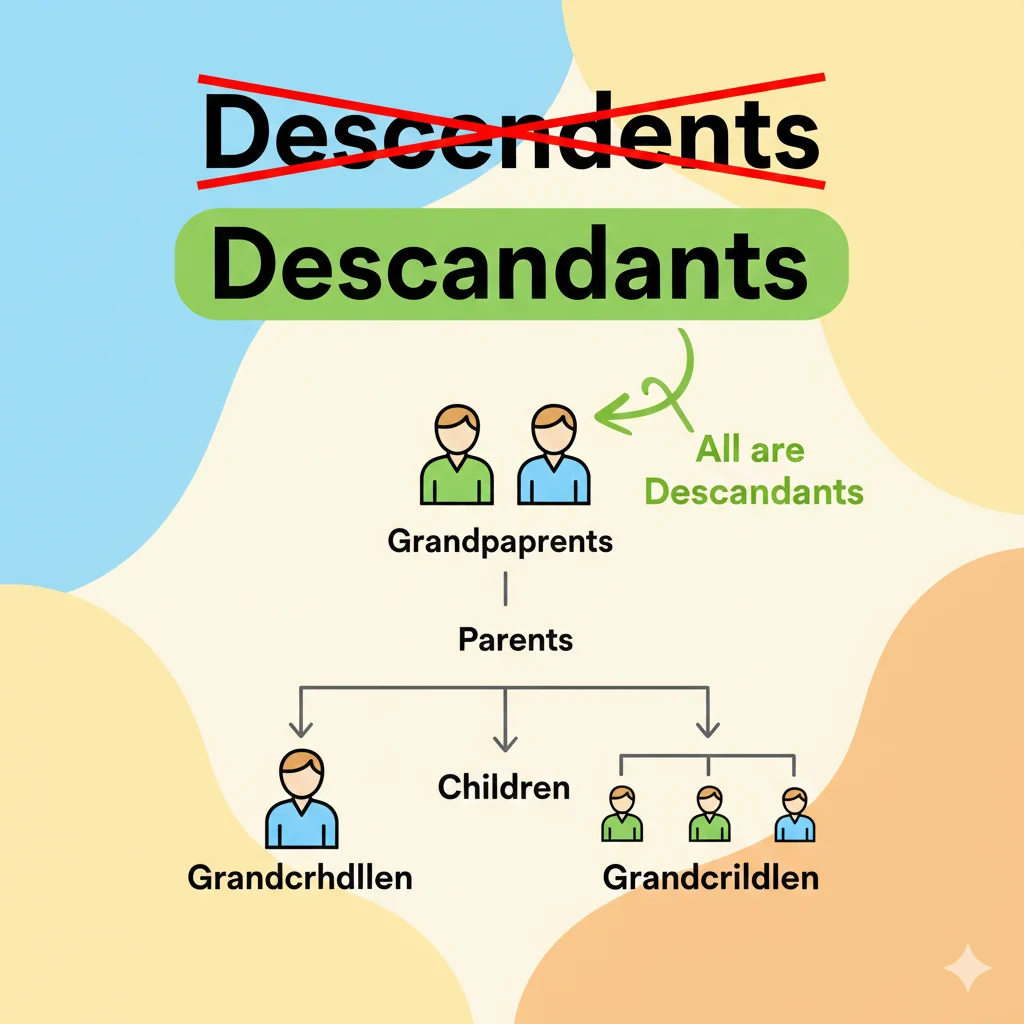
Descendants means children, grandchildren, and future family members of a person.
👉 Simply put:
Descendants = people who come after you in your family line
Part of speech: Noun (naming word)
Easy Examples:
- Her descendants still live in the same village.
- The king’s descendants ruled the land for many years.
- You and your children are descendants of your grandparents.
🧠 Mini Story:
Imagine a tree 🌳
The roots are your grandparents.
The branches growing forward are descendants.
Meaning of Descendents
Here is the important truth 👇
⚠️ “Descendents” is NOT the correct spelling in modern English.
- It is an old or incorrect form
- It is considered a common spelling mistake
- Dictionaries recommend descendants, not descendents
So when people ask “What do descendents mean?”
The correct answer is:
👉 They usually mean descendants, but spelled it wrong.
The Key Difference Between Descendents and Descendants
📊 Comparison Table
| Feature | Descendants ✅ | Descendents ❌ |
|---|---|---|
| Correct spelling | Yes | No |
| Used in modern English | Yes | No |
| Dictionary accepted | Yes | Rare/Incorrect |
| Meaning | Children, grandchildren, future family | Misspelling |
| Used in exams & writing | Yes | Avoid |
⭐ Quick Tip to Remember
👉 Always use “descendants”
If you write descendents, it is almost always wrong.
Common Mistakes and How to Avoid Them
❌ Mistake 1
He left his property to his descendents.
✅ Correct:
He left his property to his descendants.
Why mistake happens:
People hear the word and spell it by sound.
Fix:
Remember: ants, not ents → descendants
❌ Mistake 2
Are siblings descendants?
✅ Correct:
Siblings are NOT descendants.
Explanation:
Brothers and sisters are siblings, not descendants.
❌ Mistake 3
Is a wife a descendant?
✅ Correct:
No. A wife is not a descendant.
Why:
Descendants must come after you in the family line.
When to Use “Descendants”
Use descendants when talking about:
- Family history
- Children and grandchildren
- Bloodline or ancestry
- Legal or historical writing
✔ Simple Real-Life Examples
- My grandparents have many descendants today.
- The story was passed down to their descendants.
- Descendants of the hero still honor him.
- She wants to know about her ancestors and descendants.
- The land belongs to his descendants.
When to Use “Descendents”
👉 Short answer: Don’t use it.
- It is outdated
- It is marked incorrect in modern grammar
- Exams, essays, and content require descendants
🧠 Memory Hack:
Think of ants walking forward 🐜🐜🐜
Future family = descendants
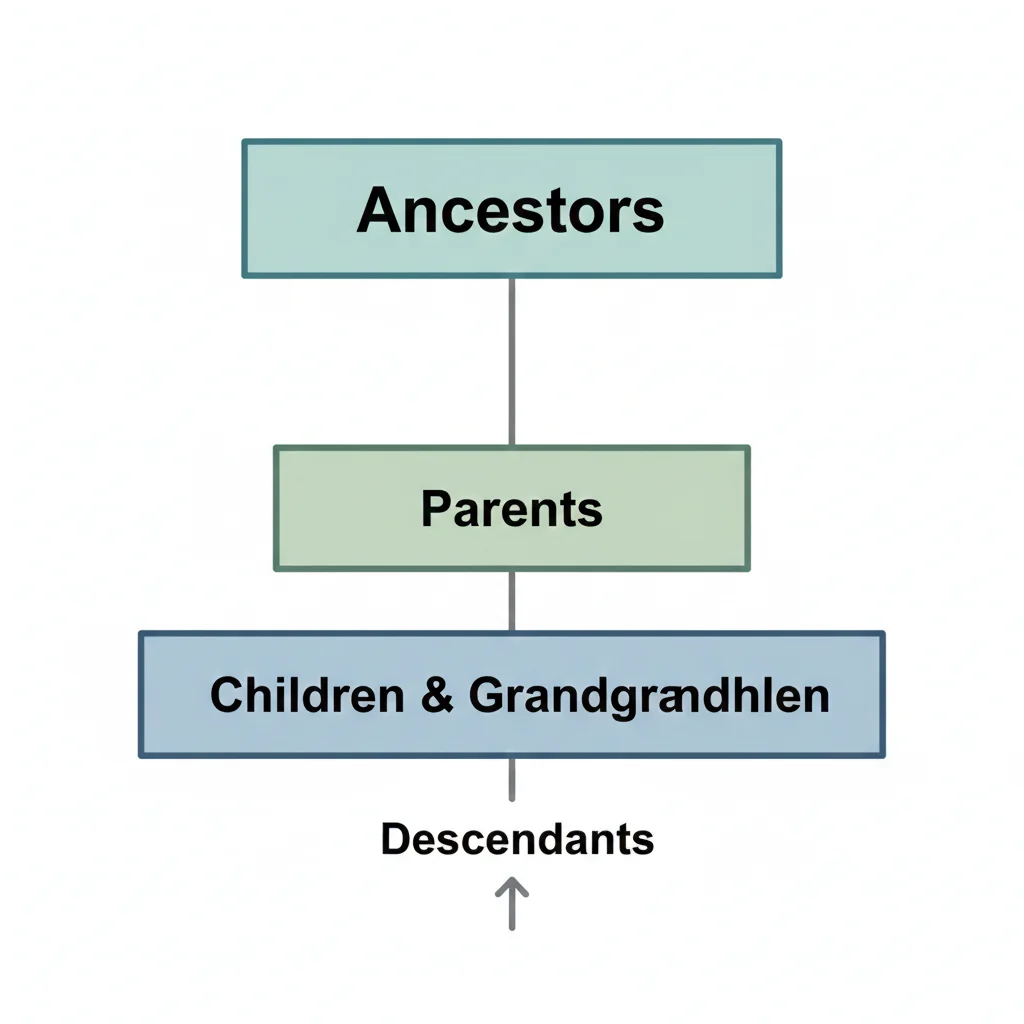
Descendant vs Ancestor (Quick Explanation)
| Word | Meaning |
|---|---|
| Ancestor | People before you (grandparents) |
| Descendant | People after you (children) |
👉 You are a descendant of your grandparents
👉 You are an ancestor of your grandchildren
Descendant vs Ascendant
- Descendant → going down the family line
- Ascendant → going up the family line
📌 Used in family trees and astrology.
Is “Descendants” Singular or Plural?
- Descendant → singular (one person)
- Descendants → plural (many people)
✔ Example:
- He is a descendant of the poet.
- They are descendants of the poet.
Does Descendant Mean Child?
✔ Yes — but not only child.
A descendant can be:
- Child
- Grandchild
- Great-grandchild
Are Descendants for Kids?
✔ Yes!
Children are descendants of their parents and grandparents.
Advanced Tips (For Exams & Formal Writing)
- Origin: Comes from Latin descendere (to go down)
- Used in:
- History books
- Legal documents
- Family records
- Using descendents in exams can reduce marks
- In online writing, wrong spelling can hurt ranking
Mini Quiz (Test Yourself ✏️)
Fill in the blanks:
- Children are the ______ of their parents.
- Grandparents have many ______.
- A brother is NOT a ______.
- The correct spelling is descend_____.
- Future family members are called ______.
✅ Answers: descendants, descendants, descendant, ants, descendants
Quick Recap: Descendents vs Descendants
- ✅ Descendants = correct word
- ❌ Descendents = spelling mistake
- Descendants = children, grandchildren, future family
- Used in school, history, legal, and daily English
FAQs
What is the difference between descendants and descendents?
Descendants is correct. Descendents is a common spelling mistake.
Is it descendents or the descendents?
Neither. The correct form is descendants.
Is a sibling a descendant?
No. Siblings are not descendants.
Is a wife a descendant?
No. Descendants must be born into the family line.
What does descendants mean in simple words?
People who come after you in your family, like children and grandchildren.
Conclusion
Now you clearly understand the difference between descendents vs descendants. The truth is simple: descendants is the correct and accepted word in modern English, while descendents is a common spelling mistake. Descendants refers to children, grandchildren, and future family members who come after someone in a family line.
By remembering this small spelling rule, you can improve your grammar, writing, exams, and confidence in English. Keep practicing, keep learning, and don’t fear confusing words. Every day, your English gets stronger 💪📘

Tessa Hadley, a reflective voice at SimileHub.com, transforms everyday moments into vivid imagery, guiding writers to create powerful, expressive comparisons.