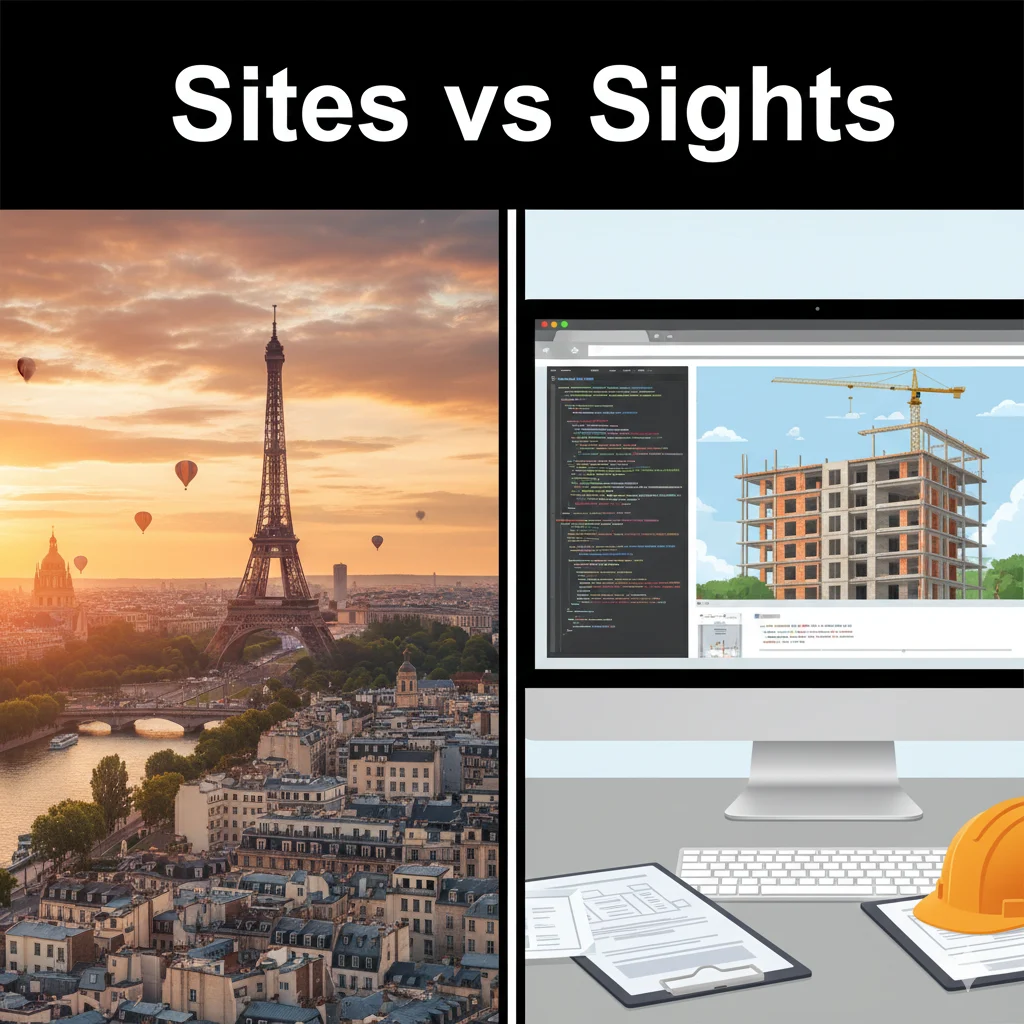
Sites vs Sights: “Sites” are places, locations, or areas, while “sights” are things you see, especially views, landmarks, or attractions.
If you’ve ever stopped while writing and wondered whether to use sites or sights, you’re not alone. These two words sound exactly the same, yet they have completely different meanings, making them one of the most commonly confused word pairs in English.
A traveler might visit famous historical sites, but admire breathtaking sights along the journey. Mixing them up can change the meaning of a sentence and leave readers confused. That’s why understanding the difference is important for students, writers, professionals, and anyone who wants to communicate clearly.
The good news is that the distinction is surprisingly simple once you know what to look for. A small spelling change separates a physical location from something seen with the eyes, and learning this difference can instantly improve your writing accuracy.
In this guide, you’ll discover the meanings of sites and sights, their correct usage, memorable examples, common mistakes, and easy tricks to remember the right word every time. By the end, you’ll never have to second-guess which one belongs in your sentence again.
The Origin of Sites vs Sights
- Site comes from Latin situs, meaning “position” or “place.” Historically, it referred to a physical area or location. Over time, it extended to websites or digital locations.
- Sight comes from Old English sīht, related to seeing or vision. It has always been connected with what can be observed visually.
The spelling differences exist because English borrows words from different languages with unique rules. Phonetics and context help distinguish them.
British English vs American English Spelling
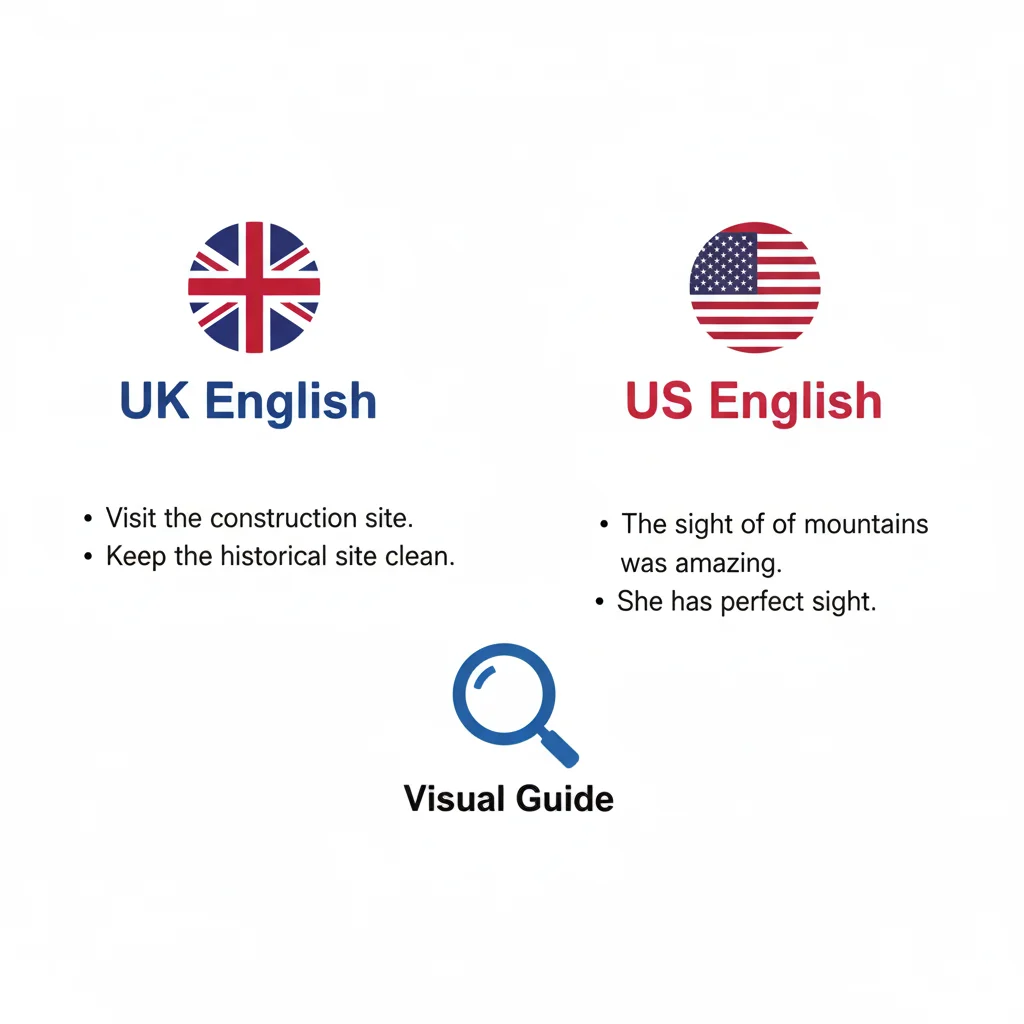
Both “site” and “sight” are spelled the same in British and American English. The main difference lies in usage and related words.
| Word | British English Example | American English Example |
|---|---|---|
| Site | The building site is closed today. | The construction site is closed today. |
| Sight | The London Eye is a famous sight. | The Grand Canyon is a beautiful sight. |
| Sightsee | We plan to sightsee in London. | We plan to sightsee in New York. |
Note: Words like “website” or “onsite” follow the same spelling globally.
Which Spelling Should You Use?
- If you are writing for the US audience: Use standard “site” and “sight”. No special changes needed.
- If you are writing for the UK or Commonwealth countries: Same spelling works; context matters more than regional spelling.
- For global audiences: Keep it simple: match the word to its meaning. Don’t try to swap “site” for “sight.”
Tip: When unsure, ask: Can this be seen? → sight. Is this a location or web page? → site.
Common Mistakes with Sites vs Sights
- Mistake: I visited a beautiful site in Paris.
Correction: I visited a beautiful sight in Paris. - Mistake: Construction is happening at the Eiffel Tower sight.
Correction: Construction is happening at the Eiffel Tower site. - Mistake: Let’s go siteseeing tomorrow.
Correction: Let’s go sightseeing tomorrow. - Mistake: Confusing “site” for “cite”.
- Site → location
- Cite → quote or reference
Sites vs Sights in Everyday Examples
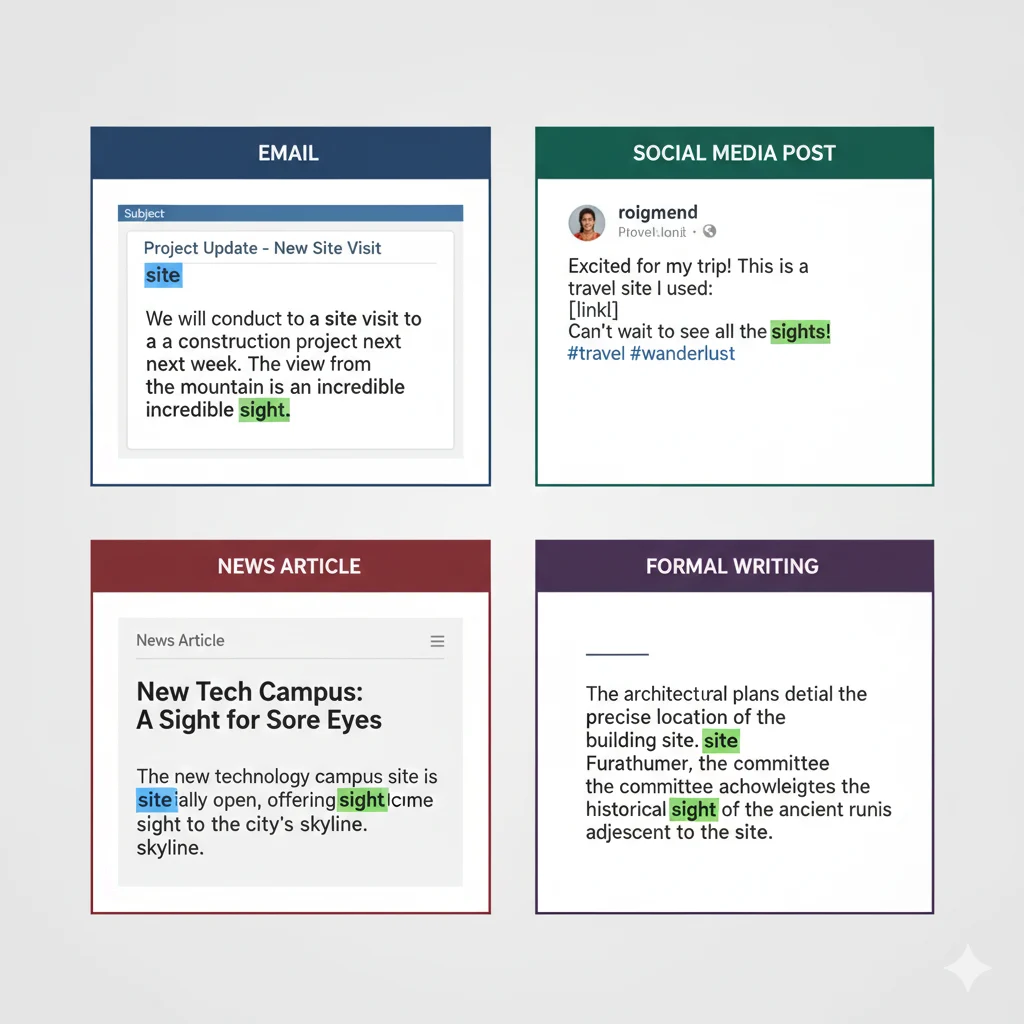
- Emails:
- Please check the new project site before Monday.
- The sunrise at the beach was a breathtaking sight.
- News:
- The archaeological site revealed ancient artifacts.
- The sight of the meteor shower amazed the city residents.
- Social Media:
- Visited this historical site today! 🏛️ #travel
- What a sight! The sunset looks magical 🌅 #nature
- Formal Writing:
- The site selection process is critical for urban development.
- The sight of the mountains inspired the poet.
Sites vs Sights – Google Trends & Usage Data
- Google searches show “sight” peaks during vacation seasons and travel posts.
- “Site” peaks in construction, technology, and online content discussions.
- Top countries for “sight”: USA, UK, Canada, Australia.
- Top countries for “site”: India, USA, UK, Singapore.
Keyword Variations Comparison Table
| Variation | Meaning | Example | Usage Context |
|---|---|---|---|
| Site | Location/place | Construction site | Professional, tech, travel |
| Sight | View/vision | Beautiful sight | Travel, photography, literature |
| Sightsee | Visit attractions | We sightsee in Paris | Tourism |
| Cite | Reference | Cite the source | Academic, professional |
| Website | Online site | Company website | Tech, business |
| Onsite | At the location | Onsite inspection | Workplace, construction |
FAQs
- How do you use site and sight in a sentence?
- Site: The construction site is busy today.
- Sight: The sunset is a wonderful sight.
- What is the full meaning of sites?
- A site is a location, place, or area for a specific purpose.
- Is it a beautiful site or sight?
- Beautiful sight is correct; “site” refers to a location, not something seen.
- Is it site see or sight see?
- Correct: sightsee.
- Sites vs sights meaning?
- Site → place; Sight → something seen.
- Sites vs sights examples?
- We visited the historic site.
- The view from the hilltop was a breathtaking sight.
- Sites or sights tourist?
- Tourists love the sights of London.
Conclusion
Understanding “sites vs sights” is simple if you remember the key difference: site is a location, sight is something you see. Confusing these words can lead to misunderstandings in emails, travel posts, professional writing, and social media. By knowing the origin, usage rules, British vs American conventions, and common mistakes, you can confidently choose the right word every time.
Always consider your audience: for the US, UK, or global readers, the spelling remains the same, but context is everything. Using visual cues and everyday examples can also help cement the difference in your memory. Whether describing a construction project, a website, or a stunning view, matching the word to its meaning ensures clarity and professionalism.
Remember, when in doubt, ask yourself: Can it be seen? → sight. Is it a location or place? → site. Following these simple rules will improve your writing and make you appear precise, knowledgeable, and confident.

Ali Smith, a passionate language artist at SimileHub.com, turns simple words into vivid imagery, helping writers express emotions with beauty and clarity.