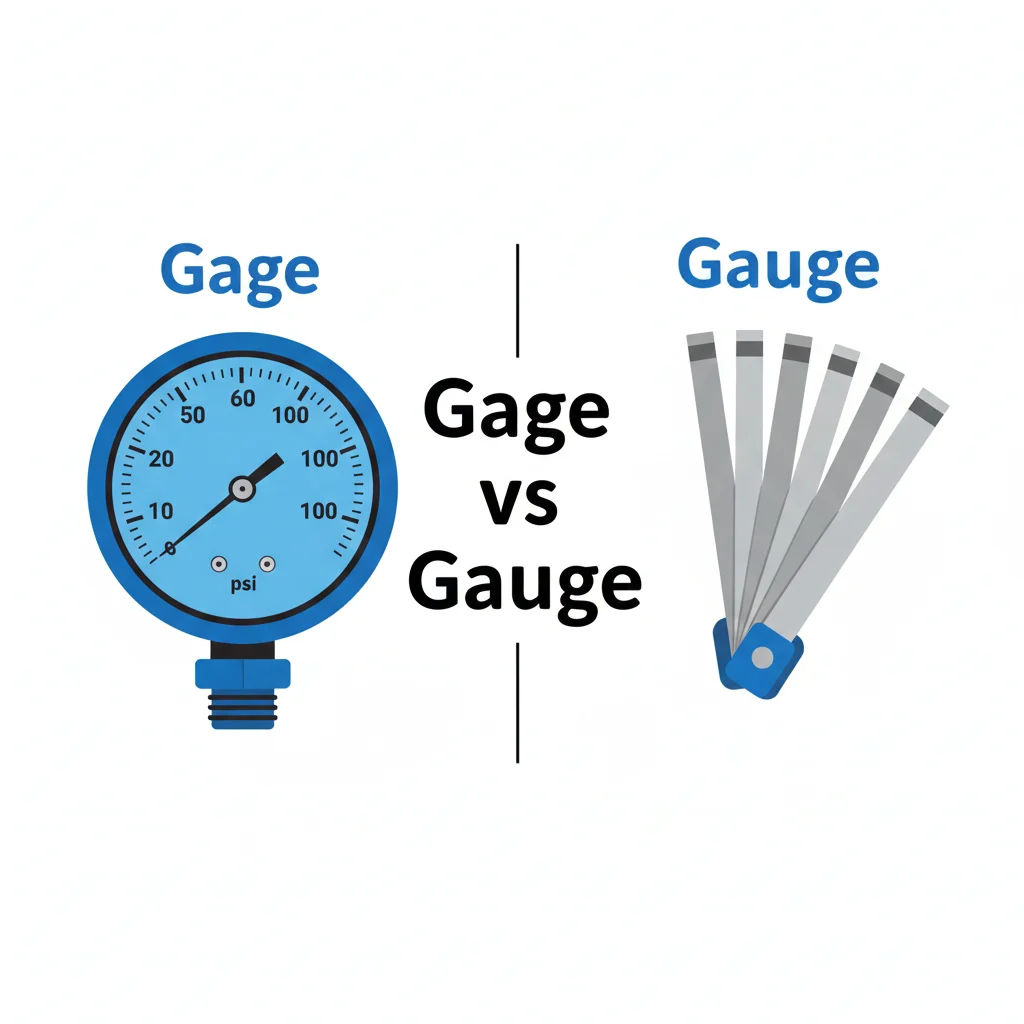
Gauge is the standard and preferred spelling in modern English.
Gage is an accepted variant, mainly used in American technical contexts.
Simple examples:
- ✅ The mechanic checked the tire pressure with a gauge.
- ✅ The blueprint lists the metal thickness in gage.
- ❌ She tried to gage public opinion (better: gauge).
👉 In most writing, gauge is correct.
Have you ever paused while writing gage or gauge and wondered which one is actually correct? You’re not alone. The keyword gage vs gauge is searched thousands of times every month by students, engineers, writers, journalists, and everyday English users who want to avoid spelling mistakes. The confusion is real because both spellings exist, both appear in dictionaries, and both are used in professional fields like engineering, manufacturing, and science.
This article clears it all up. You’ll learn the difference between gage and gauge, where each spelling comes from, how British and American English treat them, and which one you should use depending on your audience. By the end, you’ll confidently know whether to write gage or gauge for thickness, gage vs gauge engineering, or even what it means to gage a situation—without second-guessing yourself.
The Origin of Gage vs Gauge
The word comes from Old French “jauge”, meaning a measuring rod or standard. When it entered Middle English, spellings varied wildly—gauge, gage, gauage, and others.
Over time:
- Gauge became the dominant spelling in British English.
- American English briefly favored gage as a simplified form.
- Eventually, gauge won out, even in the U.S.
However, gage survived in specialized fields like:
- Engineering
- Manufacturing
- Metal thickness measurement
- Pressure systems
This history explains why gage vs gauge engineering is still debated today.
British English vs American English Spelling
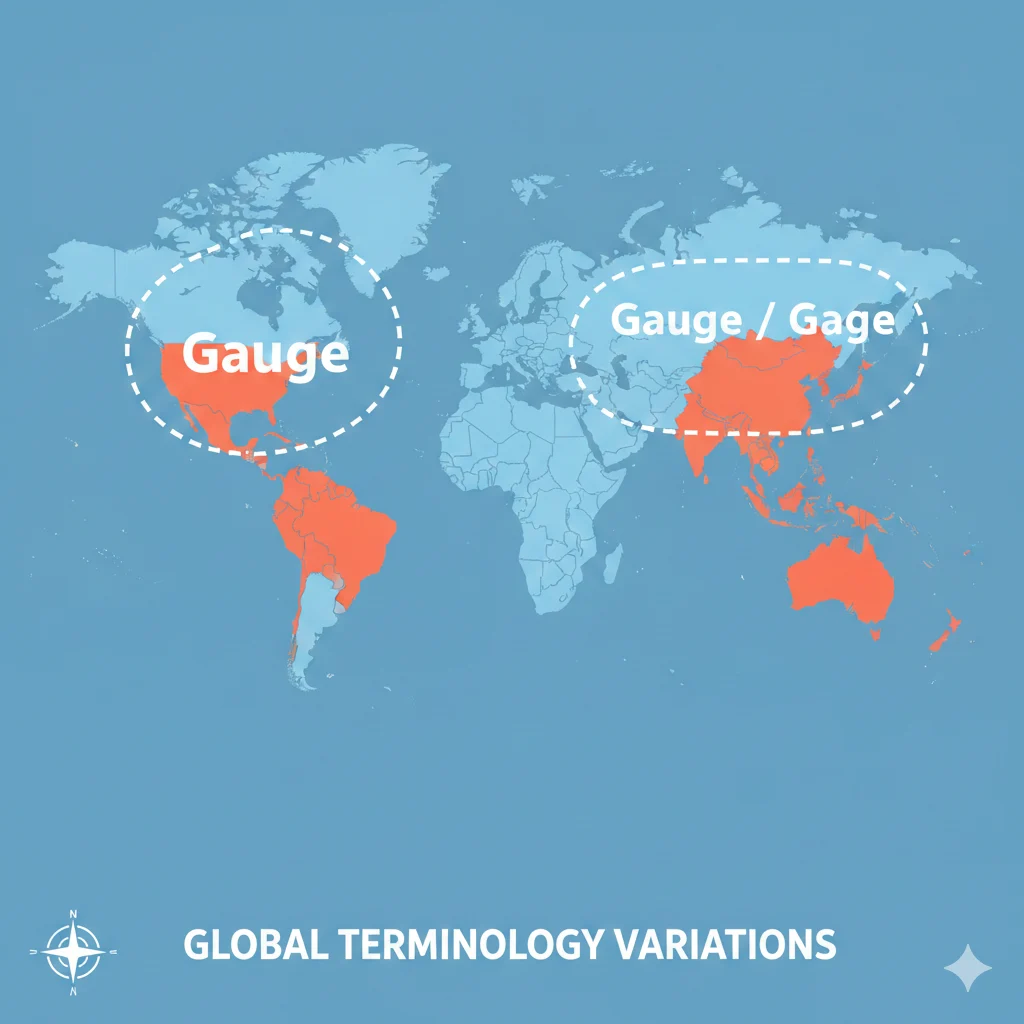
| Context | British English | American English |
|---|---|---|
| General writing | Gauge | Gauge |
| Journalism | Gauge | Gauge |
| Science & education | Gauge | Gauge |
| Engineering terms | Gauge | Gauge / Gage |
| Thickness measurement | Gauge | Gage (common) |
Key point:
- British English: Only gauge
- American English: Gauge is preferred, but gage appears in technical use
Which Spelling Should You Use?
Use gauge if:
- You’re writing for a global audience
- You’re publishing online or in media
- You’re unsure which one to choose
- You’re writing academically or professionally
Use gage if:
- You work in U.S. engineering or manufacturing
- You’re referring to metal thickness gage
- You’re matching industry standards or manuals
👉 For clarity, and safety: choose “gauge.”
Descendents vs Descendants: Stop Making This Error 🚫
Common Mistakes with Gage vs Gauge
❌ Trying to gage the crowd’s reaction
✅ Trying to gauge the crowd’s reaction
❌ The fuel gage shows empty
✅ The fuel gauge shows empty
❌ Gauge pressure and gage pressure are different things
✅ They mean the same thing
Remember:
- Verbs: Always gauge
- Abstract meaning: Always gauge
- Devices: Usually gauge
- Thickness systems: Sometimes gage
Gage vs Gauge in Everyday Examples
Emails
- Please gauge client interest before the meeting.
News
- Officials are using surveys to gauge public opinion.
Social Media
- Trying to gauge the vibe before posting 👀
Formal Writing
- Pressure was measured using a calibrated gauge.
Technical Writing
- The wire thickness is measured in American Wire Gage.
Gage vs Gauge – Google Trends & Usage Data
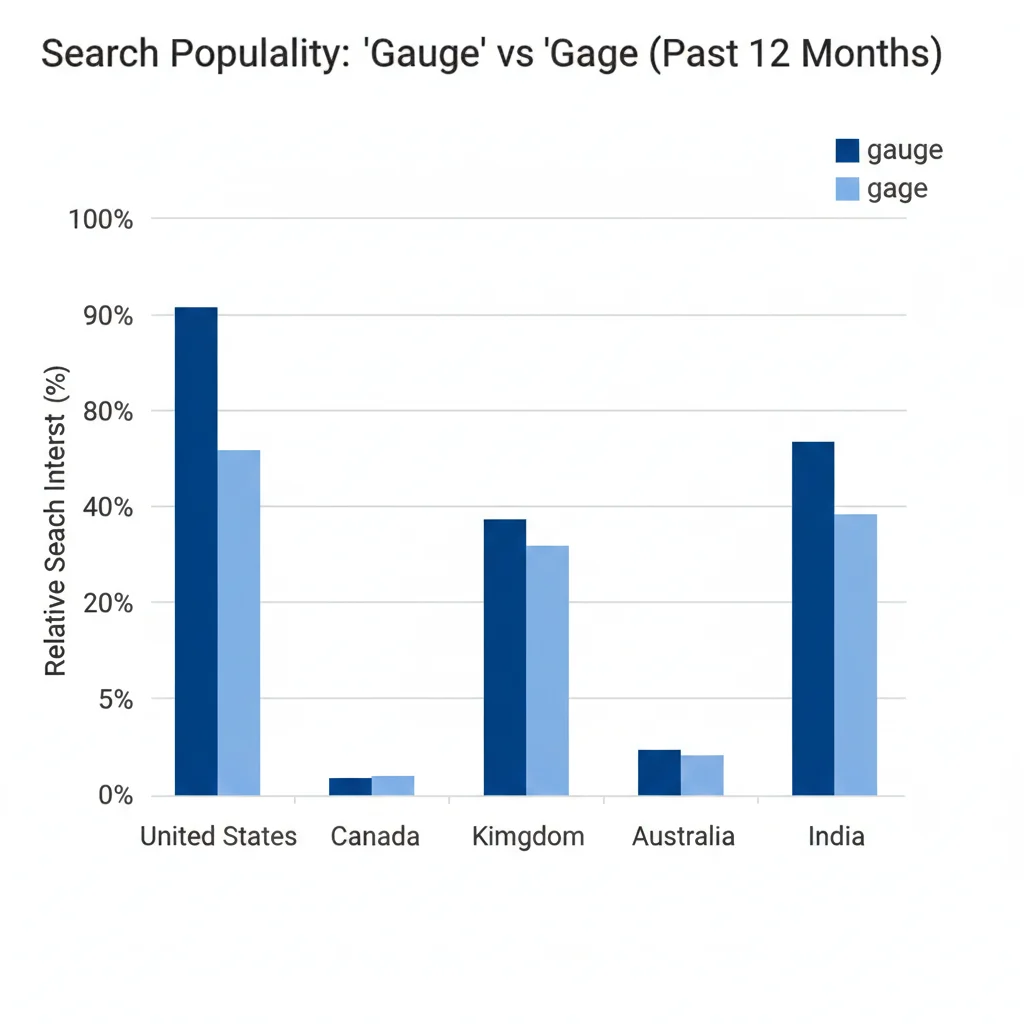
Search trends show:
- Gauge dominates worldwide
- Gage spikes in:
- United States
- Engineering searches
- Manufacturing and machining contexts
Common searches include:
- gage vs gauge pressure
- gage vs gauge interest
- gage or gauge for thickness
- the microns gage vs gauge
👉 Online content overwhelmingly favors gauge, making it better for.
Sites vs Sights: Don’t Make This Common Mistake 😱
Gage vs Gauge Comparison Table
| Feature | Gage | Gauge |
|---|---|---|
| Standard spelling | ❌ | ✅ |
| British English | ❌ | ✅ |
| American English | ⚠️ (technical) | ✅ |
| Verb form | ❌ | ✅ |
| Abstract meaning | ❌ | ✅ |
| Engineering use | ✅ | ✅ |
| friendly | ❌ | ✅ |
FAQs: Gage vs Gauge
What is correct, gage or gauge?
Gauge is correct in most cases. Gage is a limited variant.
Is it gauge or gage in Australia?
Australia uses gauge, following British English.
What does it mean to gage a situation?
It means to judge or assess, but the correct spelling is gauge a situation.
Is it gauge or gage engineering?
Both appear, but gauge is more common today.
Gage vs gauge meaning—are they different?
No. They mean the same thing.
Gage vs gauge interest—which is correct?
Correct: gauge interest.
Gage or gauge for thickness?
In U.S. manufacturing, gage is common.
Conclusion
The confusion around gage vs gauge comes from history, regional spelling rules, and technical usage. While both spellings exist, they are not equal in modern English. Gauge is the clear winner for everyday writing, global communication, education, and friendly content. It works as both a noun and a verb, covers abstract meanings like gauge interest, and aligns with British, Australian, and modern American English.
Gage, on the other hand, survives mainly in U.S. engineering and manufacturing, especially when referring to thickness systems or pressure measurements. If you’re reading technical manuals or working in industrial fields, you may still see it used correctly.
When in doubt, choose gauge. It’s safer, clearer, and universally understood. Understanding this difference helps you write with confidence, avoid common mistakes, and communicate effectively—no matter your audience or profession.

D.M. Thomas, a thoughtful wordsmith at SimileHub.com, blends imagination with emotion, crafting rich imagery that guides readers into deeper, vivid expression.