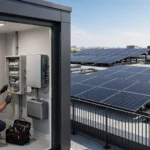
Distribution-board space, circuit grouping and permitted islanding behavior determine what a backup interface can achieve. This is a familiar challenge in rooftop solar projects, where decisions made early can restrict operation for years. Failures usually develop at the interface between otherwise competent teams. Reviewing the actual service environment is often more revealing than collecting another impressive efficiency figure.
Study the Actual Roof
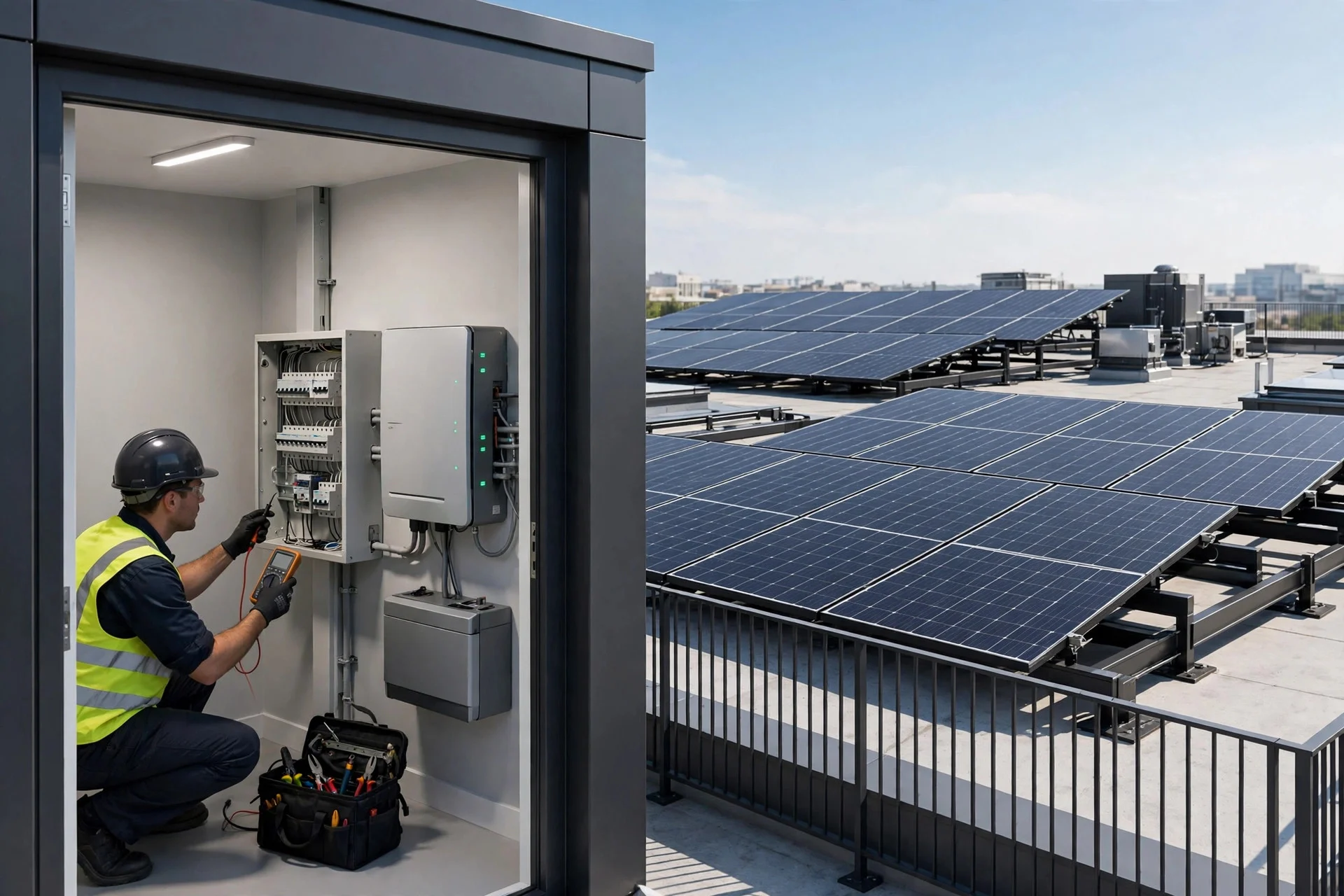
Orientation, shading, available mounting area and the condition of the roof all affect the installation. Satellite estimates are only a starting point; obstructions and access routes need a site survey. Panel layout should allow safe service work and comply with local fire access requirements. A slightly smaller array can be a better long-term choice than one squeezed into every available corner.
Understand Monitoring Limits
A monitoring app can reveal production, consumption and equipment status, but its usefulness depends on correct meter placement and network connectivity. Owners need to know which data are measured and which are estimated. When a communication link fails, local electrical safety functions must remain independent of the app display.
For a broader technical starting point, compare Smart Guard with the conditions actually documented in the proposed project. Distribution-board space, circuit grouping and permitted islanding behavior determine what a backup interface can achieve.
Compare Lifetime Economics
Installer quotes should use consistent assumptions for irradiation, degradation, electricity prices and maintenance. Savings from self-consumption and payments for exported energy need separate lines. Financial calculations also require clarity about warranties and battery replacements where applicable. An unrealistic payback claim is not made reliable by precise-looking decimals.
High-starting-current loads can trip a backup supply even when their average demand appears modest.
Inspect the Physical Site
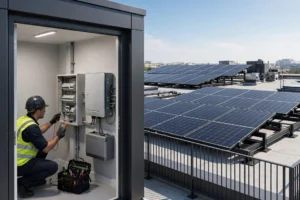
Roof remaining life, loading, fire access and cable routes belong in the earliest feasibility visit. Large roofs often contain equipment and shadowing that are not obvious on aerial imagery. If reroofing is likely during the solar system life, maintenance and removal costs need to be visible in the investment case. A cheaper array layout can be expensive to service.
Make Faults Easy to Locate
Monitoring at appropriate string or inverter granularity can reduce diagnosis time, particularly across scattered rooftops. Alerts need location identifiers that technicians recognize in the field. A failure that is detected immediately but cannot be safely accessed still causes losses. Include isolation procedures and access arrangements in the maintenance plan.
The design review for Smart Guard should be supported by evidence tied to the delivered configuration. Have the electrician label protected circuits and demonstrate the changeover under realistic load.
Review Operations After Handover
Cleaning frequency, roof access, fault escalation and inverter service affect long-term output. Establish reporting based on weather-adjusted performance where practical, rather than treating every low-energy day as a fault. The building manager must know how to arrange maintenance without disrupting occupants. Assign responsibility for keeping plant documentation current.
Readers comparing specifications can review information about Smart Guard as context, then verify site-specific claims with drawings, tests and commercial terms.