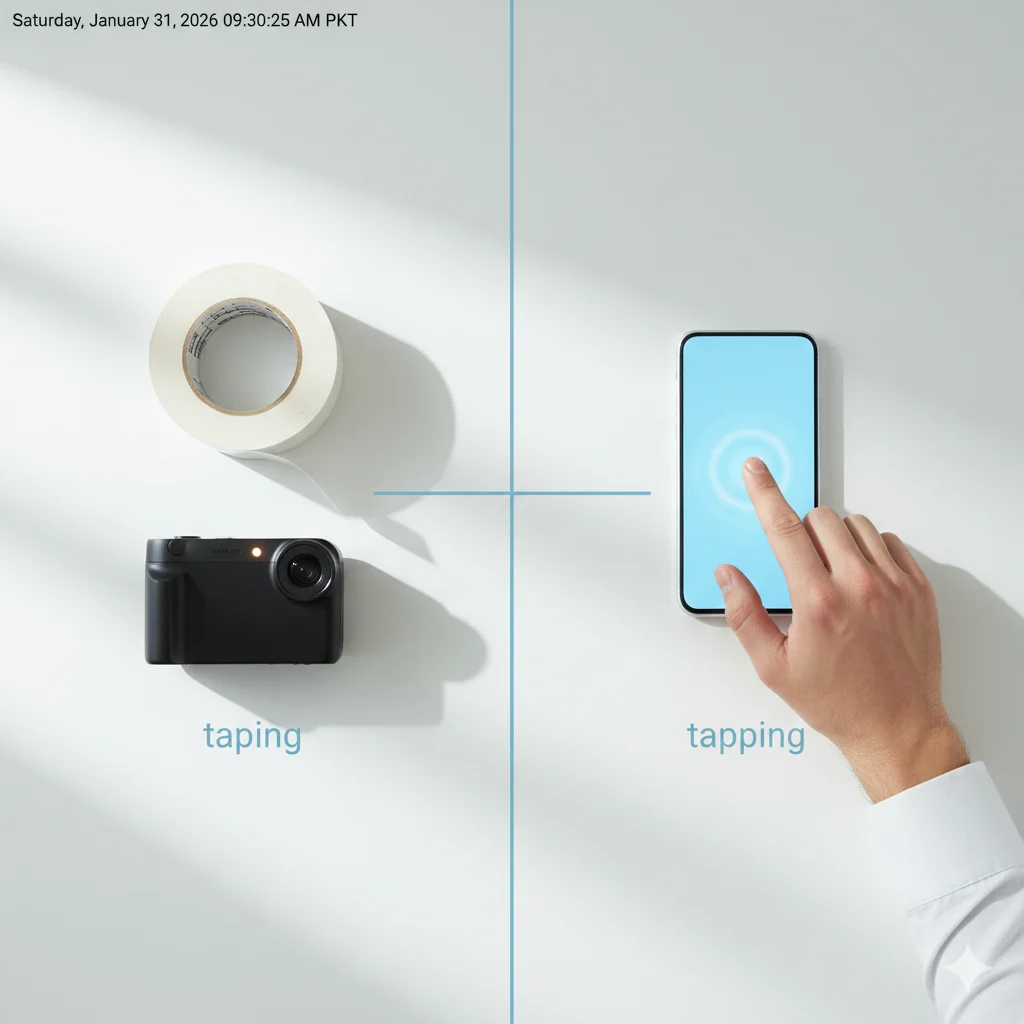
Taping means recording video or audio, or attaching something using tape.
Tapping means touching lightly, hitting gently, or using a small action to access something.
Examples:
- She is taping a video for her YouTube channel.
- He is tapping on the screen to open the app.
In short, taping relates to tape or recording, while tapping relates to light touch or action.
English spelling can feel tricky, especially when two words look almost the same but mean different things. Taping vs tapping is one of those confusing pairs that many people search for when writing emails, captions, news articles, or video descriptions. A single extra letter can completely change the meaning of a sentence, and that’s where mistakes often happen.
People search for this keyword because they want a clear answer: Is it taping or tapping? The confusion usually comes from pronunciation, verb forms, and British vs American spelling rules. It also appears in different fields like sports, medicine, filmmaking, and social media, which adds to the problem.
This article solves that confusion in a simple way. You’ll learn the exact meaning of taping, tapping, tape, and tap, how they are used in real life, and which spelling is correct for your audience. By the end, you’ll feel confident using these words correctly—every time.
The Origin of Taping vs Tapping
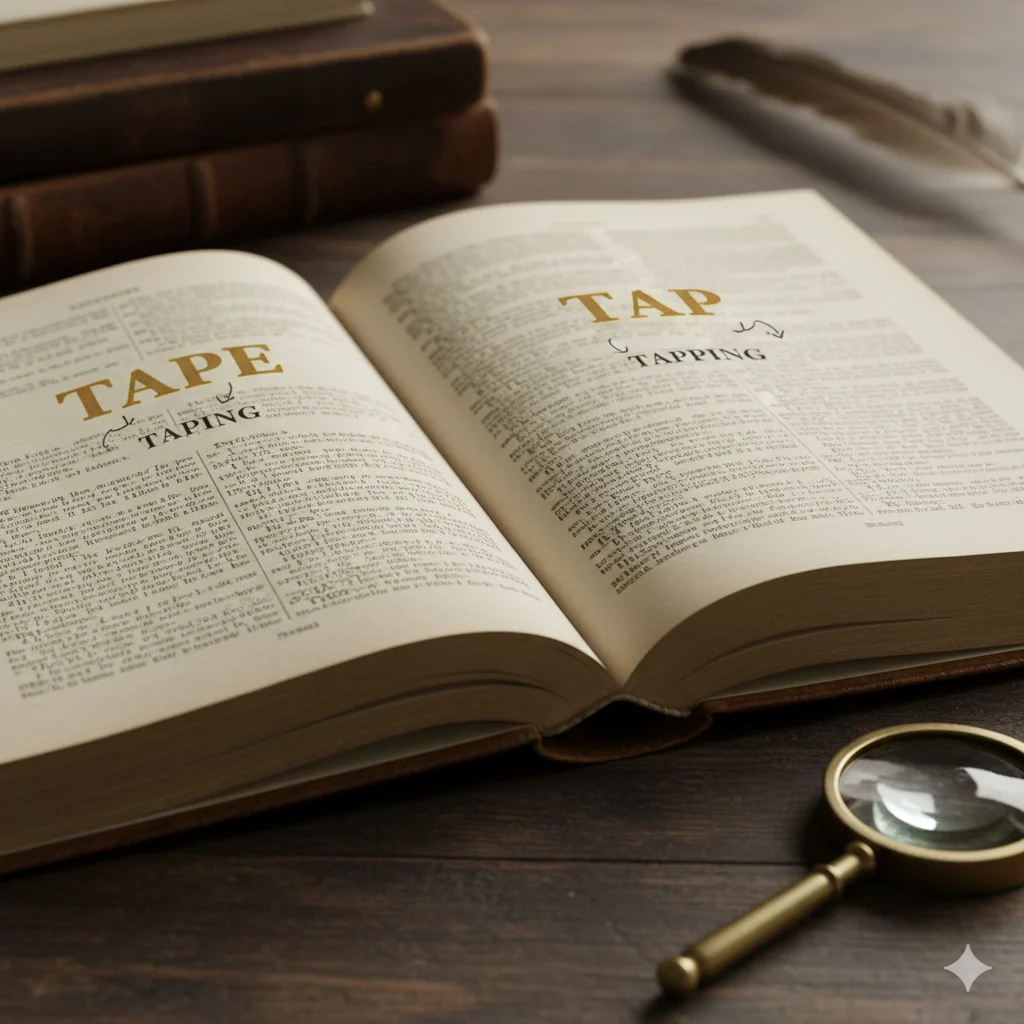
The difference between taping vs tapping comes from two different root words.
Tape comes from an Old French word meaning “a narrow strip of cloth.” Over time, it became linked with adhesive tape and later with audio and video recording. This is where taping meaning developed, especially in media and sports.
Tap comes from Old English and meant “to strike lightly” or “draw liquid.” That meaning stayed mostly physical, which is why tapping still means light contact or gentle action today.
The spelling difference exists because English doubles the final consonant when adding -ing after a short vowel sound. That’s why tap → tapping, but tape → taping drops the silent “e.”
British English vs American English Spelling
Both British and American English follow the same spelling rules for taping and tapping. The difference is not regional, but grammatical.
Spelling Rules Explained Simply
- If the base word ends with a silent e, drop it:
tape → taping - If the base word has a short vowel + consonant, double it:
tap → tapping
Comparison Table
| Base Word | Meaning | -ing Form | Correct Usage |
|---|---|---|---|
| tape | record or attach | taping | taping video |
| tap | touch lightly | tapping | tapping screen |
Which Spelling Should You Use?
Your audience matters, but the rule stays the same worldwide.
- US audience: Use taping for recording or tape, tapping for touch or action.
- UK/Commonwealth: Same rule applies, no spelling change.
- Global audience: Choose based on meaning, not location.
If you are writing about taping video, recording a show, or medical taping, use taping.
If you are writing about tapping into meaning, phone gestures, or physical actions, use tapping.
Common Mistakes with Taping vs Tapping
Many errors happen because people write what they hear.
Frequent Errors
- ❌ tapping a video
- ❌ taping on the phone
- ❌ taped the screen lightly
Correct Forms
- ✅ taping a video
- ✅ tapping on the phone
- ✅ tapped the screen lightly
Another mistake is confusing taped and tapped.
Taped means recorded or attached with tape.
Tapped means touched lightly or hit gently.
Taping vs Tapping in Everyday Examples
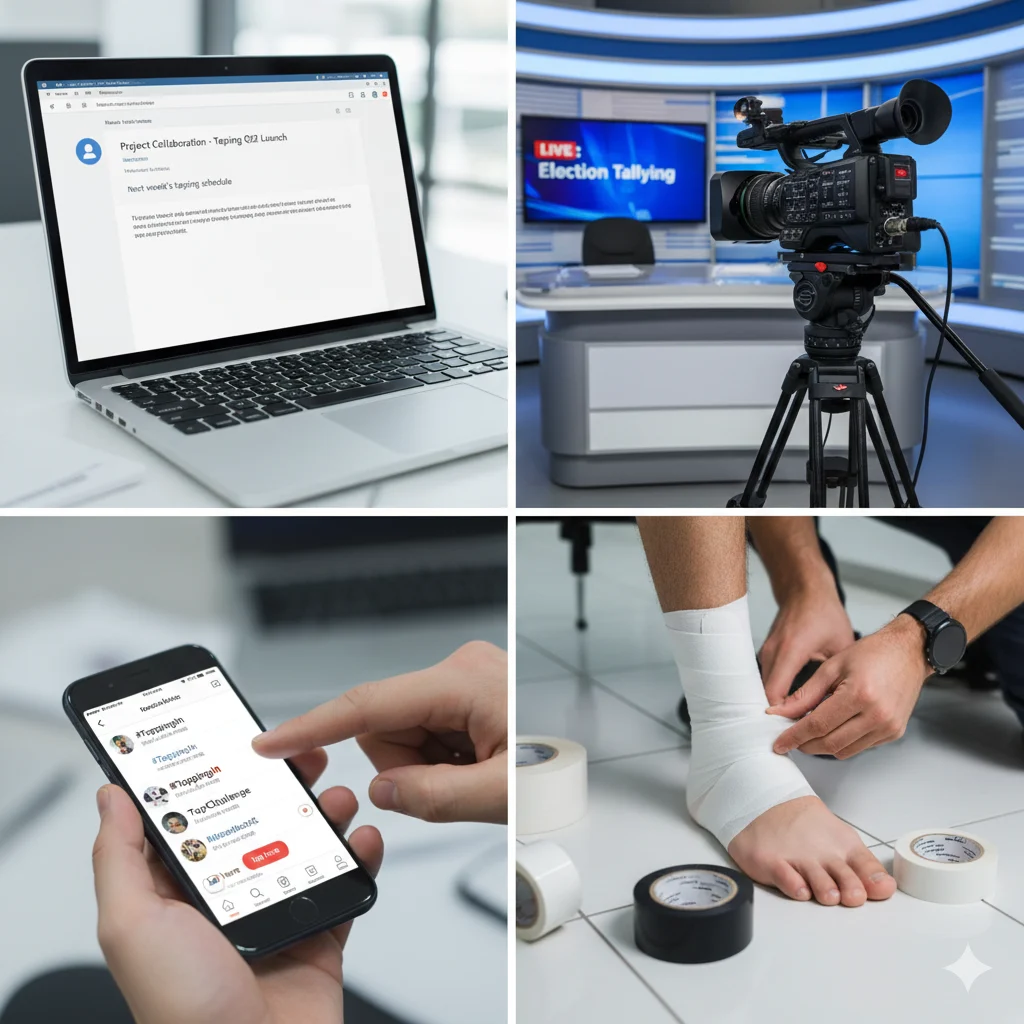
Emails
- “We are taping the meeting for later review.”
- “Please stop tapping the desk during the call.”
News
- “The show was taped before a live audience.”
- “Police heard someone tapping on the window.”
Social Media
- “I’m taping video for my vlog today.”
- “Keep tapping the link in my bio.”
Formal Writing
- “The procedure involves ankle taping for support.”
- “The study examined finger tapping speed.”
Taping vs Tapping – Google Trends & Usage Data
Search interest shows that taping is more common in media, sports, and medical topics. It is often searched with phrases like taping meaning, taping English, and taping video.
Tapping appears more in technology, mobile use, and psychology. Phrases like tapping into meaning and screen tapping are common.
By country:
- United States: High use of taping video and tapping phone
- United Kingdom: Balanced use in medical and tech contexts
- Global: Taping is linked with recording; tapping with action
Installment vs Instalment: Are You Wrong? 😳
Taping vs Tapping vs Tape – Comparison Table
| Term | Part of Speech | Meaning | Example |
|---|---|---|---|
| tape | noun/verb | strip or record | use tape |
| taping | verb | recording or attaching | taping English |
| tap | verb | light touch | tap screen |
| tapping | verb | repeated light touch | tapping fingers |
FAQs About Taping vs Tapping

What is the meaning of tapings?
Tapings means recorded videos or sessions, or the act of applying tape for support.
What is the difference between tap and tape?
Tap means to touch lightly. Tape means a strip or recording material.
What is the difference between taped and tapped?
Taped means recorded or attached with tape. Tapped means touched lightly.
What is the difference between taping and strapping?
Taping uses adhesive tape. Strapping uses firm bands for stronger support.
Taping or tapping video – which is correct?
Taping video is correct when recording.
What does tapping into meaning mean?
It means using or accessing a hidden skill or resource.
Is taping English correct grammar?
Yes, taping English is correct when referring to recorded content.
Conclusion
Understanding taping vs tapping makes your writing clearer and more professional. Even though these words look similar, their meanings are very different. Taping is connected to tape, recording, and support, while tapping relates to light touch, action, or access. One extra letter can change the full message of a sentence.
The key rule is simple. If the base word is tape, drop the silent “e” and write taping. If the base word is tap, double the consonant and write tapping. This rule works the same in American, British, and global English.
Always think about context. Are you recording, supporting, or attaching something? Use taping. Are you touching lightly, clicking, or accessing something? Use tapping. With this clarity, you can avoid common mistakes, write with confidence, and sound natural in emails, videos, and formal writing.

Ali Smith, a passionate language artist at SimileHub.com, turns simple words into vivid imagery, helping writers express emotions with beauty and clarity.