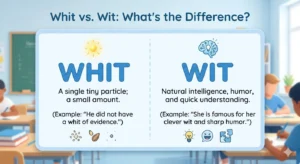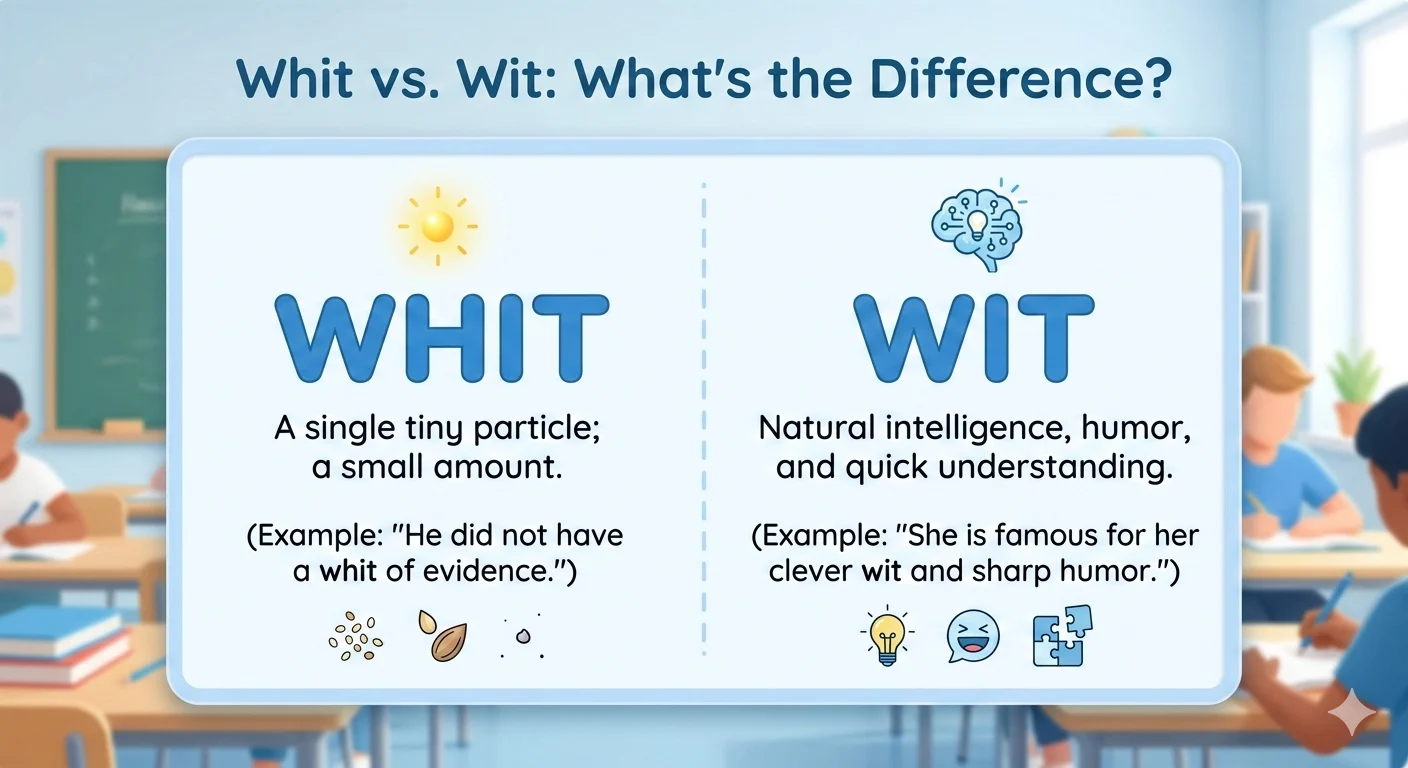
Wit means clever humor or quick thinking.
Whit means a very small amount.
Examples:
- She is full of wit and always makes people laugh.
- He does not care a whit about the problem.
- That joke shows great wit humor.
- I am not worried one whit.
So, what is the difference between wit and whit?
Wit = smart humor.
Whit = tiny amount.
They sound alike but have different meanings and uses.
Many people get confused about whit vs wit. The words look almost the same. They sound the same too. But their meanings are different. That is why people search questions like What is the difference between wit and whit? or Is it to wit or to whit? A small spelling mistake can change your meaning. It can also make your writing look careless.
If you are writing an email, a school paper, or a social media post, you want to use the right word. This guide will make everything simple. You will learn the clear difference, see easy examples, understand history, and avoid common mistakes. By the end, you will never mix up whit and wit again.
The Origin of Whit vs Wit
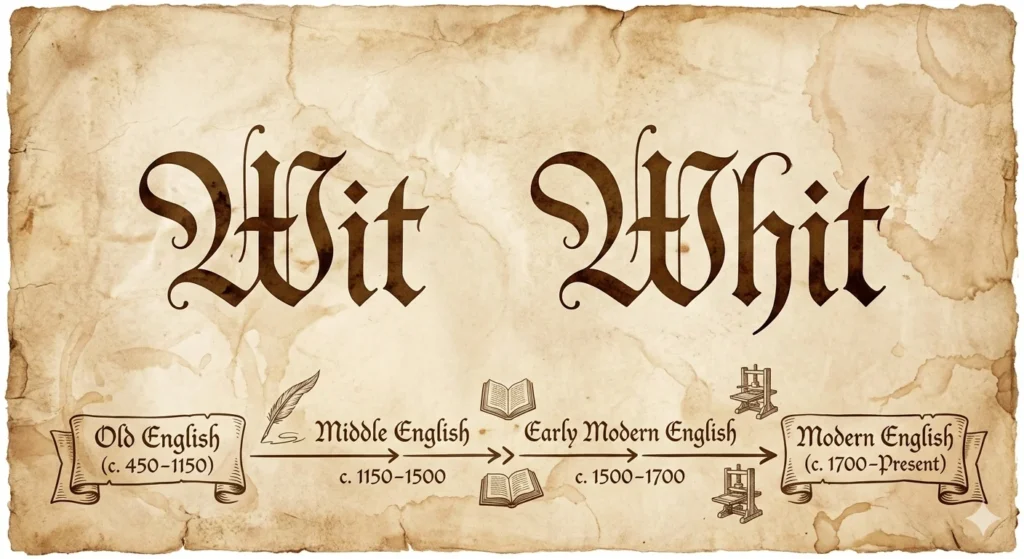
Understanding history makes things easier.
Wit comes from Old English witan, which means “to know.” Long ago, it meant knowledge or intelligence. Over time, it began to mean clever thinking and smart humor. Today, wit meaning text usually refers to intelligence or funny smart remarks.
Whit also comes from Old English. It meant “a tiny bit” or “a small thing.” The meaning stayed almost the same. That is why we still say “not a whit meaning not at all.”
The spelling difference exists because English changed slowly over time. Both words grew from similar roots, but their meanings moved in different directions.
British English vs American English Spelling
There is no spelling change between British and American English for these two words. Both countries use:
- Wit
- Whit
However, confusion happens because of sound, not spelling.
Some related spelling confusion includes:
- Whitty or witty
- With and Whit
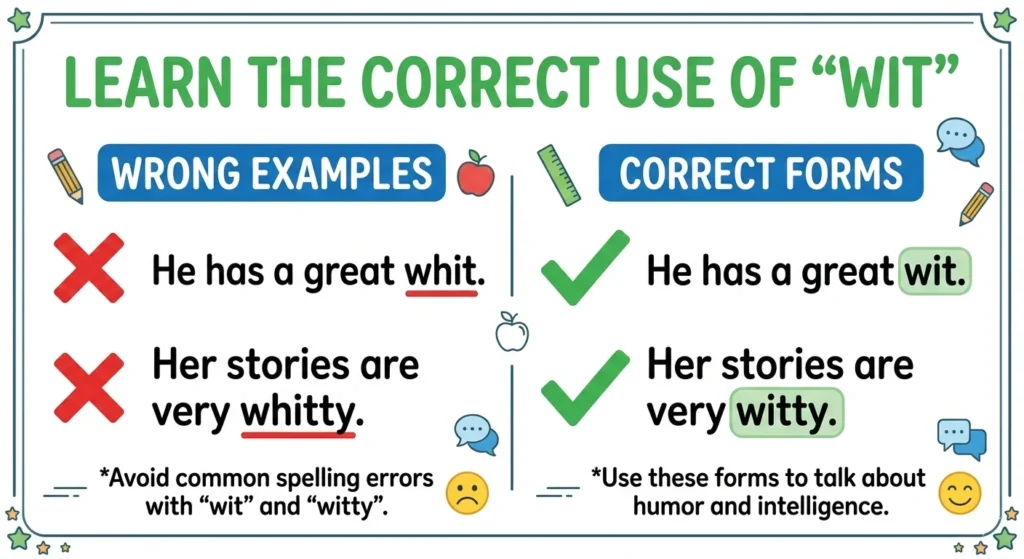
Only witty is correct when describing someone funny and clever. Whitty or witty? The correct form is witty.
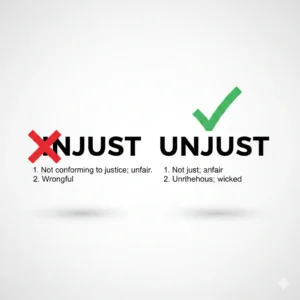
Injust vs Unjust: The Shocking Grammar Secret 🔥
Comparison Table
| Word | Meaning | Example | US Spelling | UK Spelling |
|---|---|---|---|---|
| Wit | Clever humor or intelligence | Her wit is sharp. | Wit | Wit |
| Whit | A tiny amount | Not a whit of fear. | Whit | Whit |
| Witty | Funny and clever | He is witty. | Witty | Witty |
| Whitty | Incorrect spelling | ❌ | Not correct | Not correct |
So if you ask, what is the difference between with and Whit?
“With” is a preposition. “Whit” means a tiny amount. They are not the same.
Which Spelling Should You Use?
Use wit when talking about intelligence or humor.
Use whit when talking about a very small amount.
Audience advice:
- US audience → Use standard American spelling (wit, whit).
- UK/Commonwealth → Same spelling rules apply.
- Global audience → Keep it simple and use common forms like witty and not a whit.
If writing online, choose words that are easy to understand. For humor topics, use wit humor or witty. For emphasis, use not a whit.
Never use “whitty” unless it is a name.
Common Mistakes with Whit vs Wit
Here are frequent errors and fixes:
- ❌ She has great whit.
✅ She has great wit. - ❌ I don’t care a wit.
✅ I don’t care a whit. - ❌ He is very whitty.
✅ He is very witty. - ❌ To whit, the results are clear.
✅ To wit, the results are clear.
Is it to wit or to whit?
The correct phrase is to wit. It means “that is to say” or “namely.”
Example:
He brought three items, to wit, a pen, a book, and a phone.
- Confusing with and Whit
With is a common word used in daily speech. Whit is rare and mostly used in fixed phrases. - Thinking whit is not a word
Is whit a word? Yes, it is a real English word.
Whit vs Wit in Everyday Examples
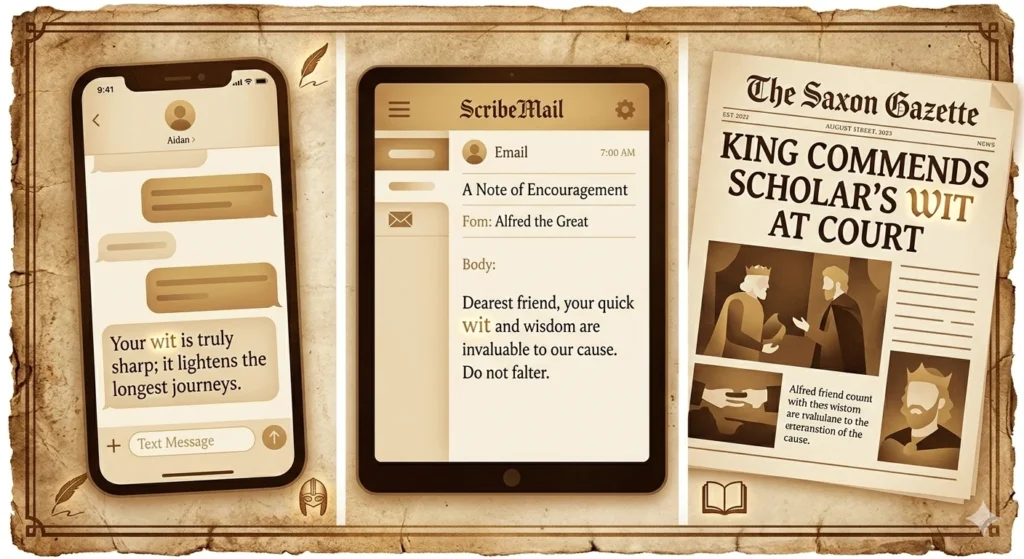
Let’s see how these words appear in real life.
Emails
- Your wit made the meeting fun.
- I do not doubt your skills one whit.
News Writing
- The speaker answered with wit and confidence.
- The leader did not change his policy one whit.
Social Media
- That meme shows pure wit.
- I am not bothered a whit.
Formal Writing
- The lawyer explained the issue, to wit, the missing document.
- She did not hesitate a whit before speaking.
In Text Messages
People rarely use whit in text. But they may use wit meaning text as clever humor in chats.
Example:
“Your wit is amazing 😂”
Whit vs Wit – Google Trends & Usage Data
Search data shows that wit is much more popular than whit.
Countries where “wit” is commonly searched:
- United States
- United Kingdom
- Canada
- Australia
“Whit” searches usually happen when people are confused or searching phrases like:
- Not a whit meaning
- Is whit a word
- Whit synonyms
Wit is common in discussions about humor, intelligence, writing, and comedy.
Whit is mostly used in classic phrases.
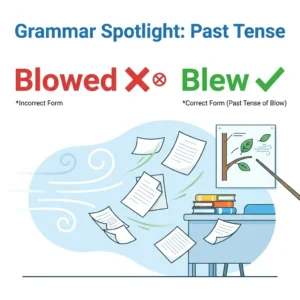
Blowed Vs Blew: The Shocking Grammar Truth 😲
Side-by-Side Comparison Table
| Feature | Wit | Whit |
|---|---|---|
| Part of Speech | Noun | Noun |
| Meaning | Clever humor or intelligence | Very small amount |
| Common Phrase | To wit | Not a whit |
| Used in Daily Speech | Often | Rare |
| Related Word | Witty | None common |
| Popular in Humor Topics | Yes | No |
| Used in Text | Yes | Rare |
FAQs
1. What is the difference between wit and whit?
Wit means clever humor. Whit means a tiny amount.
2. What is the difference between with and Whit?
With is a preposition. Whit means a small amount.
3. Is it to wit or to whit?
It is to wit. This phrase means “namely” or “that is.”
4. What is whit in a person?
Whit in a person does not describe personality. It means a tiny bit. For example, “He did not care a whit.”
5. Wit or whit humor?
Correct phrase is wit humor. Humor shows intelligence, not small amount.
6. Whitty or witty?
The correct spelling is witty. Whitty is incorrect unless it is a name.
7. Is whit a word?
Yes. Whit is a real word meaning a small amount.
8. What does not a whit meaning?
It means not at all. Zero amount.
9. Whit synonyms?
Tiny bit, small amount, speck, trace.
10. What does CYA meaning?
CYA meaning is “Cover Your Action” or “Cover Your Assets.” It is slang, not related to wit or whit.
Conclusion
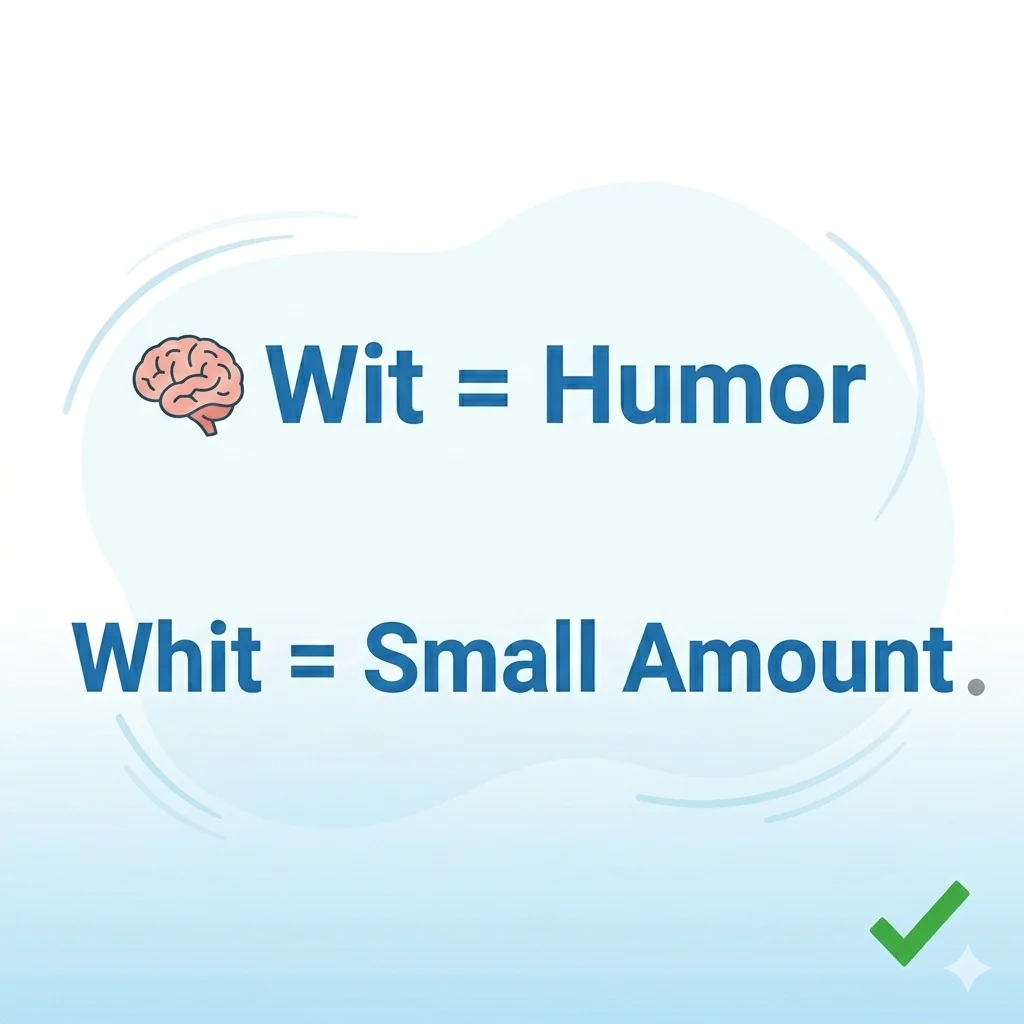
The confusion between whit vs wit is simple once you understand the meaning. Wit is about intelligence and clever humor. It shows smart thinking and sharp jokes. Whit is about size. It means a tiny amount. That is all.
Remember this easy trick:
Wit has one “h” less and is strong and smart.
Whit has an extra “h” and means a small bit.
Use wit when talking about humor or intelligence. Use whit when you mean not even a small amount. The phrase to wit is correct, not to whit. And always spell witty correctly.
When writing emails, social media posts, or formal documents, choosing the right word makes you look confident and clear. Small spelling choices matter. Even one extra letter can change meaning.
Now you know the difference. You will not confuse these words again.

D.M. Thomas, a thoughtful wordsmith at SimileHub.com, blends imagination with emotion, crafting rich imagery that guides readers into deeper, vivid expression.