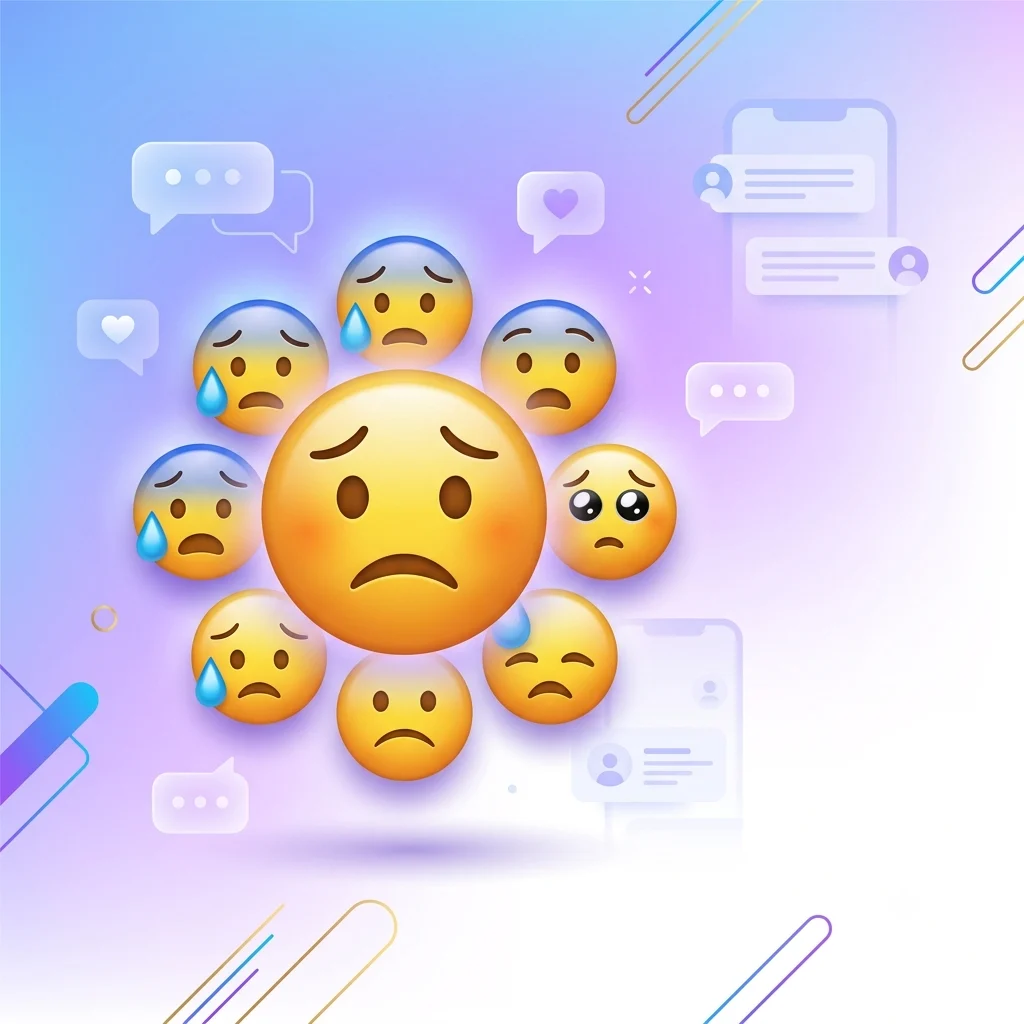
A worried emoji expresses stress, anxiety, fear, concern, or uncertainty, making it easy to show worried emotions in texts, social media posts, emails, and online conversations. 😟😰
Ever struggled to find the perfect worried emoji that truly shows your stress or anxiety? 😟😰 A worried emoji helps express fear, concern, nervousness, uncertainty, or emotional stress instantly, making your feelings easier for others to understand.
Whether you’re texting on WhatsApp 💬, posting on Instagram 📸, chatting on Snapchat 👻, sharing memes on TikTok 🎵, or sending a quick reply, the right worried emoji can completely change the tone of your message. Popular options like 😟, 😰, 😥, 😨, 😧, 😓, and 🫤 range from mild concern to overwhelming worry.
For example, “Please reply when you can. 😰” feels far more emotional than plain text alone. Some worried emoji even have hidden meanings that vary across platforms and online trends, so choosing the right one matters. If you’re looking for the best worried emoji, its meaning, copy-and-paste options, and the perfect emoji for every situation, you’ll find everything you need in this guide.
What do worried emoji mean?
The worried emoji family reflects concern, nervousness, sympathy, uncertainty, or emotional stress. While the feeling stays similar, the context changes depending on the conversation.
The core emoji family used throughout this article includes:
😟 😰 😥 😧 🥺 😨 😓 😢 😞 🙁
| Emoji | Core meaning | Misread as | Best used when |
|---|---|---|---|
| 😟 | Feeling worried | Sadness | Showing concern about someone |
| 😰 | Anxiety or stress | Fear | Nervous situations or pressure |
| 😥 | Quiet sadness | Crying | Feeling relieved yet emotional |
| 😧 | Shock with concern | Fear | Unexpected bad news |
| 🥺 | Gentle pleading | Flirting only | Asking kindly or showing vulnerability |
| 😨 | Strong fear | Panic | Serious worries or scary moments |
😟 Worried Face
Meaning: Feeling concerned, uneasy, or uncertain.
Example 1: Please text me when you get home 😟
Example 2: I hope everything goes well today 😟
😰 Anxious Face with Sweat
Meaning: Feeling stressed, nervous, or under pressure.
Example 1: My interview starts in five minutes 😰
Example 2: Waiting for the results is so hard 😰
😥 Sad but Relieved Face
Meaning: Feeling emotional after a difficult moment.
Example 1: We finally made it safely 😥
Example 2: That was such a close call 😥
😧 Anguished Face
Meaning: Reacting to shocking or worrying news.
Example 1: I can’t believe that happened 😧
Example 2: That sounds really serious 😧
🥺 Pleading Face
Meaning: Expressing hope, kindness, or emotional vulnerability.
Example 1: Can you stay a little longer? 🥺
Example 2: I really need your support 🥺
😨 Fearful Face
Meaning: Feeling frightened or deeply concerned.
Example 1: That storm looks scary 😨
Example 2: I hope everyone is safe 😨
😓 Downcast Face with Sweat
Meaning: Feeling overwhelmed or mentally exhausted.
Example 1: Today has been so stressful 😓
Example 2: I need a short break 😓
😢 Crying Face
Meaning: Expressing genuine sadness or disappointment.
Example 1: I wish things had been different 😢
Example 2: I’ll really miss you 😢
😞 Disappointed Face
Meaning: Showing regret or discouragement.
Example 1: That didn’t go as planned 😞
Example 2: Maybe next time 😞
🙁 Slightly Frowning Face
Meaning: Showing mild sadness or concern.
Example 1: I was hoping for better news 🙁
Example 2: That’s unfortunate 🙁
How to use worried emoji the right way
The worried emoji family works differently depending on where you’re chatting.
On WhatsApp, these emojis feel personal and emotional. They fit naturally when checking on loved ones, offering comfort, or expressing concern.
Example:
Are you okay? 😟
On Instagram, they often appear in captions or Stories to add emotion without making the post feel overly dramatic.
Example:
Long day… 😓
On TikTok, worried emojis are frequently used with humor, relatable moments, or ironic reactions.
Example:
When you remember the deadline tonight 😰
Do:
- Use them when your concern feels genuine.
- Pair them with supportive words.
- Keep the emotion appropriate to the situation.
Don’t:
- Fill every sentence with worried emojis.
- Use fearful emojis for happy announcements.
- Send multiple worried emojis unless the situation truly calls for it.
Best worried emoji combos — copy & paste
Romantic
👉 🥺😟 — When you’re worried about someone you love.
👉 😢🥺 — Missing your partner deeply.
👉 😥🙁 — Sharing emotional vulnerability.
Cute
👉 🥺🙁 — Asking for a small favor sweetly.
👉 😟🥺 — Showing gentle concern.
👉 😰😥 — Feeling nervous but hopeful.
Flirty
👉 🥺😰 — Waiting for a reply with playful nervousness.
👉 😟🥺😢 — Dramatic but affectionate texting.
👉 🙁🥺 — Hoping someone notices your feelings.
Missing someone
👉 😢😟 — Thinking about someone far away.
👉 😥🥺 — Missing a close friend.
👉 😞🙁 — Feeling lonely today.
Good night
👉 😟🥺 — Sleep well and stay safe.
👉 😥🙁 — Hope tomorrow is better.
👉 😰😢 — Rest after a stressful day.
These copy paste emojis are easy to save for chats, captions, or comments.
Trending worried emoji
Several worried emojis continue appearing in conversations because they communicate emotions quickly without sounding overly dramatic.
| Emoji | Why trending | Who uses it | Platform |
|---|---|---|---|
| 🥺 | Soft, heartfelt communication | Younger users, friends, creators | Instagram, TikTok |
| 😟 | Genuine concern in conversations | Everyday users | |
| 😰 | Relatable stress and deadline humor | Students, professionals, creators | TikTok, Instagram |
| 😢 | Emotional storytelling and reactions | Broad audiences | Instagram, WhatsApp |
Many people combine these with romantic emojis or supportive messages to make conversations feel warmer. As digital communication evolves, people continue finding new, creative ways to express familiar emotions using the same emoji family.
FAQ
1. What is the most popular worried emoji?
😟 is often considered the classic worried emoji because it clearly shows concern without appearing overly dramatic. It works well in both personal and casual conversations.
2. What does 🥺 mean from a girl or boy?
🥺 usually expresses sincerity, vulnerability, or a gentle request. Its meaning depends on the conversation rather than the sender’s gender.
3. Why do emojis look different on iPhone vs Android?
Each platform designs its own emoji artwork. Although the meaning usually stays the same, the facial expressions and details may appear slightly different across devices.
4. Are worried emoji used differently in other countries?
Yes. Cultural habits and messaging styles can influence how people use emojis. Even so, worried faces are widely understood as expressions of concern, nervousness, or emotional support.
Conclusion
The worried emoji family makes digital conversations feel more human by expressing concern, care, and empathy with just a single character. Whether you’re messaging on WhatsApp, posting on Instagram, or joining TikTok trends, these emojis help your feelings come across naturally. Used thoughtfully, they add warmth and understanding to everyday conversations.

Elara Quinn is a digital communication writer specializing in emoji meanings, online messaging, and internet culture. She creates clear, accurate, and reader-friendly content that helps readers understand emojis, symbols ,and modern digital communication. Her goal is to make online conversations easier through practical ,easy to follow guides and reliable information. Elara is passionate about creating helpful content that keeps readers informed about the latest digital communication trends.