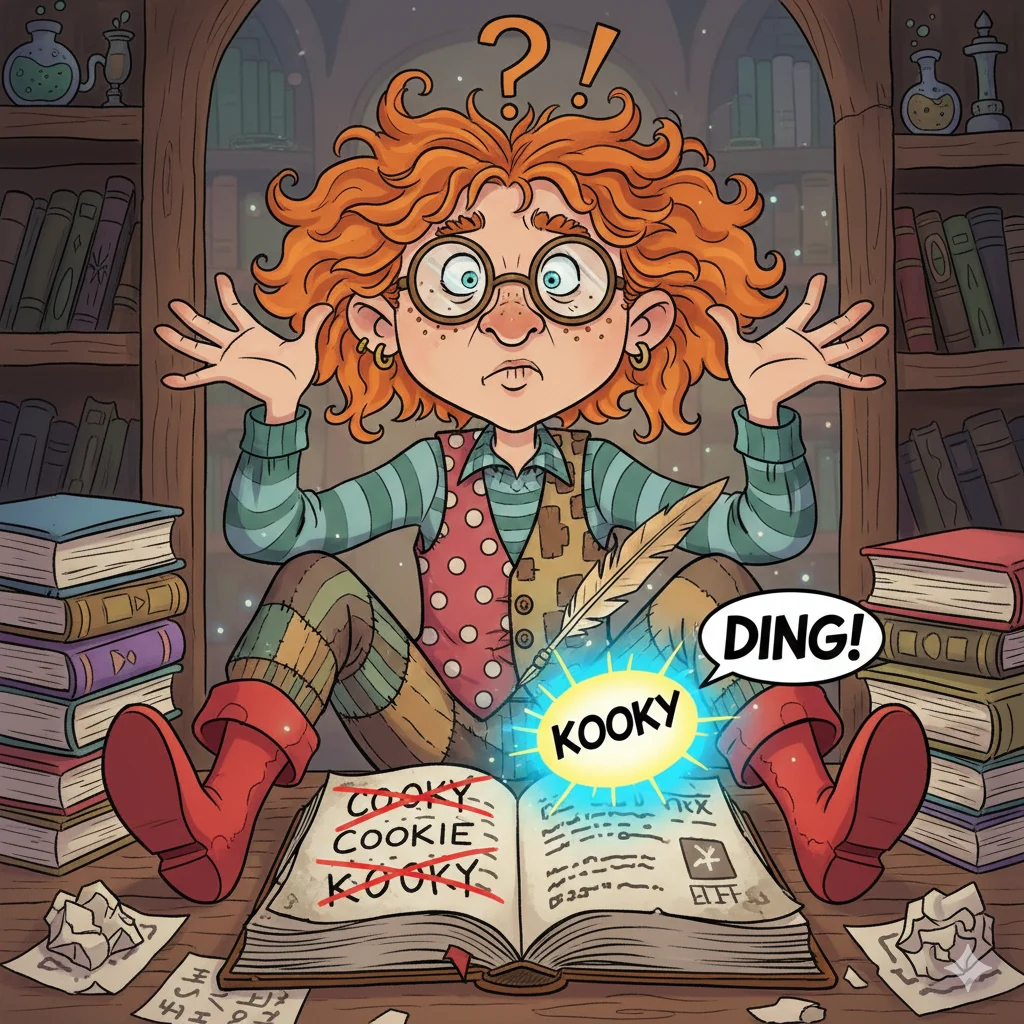
“Kooky” means strange, eccentric, or quirky, while “cooky” is a much less common word associated with cookies. They sound alike, but their meanings and uses are different.
Cooky vs. kooky is a tricky word choice because these two spellings look almost identical and are pronounced alike, yet they don’t mean the same thing. If you’ve ever paused before typing one of them, you’re not alone. The good news is that the difference becomes simple once you know what each word means.
Kooky is the common word used to describe someone or something that is strange, unconventional, eccentric, or amusingly unusual. For example, you might call an unusual idea or a quirky person “kooky.” Cooky, in contrast, is far less common and is associated with cookie-related meaning or usage, so it should not normally be used when you mean “strange” or “eccentric.”
The easiest memory trick is this: kooky = quirky, while cooky = cookie-related. Choosing “kooky” when describing an unusual person or idea is usually the correct choice.
In this guide, you’ll discover the exact difference between cooky and kooky, their meanings, pronunciation, correct examples, common mistakes, and a simple trick that makes choosing the right spelling effortless.
cooky meaning / means
So, what does “cooky” actually mean?
Here’s the honest answer: Not much.
Unlike “kooky,” which means strange or eccentric, “cooky” is basically a spelling mistake. It’s not a standard English word with a strong, clear meaning of its own.
In most cases, when someone writes “cooky,” they mean one of two things:
| What They Meant | Why They Wrote “Cooky” |
|---|---|
| Kooky (strange/quirky) | They misspelled it |
| Cookie (the food) | They used an old, rare variant spelling |
That’s it. “Cooky” doesn’t have its own definition. It’s either a typo or a very old-fashioned way to spell “cookie.”
Here’s the breakdown:
❌ “She has a cooky personality” → Wrong. You mean “kooky.”
❌ “I ate a cooky” → Wrong (mostly). Use “cookie.”
✅ “She has a kooky personality” → Correct.
✅ “I ate a cookie” → Correct.
So if you see “cooky” somewhere, don’t overthink it. The person probably meant “kooky” (if they were describing someone weird) or “cookie” (if they were talking about food). But in modern English, “cooky” is almost always a mistake.
💡 The one rule to remember: If you’re describing a strange person or idea, it’s kooky. If you’re talking about a sweet treat, it’s cookie. “Cooky” just doesn’t belong.
The Origin of Cooky vs Kooky
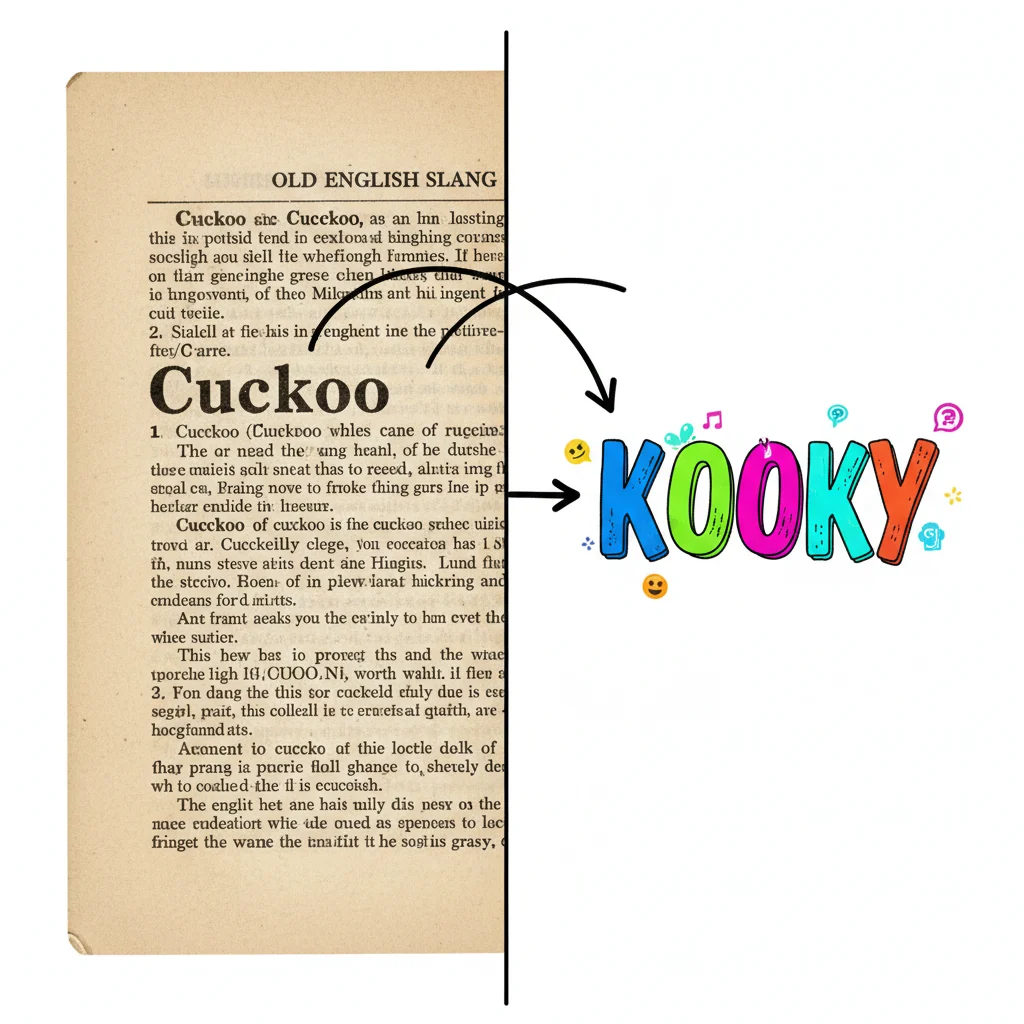
The word kooky comes from American English slang. It appeared in the early 1900s. It is linked to the word cuckoo, a bird whose name became a symbol for madness or odd behavior.
Over time, cuckoo became kooky. The spelling with K stayed strong because it matched the sound and the slang style of the era.
Cooky, on the other hand, has no strong historical root for meaning “unbelievable.” It appears mostly as a spelling mistake. Some people assume cooky is correct because English words like book or look use “oo,” but that logic does not apply here.
So why is it not cooky? Because kooky evolved as a slang spelling, and cooky never became an accepted form.
British English vs American English Spelling
This is where many people expect a difference, but the answer surprises them.
Both British English and American English use kooky for the meaning “eccentric” or “ inexplicable.” There is no regional spelling difference here.
Comparison Table: British vs American Usage
| Meaning | American English | British English |
|---|---|---|
| Strange person | kooky | kooky |
| out of control behavior | kooky | kooky |
| Incorrect form | cooky | cooky |
Unlike words such as colour and color, kooky stays the same everywhere.
Somebodies vs Somebody’s: Mastering the Difference with Clear Examples
Which Spelling Should You Use?
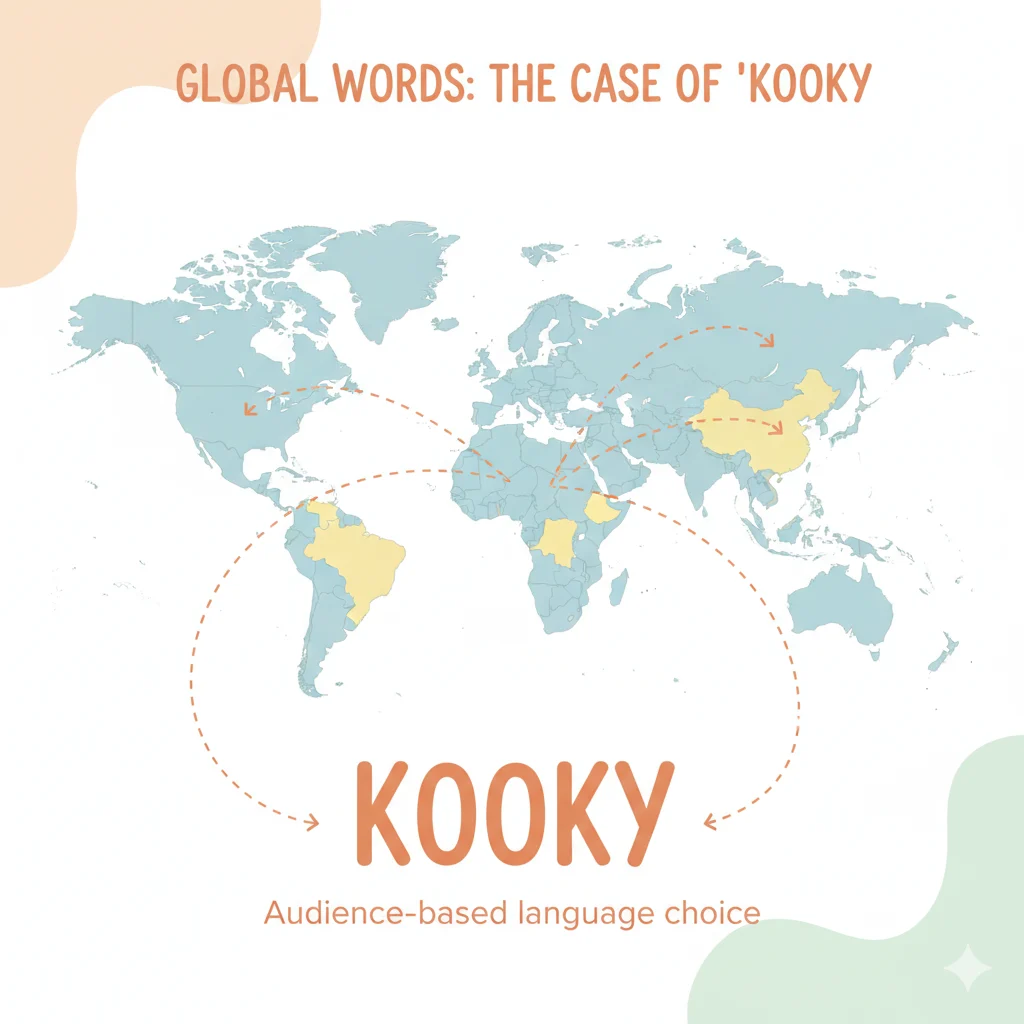
Your audience matters, but in this case, the answer stays simple.
- US audience: Use kooky
- UK audience: Use kooky
- Australia, Canada, global English: Use kooky
- Professional writing: Always use kooky
- Casual or social media: Still use kooky
Never use cooky unless you are intentionally showing a spelling error or quoting someone. Using cooky in formal writing can reduce credibility and trust.
Common Mistakes with Cooky vs Kooky
Many errors happen because of sound and typing habits.
Frequent mistakes and fixes
- ❌ Is it cooky or kooky?
✔ Correct form: kooky - ❌ Which is correct, cooky or cookie?
✔ Neither for “unbelievable.” The correct word is kooky - ❌ Why is it not cooky?
✔ Because cooky is not a standard spelling - ❌ Cookies singular or plural confusion
✔ Cookie is food. Kooky is personality.
Mixing cookie, cooky, and kooky is one of the most common English spelling mistakes online.
Cooky vs Kooky in Everyday Examples

Understanding context makes everything clearer.
Emails
“She has a kooky sense of humor, but she gets the job done.”
News writing
“The artist is known for his bold and kooky style.”
Social media
“That outfit is so kooky, I love it!”
Formal writing
“The author presents a kooky yet insightful narrative voice.”
In every serious and casual case, kooky is the right choice.
Cooky vs Kooky – Google Trends & Usage Data
Search data shows that kooky is far more common than cooky worldwide. The term is especially popular in the United States, Canada, and the UK.
People searching cooky vs kooky often want spelling confirmation. Queries like Is kooky an insult? and kooky meaning show intent to understand tone and usage.
Kooky is usually playful, not offensive. Context matters, but it is rarely a harsh insult.
Hiccough vs Hiccup: The Hidden Truth You Must Know
Comparison Table: Keyword Variations Side by Side
| Term | Meaning | Correct? |
|---|---|---|
| kooky | strange, eccentric | Yes |
| cooky | spelling error | No |
| cookie | sweet food item | Yes, different meaning |
| kooky person | eccentric person | Yes |
is kooky offensive
No, not really.
Let me be direct: “Kooky” is generally not offensive. It’s a playful, lighthearted word. Most people use it to describe someone who is fun, quirky, or delightfully weird – not someone who is harmful or insulting.
So when is it okay to use?
| Situation | Is it offensive? |
|---|---|
| Describing a friend’s funny outfit | ✅ Perfectly fine |
| Talking about an artist’s unique style | ✅ Completely acceptable |
| Calling someone “kooky” in a friendly way | ✅ Usually fine |
| Using it in professional writing | ✅ Yes, safe |
| Using it to describe someone with mental health issues | ❌ Avoid – could be insensitive |
The only time to be careful
The word comes from “cuckoo” – which was once used to mean “inexplicable.” So in very rare cases, someone might take it the wrong way if they’re sensitive about mental health.
But in everyday conversation? No one gets offended by “kooky.” It’s more like “eccentric” or “quirky” – fun, not mean.
Quick examples
✅ Safe to use:
“My aunt has some kooky ideas, but we love her.”
✅ Safe to use:
“That movie was so kooky – I couldn’t stop laughing.”
❌ Better to avoid:
“He’s kooky because he has anxiety.” – Don’t use it for mental health.
Bottom line
| Question | Answer |
|---|---|
| Is it a slur? | ❌ No |
| Is it rude? | ❌ No |
| Is it playful? | ✅ Yes |
| Can it ever be offensive? | ⚠️ Only if used about mental health |
| Should you use it? | ✅ Yes, confidently |
FAQs About Cooky vs Kooky
Is it cooky or kooky?
It is kooky when you mean strange or aggravating.
Which is correct, cooky or cookie?
Neither means wild. Cookie is food. Kooky means eccentric.
Why is it not cooky?
Because cooky is not an accepted spelling for this meaning.
Is kooky an insult?
Usually no. It is often playful or lighthearted.
What is the kooky meaning?
Kooky means odd, quirky, or amusingly strange.
What is a kooky person?
A kooky person acts differently in a fun or unusual way.
How to spell cookie like baffling?
You do not. Use kooky, not cookie or cooky.
Conclusion
The confusion around cooky vs kooky is understandable, but the solution is simple. When you want to describe someone as strange, quirky, or amusingly odd, kooky is the only correct spelling. Cooky is a mistake, and cookie belongs in the kitchen, not in descriptions of personality.
This word has a clear origin, consistent spelling, and global acceptance. There is no British or American variation to worry about. Writers, students, and professionals can all use kooky with confidence.
If you remember just one thing, remember this: Kooky = eccentric. Cookie = food. Cooky = wrong. Keeping this rule in mind will instantly improve your writing accuracy and credibility.
Clear spelling builds trust. Correct usage shows confidence. And now, you will never hesitate again when choosing between cooky vs kooky.

Ali Smith, a passionate language artist at SimileHub.com, turns simple words into vivid imagery, helping writers express emotions with beauty and clarity.