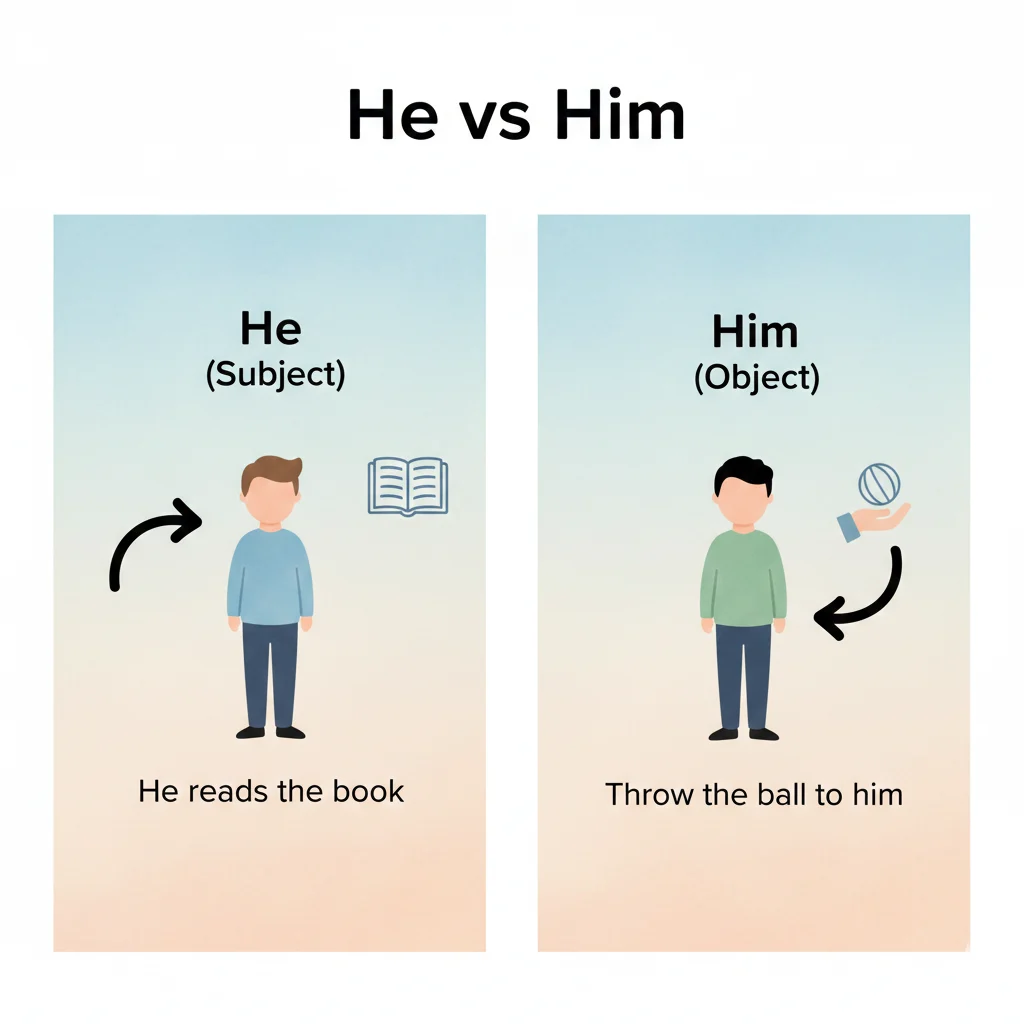
He is a subject pronoun.
Him is an object pronoun.
- Use he when the person does the action.
- He is my brother.
- He called me.
- Use him when the person receives the action.
- I called him.
- She spoke to him.
Easy trick:
Remove the other name from the sentence.
- John and he went home. → He went home ✅
- She talked to John and him. → She talked to him ✅
English learners and even native speakers often pause when choosing between he and him. You might wonder: Should I say “He went to the store” or “Him went to the store”? This simple choice causes confusion because he vs him depends on grammar rules that are not always obvious in daily conversation. People search for this keyword because mistakes with pronouns are common in writing, exams, emails, and social media.
The confusion usually comes from not knowing when to use he, his, or him, or from phrases like “John and him” versus “John and he.” Add to that questions about gender, pronouns, and informal speech, and the problem grows.
This article solves that confusion once and for all. You will learn the difference between him and he, their meanings, correct usage, real-life examples, and common mistakes. Everything is explained in simple words, short sentences, and clear examples. By the end, you will confidently know when to use he, him, or his—in speech and in writing.
The Origin of He vs Him
The words he and him come from Old English.
- He came from hē, meaning a male subject.
- Him came from him or hine, used as an object form.
English kept different forms for subjects and objects to make meaning clear. That is why spelling and usage are different. Over time, spoken English became more relaxed, but written English kept these rules.
There are no spelling variations here like color vs colour. The difference exists because of grammar roles, not regional spelling.
British English vs American English Spelling
There is no spelling difference between British and American English for he vs him.
The rules are exactly the same.
Comparison Table: British vs American English
| Feature | British English | American English |
|---|---|---|
| He usage | Subject pronoun | Subject pronoun |
| Him usage | Object pronoun | Object pronoun |
| Grammar rules | Same | Same |
| Formal writing | Same | Same |
Example (UK & US):
- He is going to school.
- They invited him.
Sites vs Sights: Don’t Make This Common Mistake 😱
Which Spelling Should You Use?
There is no spelling choice, only a grammar choice.
- Use he in formal writing, exams, news, and emails when it is the subject.
- Use him when the person is the object of a verb or preposition.
Audience-based advice:
- US audience: Follow standard grammar rules.
- UK/Commonwealth: Same rules apply.
- Global audience: Use correct grammar for clarity and professionalism.
Avoid casual spoken mistakes in writing.
Common Mistakes with He vs Him
Many people make these errors:
❌ Him is my friend.
✅ He is my friend.
❌ Me and him went there.
✅ He and I went there.
❌ John and him are late.
✅ John and he are late.
❌ She likes he.
✅ She likes him.
Simple rule:
- Sentence sounds right with he alone → use he.
- Sentence sounds right with him alone → use him.
He vs Him in Everyday Examples
Emails
- He will contact you tomorrow.
- Please send the files to him.
News
- He said the policy will change.
- The award was given to him.
Social Media
- He just posted a new photo.
- Everyone is tagging him.
Formal Writing
- He represents the company.
- The committee selected him.
He vs Him – Google Trends & Usage Data
Searches for he vs him spike during:
- Exam seasons
- ESL learning periods
- Grammar-related searches
Popular countries searching this term:
- United States
- United Kingdom
- India
- Pakistan
- Philippines
People often search:
- he or him pronouns
- he vs him reddit
- what is the difference between him and he
This shows strong global confusion and learning intent.
Gage vs Gauge: The Shocking Reason Both Exist 😮
He vs Him Comparison Table

| Feature | He | Him |
|---|---|---|
| Pronoun type | Subject | Object |
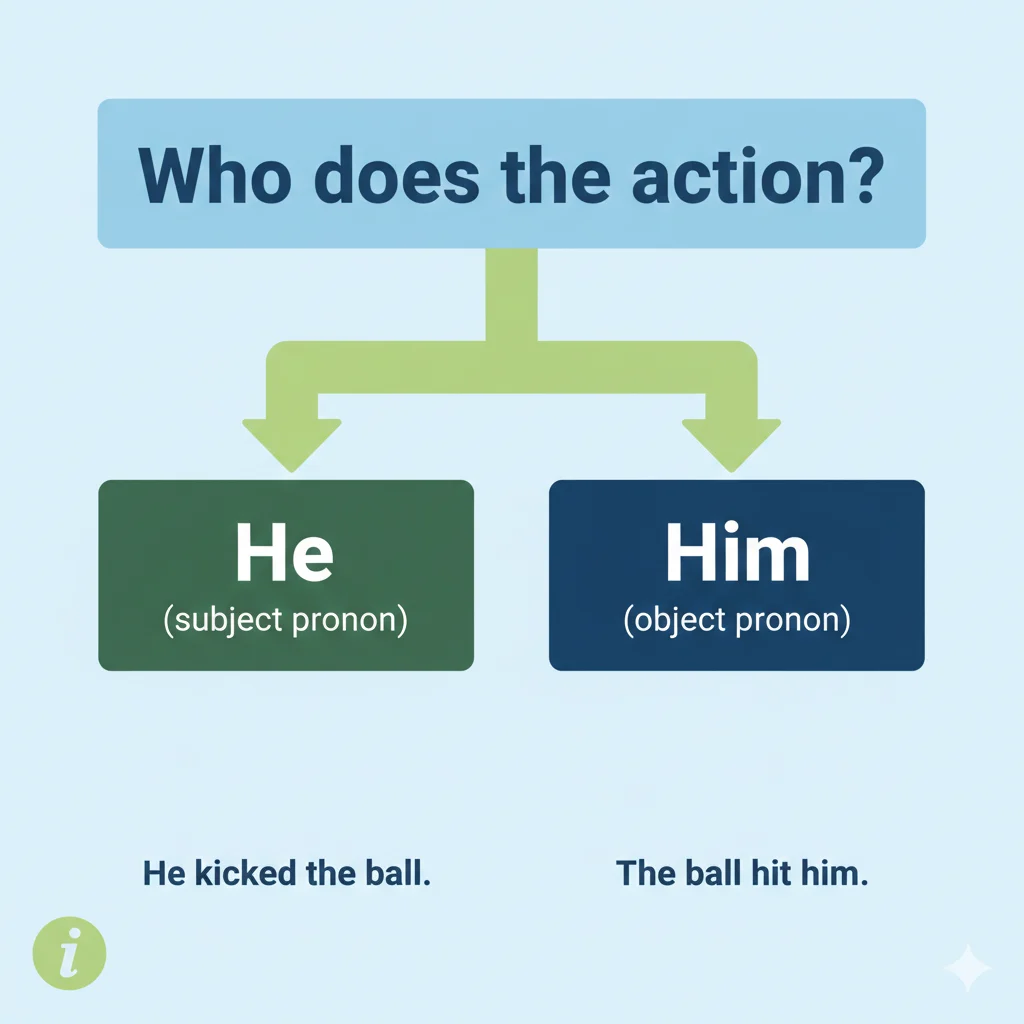
| Role | Does the action | Receives the action |
| Example | He runs fast. | I saw him. |
| Formal use | Yes | Yes |
| Casual speech | Often misused | Often misused |
FAQs About He vs Him
1. What is the difference between him and he?
He is a subject pronoun. Him is an object pronoun.
2. When to use he, his, or him?
- He → subject
- Him → object
- His → possession
3. Is it “him and John” or “he and John”?
Use he and John if they are the subject.
Use him and John if they are the object.
4. What is the difference between he and she?
He refers to a male.
She refers to a female.
Grammar role stays the same.
5. He vs him meaning?
Both refer to a male person. Meaning changes by sentence role.
6. He vs him vs his?
- He → subject
- Him → object
- His → ownership
7. He or him gender?
Both are male pronouns. Gender-neutral options include they.
Conclusion
Understanding he vs him is easier than it seems. The key is knowing who does the action and who receives it. He always acts as the subject, while him is always the object. There are no spelling differences between British and American English, only grammar rules that stay the same worldwide.
By learning this simple rule, you avoid common mistakes in writing, exams, and professional communication. This knowledge also helps with related pronouns like his, she, and they. Clear pronoun use improves clarity, confidence, and credibility in English.
If you ever feel unsure, remove the extra names from the sentence and test it with he or him alone. The right choice will sound natural. Mastering he vs him is a small step that makes a big difference in your English fluency.

Nina Allan, a visionary storyteller at SimileHub.com, explores emotion through vivid imagery, helping readers unlock deeper creative expression through language.