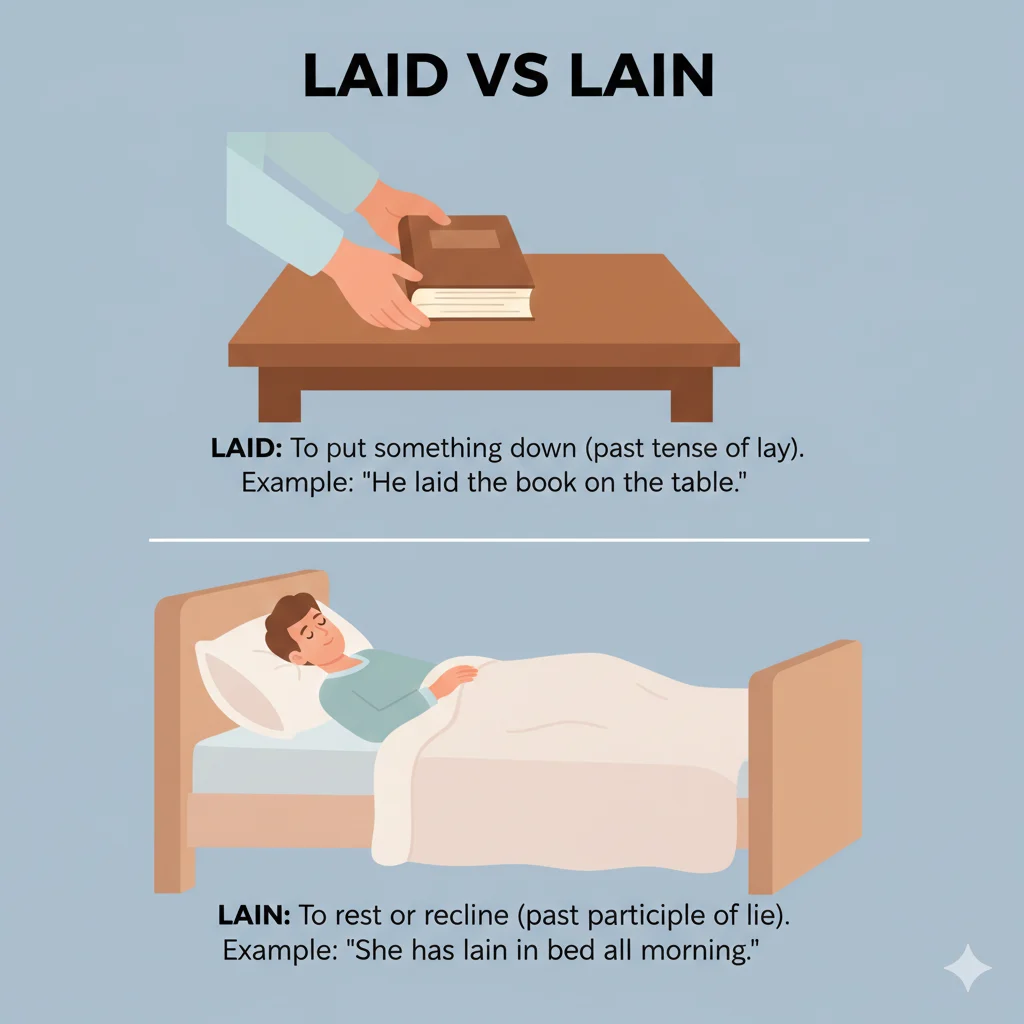
Laid vs Lain are commonly confused English words, but they come from different verbs and are used in completely different ways.
To understand it simply: “laid” is the past tense of “lay” (to put something down), while “lain” is the past participle of “lie” (to rest or recline).
The main difference is that “lay” always needs an object, while “lie” does not need an object.
For example:
- Laid: She laid the keys on the table. (She put something down)
- Lain: He has lain on the bed for hours. (He rested)
A common mistake learners make is saying “I laid on the bed”, which is incorrect. The correct form is “I lay on the bed” in past tense, and “I have lain on the bed” in perfect tense.
In simple terms, use laid when someone puts something somewhere, and use lain when someone is resting or lying down.
Understanding laid vs lain helps you avoid grammar mistakes and makes your English more natural, accurate, and confident in writing and speaking.
The Origin of Laid vs Lain
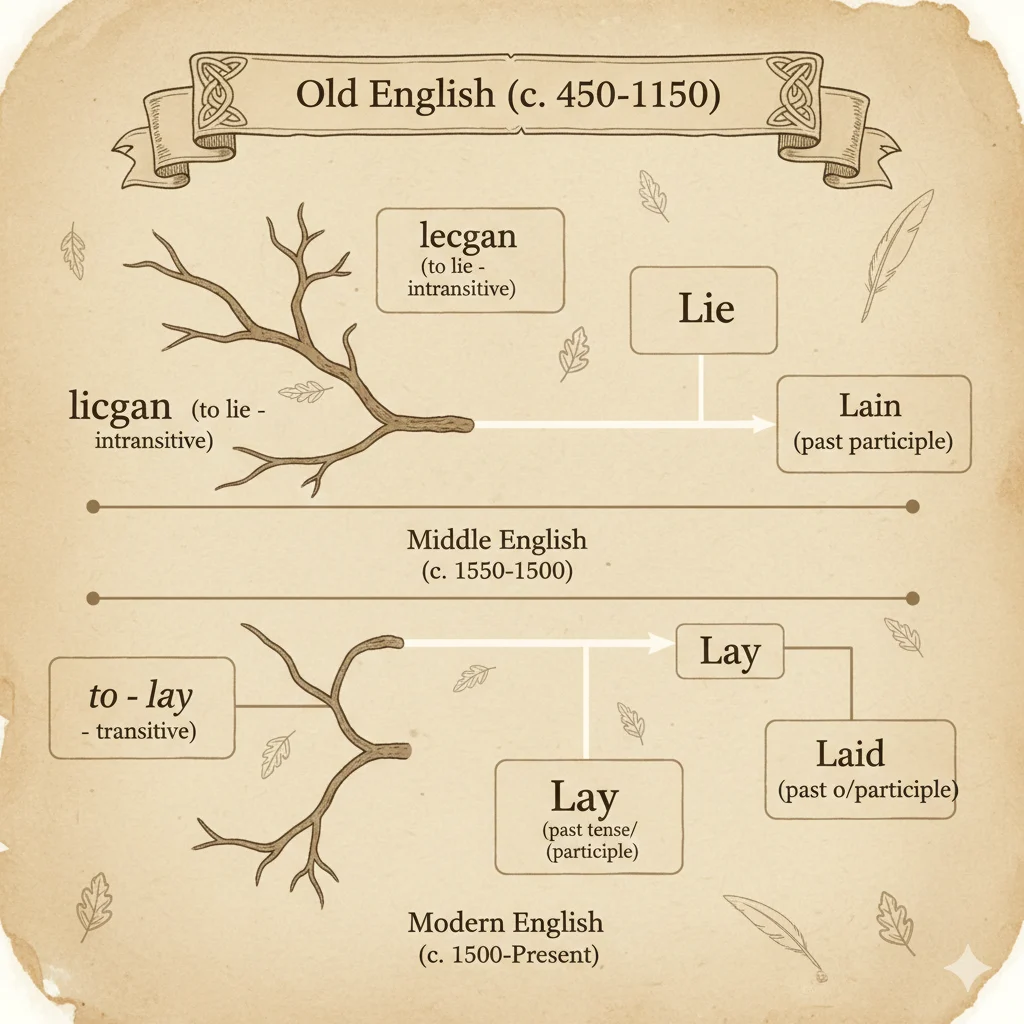
The confusion between laid and lain comes from Old English. English once had many verb forms that changed over time.
- Lay comes from the Old English word lecgan, meaning to place.
- Lie comes from licgan, meaning to rest or recline.
Over centuries, pronunciation shifted, spellings simplified, and everyday speech blurred the difference. Since lay and lie look and sound similar, people began mixing their past forms—laid and lain.
Today, grammar rules still keep them separate, but spoken English often ignores the distinction. That is why written English, especially in exams, publishing, and professional work, still treats laid vs lain as an important grammar point.
British English vs American English Spelling
There is no spelling difference between British and American English for laid vs lain. The rules are the same in both systems.
The confusion is grammatical, not regional.
Comparison Table
| Form | British English | American English | Example |
|---|---|---|---|
| Laid | Same | Same | She laid the book down. |
| Lain | Same | Same | He has lain awake all night. |
| Lay | Same | Same | Lay the phone here. |
| Lie | Same | Same | I lie down to rest. |
Which Spelling Should You Use?
Your audience does not change the rule.
- US audience: Follow standard grammar rules
- UK/Commonwealth audience: Same grammar rules apply
- Global audience: Correct usage improves clarity and credibility
If your sentence has an object, choose laid.
If it does not have an object, choose lain.
Gage vs Gauge: The Shocking Reason Both Exist 😮
Common Mistakes with Laid vs Lain
Here are frequent errors and the correct forms:
❌ I have laid in bed all day.
✅ I have lain in bed all day.
❌ She has lain the bag on the floor.
✅ She has laid the bag on the floor.
❌ Is it layed in bed?
✅ Layed is not a word. Use laid or lain.
❌ He has laid down since morning.
✅ He has lain down since morning.
Laid vs Lain in Everyday Examples
Emails
- I have laid the documents on your desk.
- I have lain sick since Monday.
News
- The foundation stone was laid yesterday.
- The victim had lain undiscovered for hours.
Social Media
- I’ve lain on the couch all weekend 😴
- She laid her phone somewhere and lost it again.
Formal Writing
- The proposal was laid before the committee.
- The patient has lain in recovery for weeks.
Laid vs Lain – Google Trends & Usage Data

Search interest in laid vs lain grammar remains steady worldwide. Users often search from English-learning regions, academic communities, and professional writing fields.
Most searches include phrases like:
- has laid or has lain
- laid vs lied down
- lie vs lay vs laid vs lain
This shows ongoing confusion, especially in spoken English influencing written mistakes. Grammar checks and education content continue to drive interest in this topic.
Laid vs Lain Comparison Table
| Verb | Present | Past | Past Participle | Needs Object |
|---|---|---|---|---|
| Lay | lay | laid | laid | Yes |
| Lie (rest) | lie | lay | lain | No |
FAQs: Laid vs Lain
Is it lain or laid?
Use laid when there is an object. Use lain when there is no object.
Is it laid to rest or lain to rest?
Laid to rest is correct. Something is being placed.
How do you use lain in a sentence?
“I have lain awake all night.”
Is it laid or layed in bed?
Layed is incorrect. Use lain in bed.
Laid vs lied – what is the difference?
Laid comes from lay. Lied comes from lie meaning to tell a lie.
Has laid or has lain?
- Has laid the book on the table
- Has lain in bed all day
Lie vs lay vs laid vs lain meaning?
- Lie = rest
- Lay = place
- Laid = placed
- Lain = rested
He vs Him: The Secret to Perfect English Sentences 🤫
Conclusion
The difference between laid vs lain may seem small, but it matters in clear writing. Remember this simple rule: laid always acts on something, while lain never does. If an object follows the verb, choose laid. If not, choose lain.
Many mistakes happen because spoken English often ignores this rule. However, correct usage improves clarity, confidence, and professionalism—especially in writing, exams, and formal communication. Understanding related forms like lie vs lay vs laid vs lain also helps prevent errors such as laid vs lied down or has laid or has lain.
With practice, the correct choice becomes automatic. Read your sentence carefully. Look for the object. Apply the rule. Soon, questions like “Is it lain or laid?” will no longer slow you down.

Sarah Hall, a passionate voice at SimileHub.com, blends poetic depth with clear guidance to help writers craft vivid imagery and unforgettable expressions.