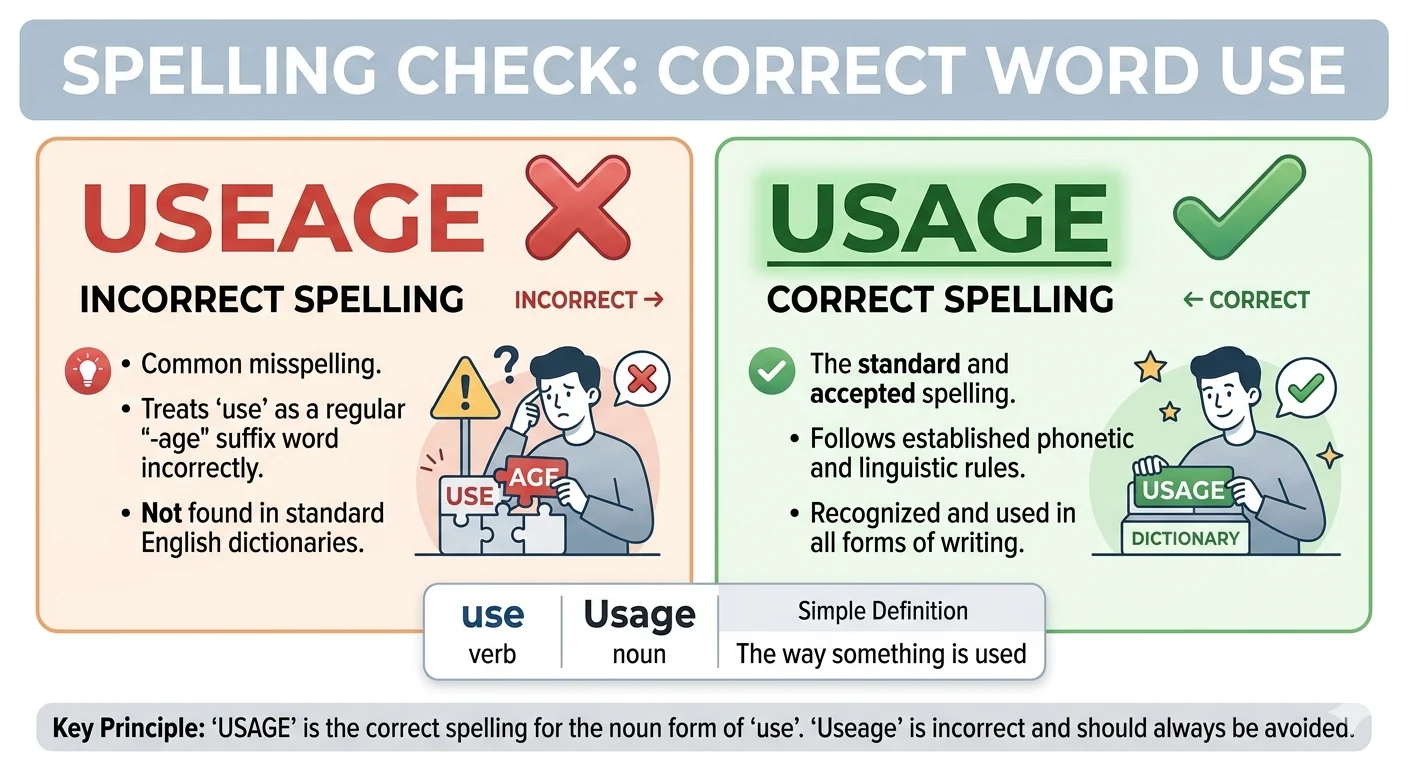
Usage is the correct spelling in English. Useage is a common misspelling and is not a real English word.
Use usage when talking about how something is used or the amount used.
Examples:
✅ Data usage increased this month.
❌ Data useage increased this month.
The correct spelling is usage.
Useage is wrong and not a real English word.
Examples:
- Correct: The app tracks data usage.
- Correct: This word has common usage in daily speech.
- Wrong: The app tracks data useage.
Simple rule: If you mean “the way something is used” or “the amount used,” write usage only.
You type a sentence. Everything looks fine. Then the red underline appears under one word: useage. Now you pause. Is it wrong? Is it British spelling? Or is your keyboard just being dramatic?
Many people search “usage vs useage” because English spelling can feel tricky. Some words follow patterns. Others do not. This confusion wastes time and causes doubt, especially in school work, emails, or professional writing. No one wants to look careless because of one small spelling mistake.
This guide clears everything up in simple English. You will learn which spelling is correct, what usage meaning is, how to use the word usage, and why the error happens. We will also look at examples, common mistakes, and real-life writing. By the end, you will never second-guess this word again.
The Origin of Usage vs Useage
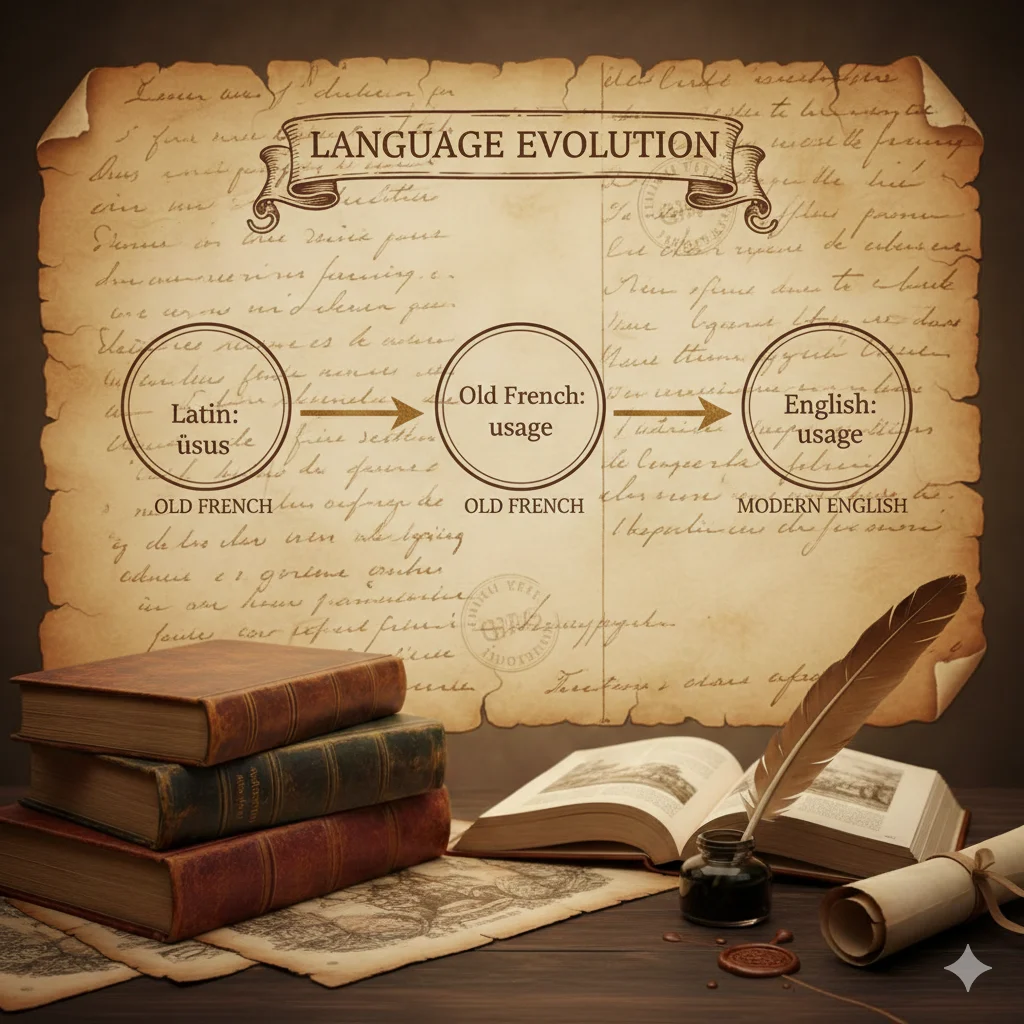
The word usage comes from French and Latin roots. It comes from the Old French word usage, which meant “use” or “custom.” That word came from Latin usus, meaning “use” or “practice.”
English borrowed many words from French after the Norman Conquest. Some kept their original spelling patterns. That is why usage does not follow the normal English “add -age to every word” idea.
So where did useage come from?
It formed by mistake. People see words like:
- package
- message
- village
They think “use” + “age” should become useage. But English does not always follow logic. Usage is a fixed word. It never had an “e” before “age” in history.
So the spelling difference exists because of word history, not grammar rules.
What Does “Usage” Mean?
The word usage refers to the way something is used, how often it is used, or accepted language practice.
It can describe:
- Amount – electricity usage, data usage
- Habit – phone usage habits
- Language style – correct word usage
Examples:
- Internet usage increased worldwide.
- Proper usage improves writing clarity.
British English vs American English Spelling
Good news: there is no difference between British and American spelling here. Both use usage.
| Word Form | British English | American English | Correct? |
|---|---|---|---|
| usage | Yes | Yes | ✅ Correct |
| useage | No | No | ❌ Wrong |
Some people think useage might be British spelling. It is not. It is simply a common spelling error.
Fed vs Feed: Stop Making This English Error 🚫
Which Spelling Should You Use?
Always choose usage.
Here is simple advice:
- US audience → usage
- UK or Commonwealth → usage
- Global writing → usage
- Academic writing → usage
- Business emails → usage
There is no situation where useage is correct. Spell checkers, grammar tools, and teachers will mark it wrong.
If you remember only one thing from this article, remember this: usage spelling has no extra “e.”
Common Mistakes with Usage vs Useage
Here are frequent errors people make.
| Mistake | Why It Happens | Correction |
|---|---|---|
| Writing useage | People copy other -age words | Write usage |
| Thinking useage is British | Confusion with colour/color type changes | British also uses usage |
| Using usage instead of “use” | Not knowing the difference | Use = verb/noun action; usage = way used |
| Saying “how to usage” | Grammar confusion | Say “how to use” |
Key difference:
- Use = action
Example: I use my phone daily. - Usage = pattern, amount, or style of use
Example: Phone usage increased this year.
Use vs Usage – What’s the Difference?
Many learners confuse use and usage, but they have different roles.
| Word | Meaning | Example |
|---|---|---|
| Use | Action of using something | I use this app daily. |
| Usage | Pattern or amount of use | App usage increased. |
Simple rule:
Use = action
Usage = pattern or amount
usage vs useage in Everyday Examples

Let’s see usage in real life writing.
Emails
- Please reduce internet usage during office hours.
- Your data usage is higher than last month.
News
- Water usage rises in summer.
- Social media usage among teens grows every year.
Social Media
- My screen usage today was 6 hours.
- Trying to lower sugar usage in my diet.
Formal Writing
- The study measured energy usage in homes.
- This word has rare usage in modern English.
Notice how usage often relates to amount, habit, or style.

Common Phrases with “Usage”
The word usage appears in many common expressions:
- data usage
- energy usage
- internet usage
- word usage
- language usage
- screen usage
These phrases are frequently used in business, education, and technology writing.
Usage vs Useage – Google Trends & Usage Data
Search data shows that usage is widely used across the world in education, technology, and business writing. It appears often with words like:
- data usage
- energy usage
- word usage
- internet usage
The term useage also appears in searches, but mainly as a spelling question. People type “usage vs useage grammar” or “usage vs useage reddit” because they are unsure. This proves the confusion is about spelling, not meaning.
Countries with high English learning populations search this topic more often. Students and writers want correct usage in English for exams and professional work.
Trully vs Truly – The Real Meaning Will Shock You 😮
Keyword Variations Comparison Table
| Term | Meaning | Correct Spelling |
|---|---|---|
| usage | way or amount something is used | ✅ Yes |
| useage | misspelling of usage | ❌ No |
| word usage | how a word is used | ✅ Yes |
| data usage | amount of data used | ✅ Yes |
| correct word usage | proper way to use words | ✅ Yes |
FAQs
1. Which is correct, usage or usage?
Usage is correct. Useage is wrong.
2. What does “usage” mean?
Usage means the way something is used or the amount used.
3. How to use the word “usage”?
Use it when talking about patterns, habits, or amounts. Example: Water usage is high.
4. What is correct word usage?
It means using words in the proper way according to grammar and meaning.
5. Why do people write useage?
They copy patterns from other -age words and add an extra “e.”
6. Is useage ever correct in English?
No. It is always a spelling mistake.
7. What is a usage synonym?
Words like use, practice, or application can sometimes work, depending on context.
Easy Trick to Remember the Spelling
A simple trick:
Use → remove the “e” → add “age” = usage
There is no extra “e” before “age.”
If you see useage, it is always incorrect.
Conclusion
The confusion between usage and useage is simple once you know the truth. Only usage is correct. The extra “e” in useage is a spelling mistake, not a British version or special grammar rule. The word comes from French and Latin history, which explains its unusual spelling.
Usage meaning relates to how something is used, how often it is used, or the style of its use. It appears often in technology, education, science, and daily life. Knowing correct word usage helps your writing look clear and professional. Small spelling errors can change how people see your work.
If you ever feel unsure, remember this easy tip: “Use” loses the “e” before “age.” That gives you usage. Keep practicing usage in English through reading and writing. Soon, this word will feel natural, and you will never type useage again.

Sarah Hall, a passionate voice at SimileHub.com, blends poetic depth with clear guidance to help writers craft vivid imagery and unforgettable expressions.