
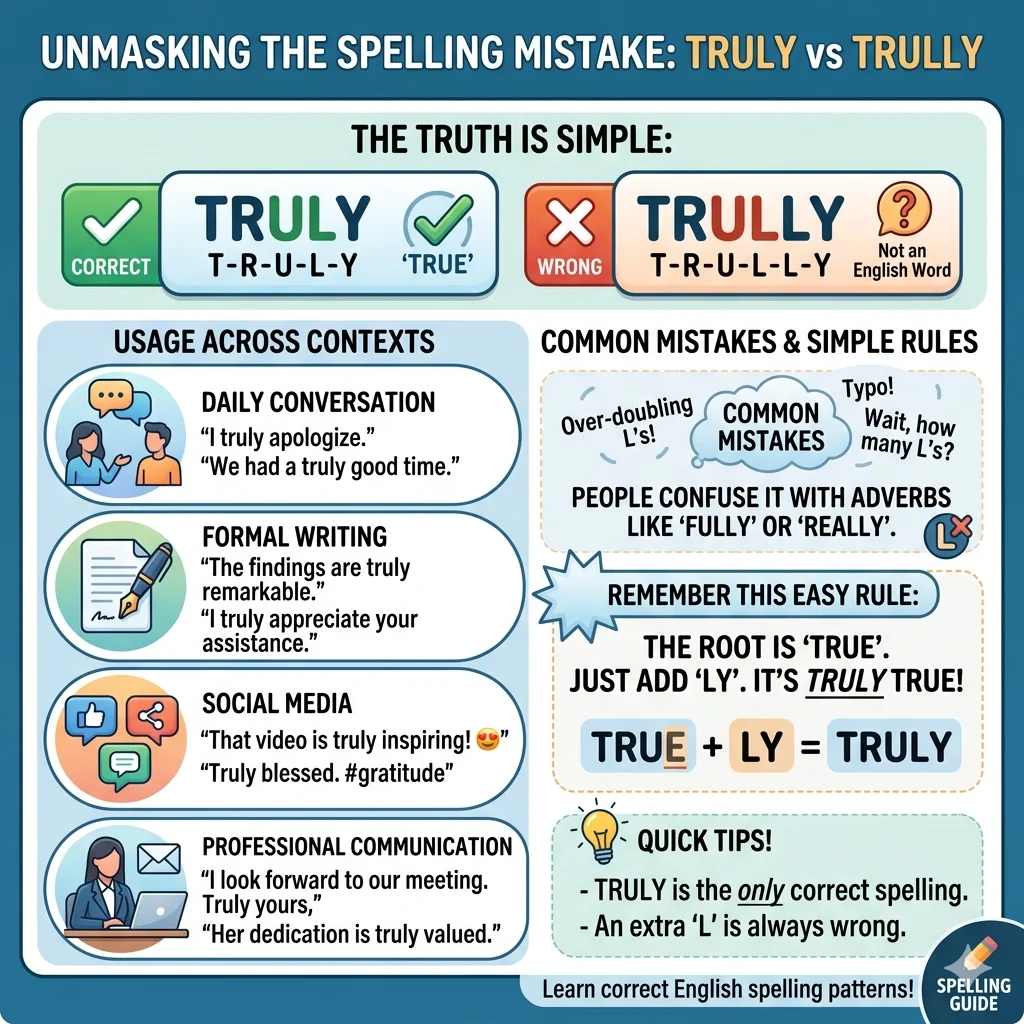
“Truly is the correct spelling meaning sincerely or genuinely, while trully is a common misspelling and should always be avoided in English writing.”
Ever wondered whether it’s “truly” or “trully”? Here’s the simple truth that clears the confusion instantly! The correct spelling is truly, which means “sincerely,” “genuinely,” or “in a real way.”
However, trully is a common spelling mistake that many people accidentally make, but it is not a valid English word. For example, you should write “I truly appreciate your support”, not “I trully appreciate your support.” Another correct usage is “She is truly happy today.”
This small spelling difference matters a lot in formal writing, emails, essays, and professional content because it affects clarity and credibility. If you want your English to look polished, accurate, and professional, understanding truly vs trully is essential and helps you avoid a very common mistake.
Which is Correct — Truly or Trully?

Let us settle this immediately.
Truly is correct. ✅ Trully is a spelling mistake. ❌ Truely is a spelling mistake. ❌ Truelly is a spelling mistake. ❌
There is only one correct spelling: T-R-U-L-Y.
If you have been writing trully, truely, or truelly — you are not alone. These errors are extremely common, especially when typing quickly on a phone or laptop. But none of them are real words in English. They do not appear in any dictionary — not Oxford, not Merriam-Webster, not Cambridge.
Many people also accidentally type turly or gruly — these are simply typos with no meaning in English. The only correct and real word is truly.
What Does Truly Mean?
Truly is an adverb. It comes from the adjective “true” and carries several related meanings:
- In a truthful or sincere way
- To a great degree; very much
- Used to emphasize that something is genuine or real
- Used as a polite closing in formal letters
Truly meaning in English — full breakdown:
- I am truly sorry. — sincerely, genuinely
- This is truly beautiful. — to a great degree
- She truly loves her work. — really and honestly
- Yours truly — a polite, sincere closing in letters
So when someone asks “what does truly mean” or searches “t r u l y meaning,” the answer is: it means sincerely, genuinely, or to a great extent. It adds emotional weight and honesty to any statement.
“Yes, truly” meaning: When someone says “yes, truly,” they are strongly agreeing or confirming that something is genuine or real.
“Was it really that beautiful?” — “Yes, truly. I have never seen anything like it.”
“Truly right” meaning: This phrase means something is absolutely correct or genuinely accurate.
“You were truly right about this all along.”
Truly Ki Spelling — Why Is It Spelled This Way?
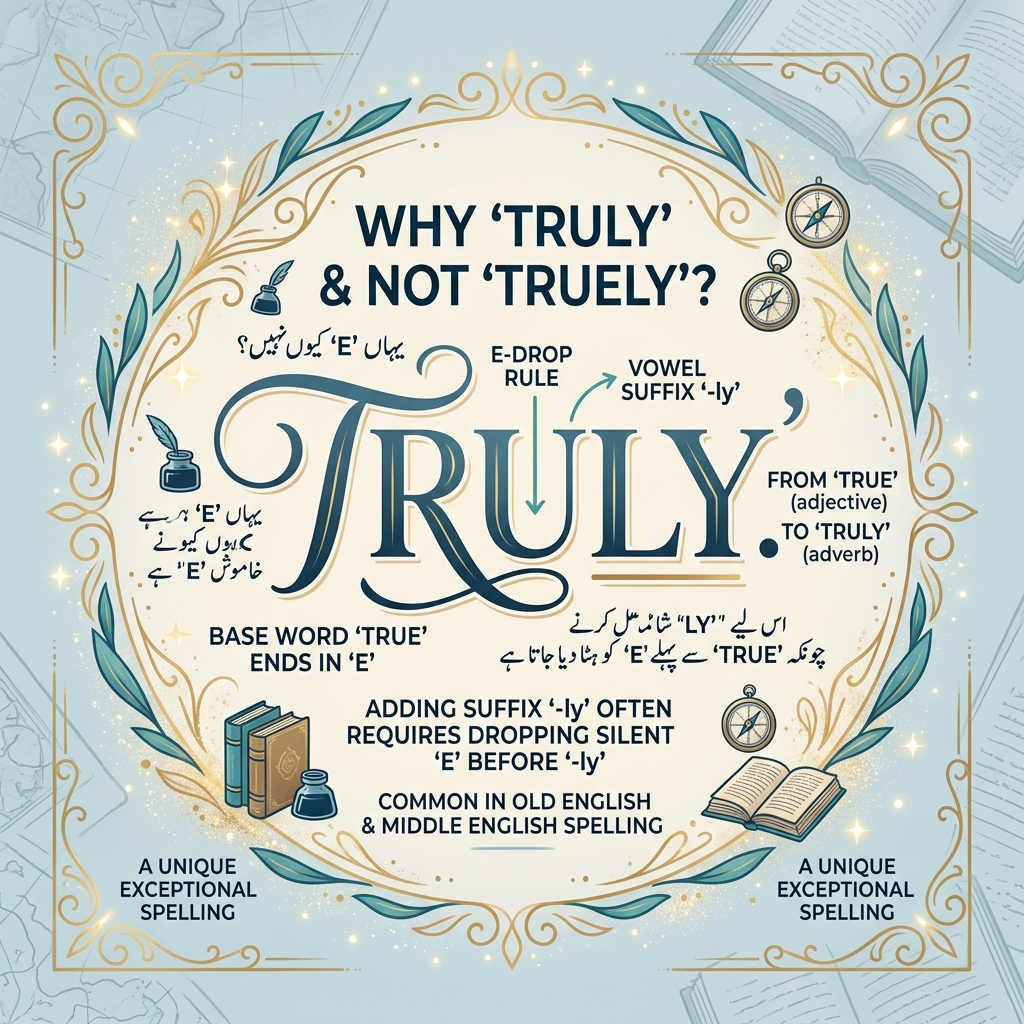
Many learners search “truly ki spelling” or “truly spelling in English” because the word looks unusual. Here is the complete explanation.
Truly comes from the adjective true. When we form adverbs in English, we add -ly to an adjective:
- quick → quickly
- soft → softly
- kind → kindly
But true ends in a silent e. English has a specific rule: when a word ends in silent e, we drop the e before adding -ly.
So: true → drop the e → tru → add -ly → truly
This is why truely is wrong — it keeps the e that should be dropped. This is why trully is wrong — it adds an extra l that was never there.
The same silent e rule applies to:
- whole → wholly
- due → duly
- true → truly
Once you understand this rule, truly spelling becomes completely logical. One l. No e. Always.
Truly or Trully — Why Do People Make This Mistake?
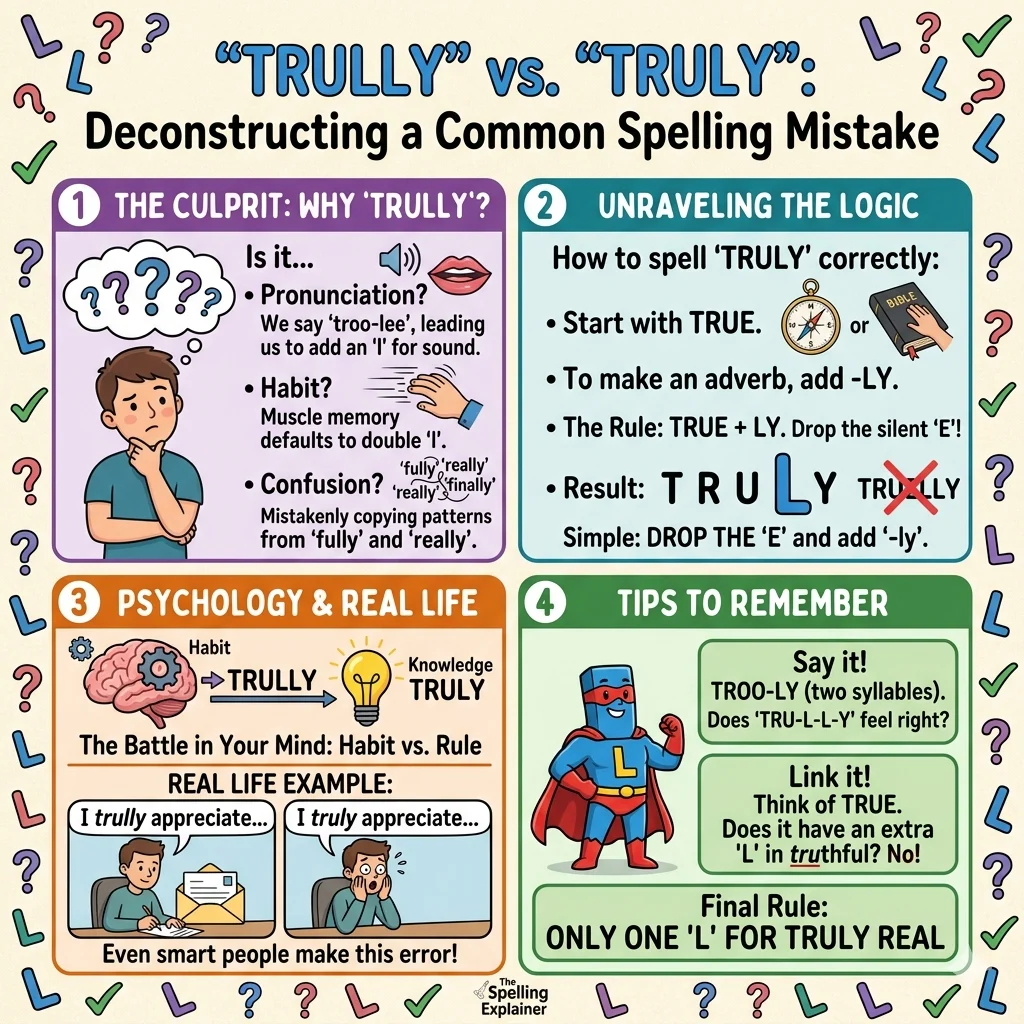
The brain is pattern-driven. English has many common words with double letters before -ly:
- fully — f-u-l-l-y
- really — r-e-a-l-l-y
- finally — f-i-n-a-l-l-y
- usually — u-s-u-a-l-l-y
- totally — t-o-t-a-l-l-y
When we see a word ending in -ly, our brain often expects a double letter before it. That is why so many people write trully — the double l pattern feels familiar. But truly does not follow that pattern because it comes from true, not from a word with a double letter.
Similarly, people write truely because they try to preserve the original spelling of “true” and just add -ly. Both errors make psychological sense — they just are not correct.
Truly or Truely — Which is Correct?
Truly is correct. Truely is wrong.
People search:
- truely or truly which is correct
- is it truely or truly
- truly or truely uk
- truely or truly british spelling
- truely or truly australia
- truely or truly grateful
The answer is the same everywhere: truly. There is no version of English — British, American, Australian, or any other — where truely is accepted. Even the Oxford Dictionary lists only truly. Searching “truely or truly UK Oxford dictionary” gives the same result every time: truly is correct, truely does not exist.
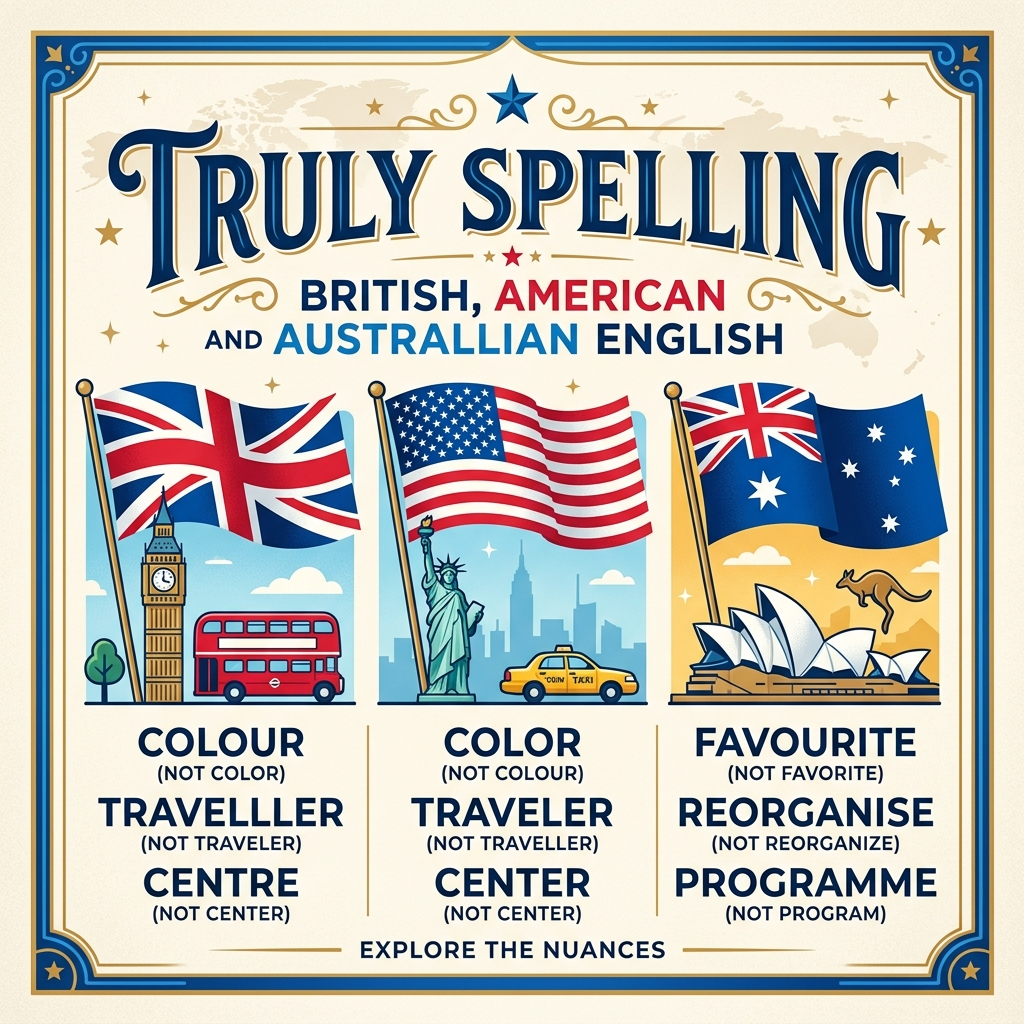
Truly Spelling — British, American and Australian English
| Form | American | British | Australian | Correct? |
|---|---|---|---|---|
| truly | truly | truly | truly | ✅ Yes |
| trully | trully | trully | trully | ❌ No |
| truely | truely | truely | truely | ❌ No |
| truelly | truelly | truelly | truelly | ❌ No |
Whether you are writing for a US, UK, or Australian audience — truly is always the correct spelling. Truly British spelling, truly UK spelling, and truly Australian spelling are all identical. This word has absolutely no regional variation anywhere in the world.
Is Truly an Adverb or an Adjective?
Truly is an adverb. Specifically, it is an adverb of manner — it describes how something happens or to what degree something is true or genuine.
Is truly an adverb of manner? Yes. It tells us how something is done or felt.
She truly cares about her students. — how she cares: sincerely He is truly talented. — to what degree: genuinely
What type of word is truly? What word class is truly? Truly belongs to the word class of adverbs. It modifies adjectives, verbs, and other adverbs.
- Modifying a verb: I truly believe you.
- Modifying an adjective: She is truly remarkable.
- Modifying a sentence: Truly, this is the best decision.
Truly is not an adjective. The adjective form is true — as in “a true friend.” Once you add -ly, it becomes an adverb.
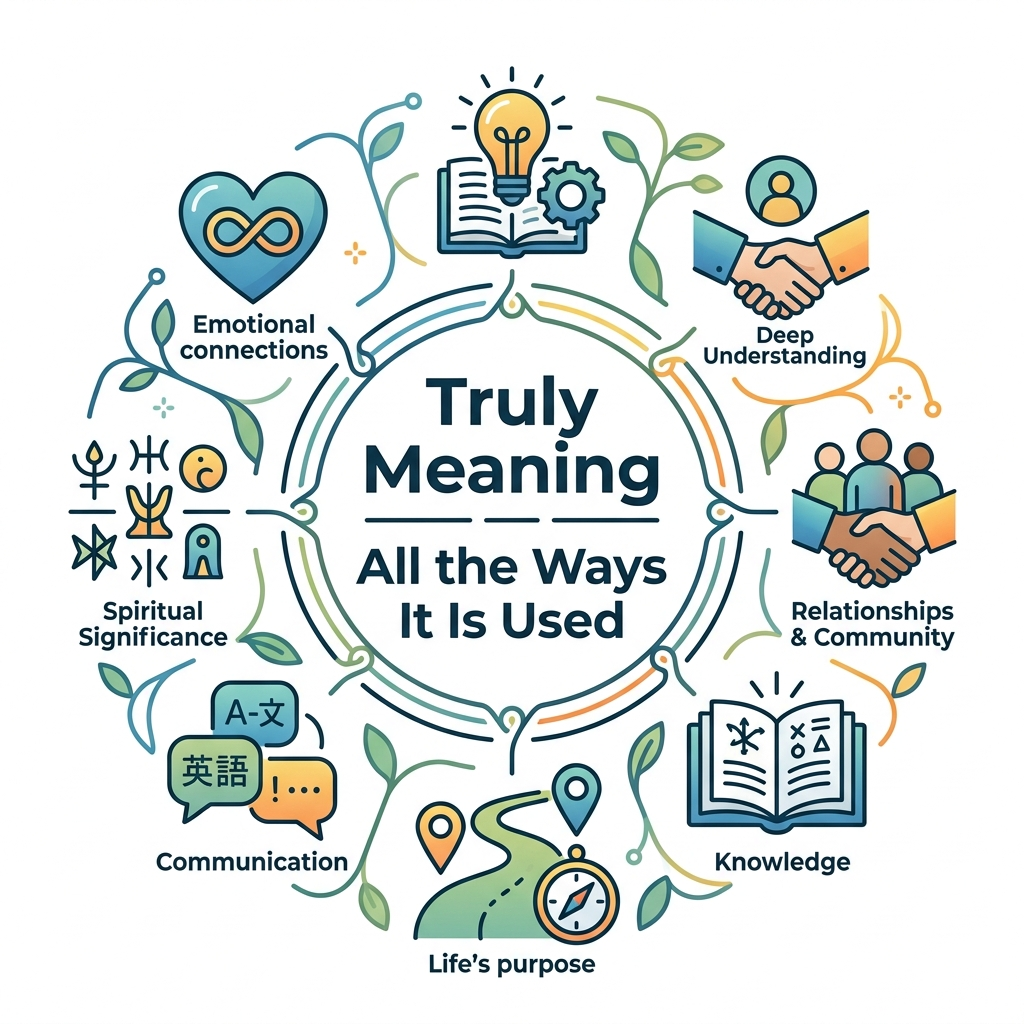
Truly Meaning — All the Ways It Is Used
1. To show sincerity or honesty:
I am truly grateful for everything you have done. He truly meant every word he said.
2. To emphasize degree:
This is truly incredible. The view from the top is truly breathtaking.
3. In formal letter and email closings:
Yours truly,
4. To express genuine agreement:
Yes, truly — that is exactly what happened.
5. To mean “correctly” or “rightly”:
She was truly right about everything she predicted.
Yours Truly or Truely — Which is Correct?
Yours truly is correct. Yours truely is wrong.
This is a fixed formal phrase used to close letters and emails. The spelling never changes — it is always yours truly, not yours truely, yours trully, or yours truelly.
Thank you for your time and consideration. Yours truly, Michael Johnson
This phrase is more common in American English. In British English, “Yours sincerely” or “Kind regards” is often preferred, but “yours truly” is still understood and accepted everywhere.
Truly vs Trully — Real-Life Examples in Every Context
In Emails and Professional Writing
I am truly grateful for this opportunity. Your feedback is truly appreciated. We are truly sorry for the inconvenience caused.
In Formal Letters
It was truly an honor to work alongside your team. Yours truly, Amanda Clarke
In Social Media and Casual Writing
This sunset is truly unreal. Truly one of the best days of my life.
In News and Journalism
The event was truly historic. This is truly a landmark moment for the country.
In Academic Writing
The results of this study are truly significant. Shakespeare was truly ahead of his time.
In Everyday Conversation
I truly do not know what happened. You truly deserve all of this.
Truly in a Sentence — 20 Examples
- I am truly sorry for what happened.
- She truly believes in what she does.
- This is truly one of the most beautiful places I have ever visited.
- He truly is a remarkable human being.
- Yours truly, James White.
- I truly appreciate everything you have done for me.
- The film was truly moving and unforgettable.
- You are truly talented — never doubt that.
- I truly had no idea this would happen.
- This experience has been truly life-changing.
- She truly cares about every single student in her class.
- The concert last night was truly unforgettable.
- I am truly honored to be here with all of you.
- He truly loves what he does and it shows.
- This is truly not what I expected at all.
- The team truly deserved to win that championship.
- I truly believe things will get better with time.
- She is truly one of a kind — there is nobody like her.
- This problem is truly difficult to solve alone.
- Truly, I have never tasted anything like this in my life.
Truly vs Really — What is the Difference?
Both truly and really are adverbs meaning “to a great degree.” In many sentences, they are interchangeable:
This is really amazing. = This is truly amazing.
But there are key differences:
Truly carries a stronger sense of sincerity and genuineness.
I am truly grateful. — deeply, sincerely, from the heart
Really is more casual and general.
That is really good. — general emphasis, no deep emotion
Summary:
- Use truly to emphasize sincerity, depth, or genuine feeling
- Use really in casual conversation for general emphasis
- In formal writing, truly is almost always the stronger choice
Truly Synonyms — Other Words You Can Use
| Synonym | Best Used When |
|---|---|
| sincerely | formal writing, letters |
| genuinely | showing real feeling |
| really | casual conversation |
| honestly | factual truth |
| absolutely | strong emphasis |
| deeply | emotional contexts |
| wholeheartedly | complete commitment |
| indeed | formal confirmation |
| certainly | expressing confidence |
Related Search Terms Explained
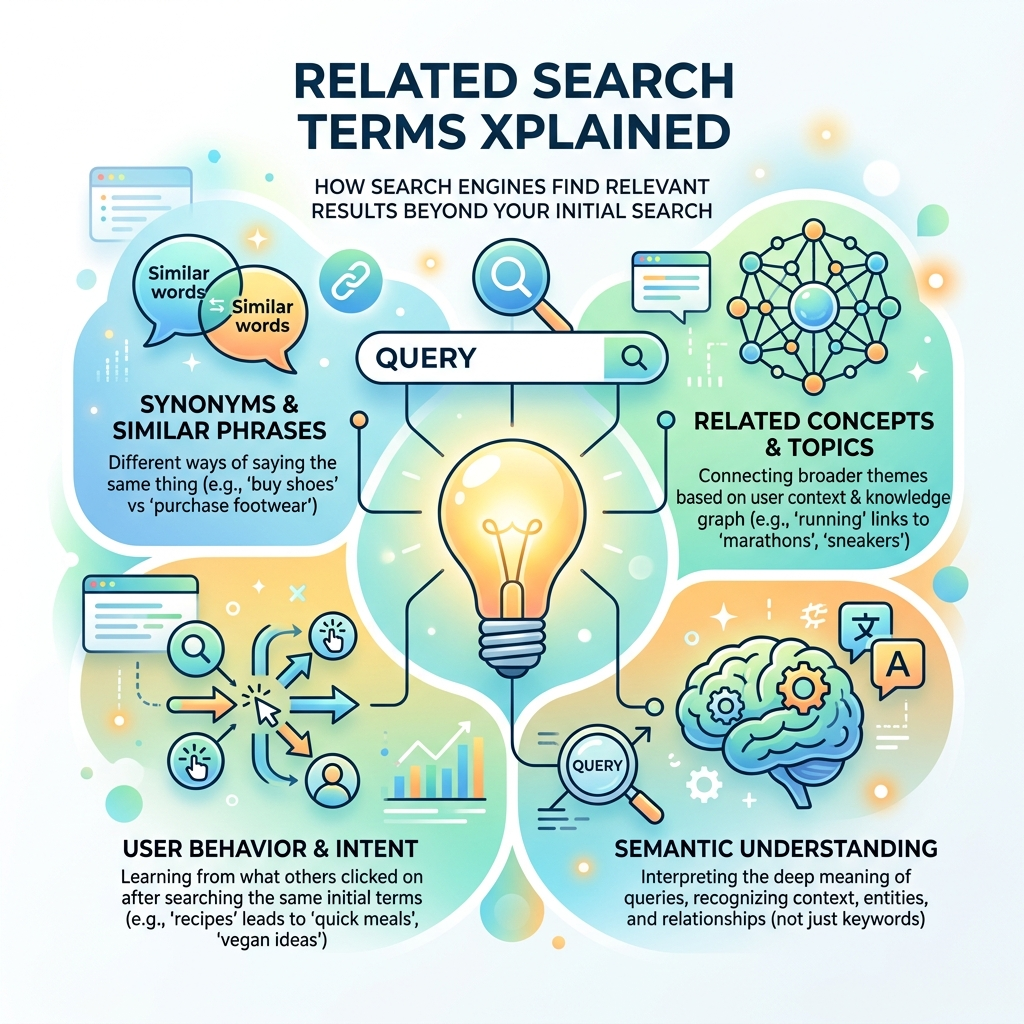
Many people search unusual variations of truly while trying to figure out the correct spelling. Here is a clear explanation:
Turly meaning: Turly is not a real English word. It is a typo of truly. There is no meaning for turly in any dictionary anywhere.
Gruly meaning: Gruly is also not a real English word. It is a typing error where g is accidentally hit instead of t. The correct word is always truly.
Truly ruly: This is not a phrase in standard English. Some people search it while trying to remember the spelling of truly. The correct word is simply truly.
Trully meaning: Trully has no meaning because it is not a real word. It is a misspelling of truly with an extra l added by mistake.
Truly ki spelling: In Urdu and Hindi speaking communities, people often search “truly ki spelling” to confirm the correct English spelling. The answer is T-R-U-L-Y — five letters, one l, no e after the u.
Truly — A Note on the Song
Some people search “lyrics to truly” referring to the classic love song Truly by Lionel Richie, released in 1982. The song title itself uses the correct spelling — truly — which further confirms that this has always been the standard and accepted spelling in English. The word truly in its title has always been spelled the same way, everywhere in the world.
Common Mistakes and How to Fix Them
| Wrong | Correct | Why |
|---|---|---|
| I am trully sorry. | I am truly sorry. | Extra l — not needed |
| She is truely kind. | She is truly kind. | Drop the silent e before -ly |
| Yours truely, | Yours truly, | Fixed phrase — always truly |
| Truelly amazing. | Truly amazing. | Both extra l and e are wrong |
| He truely cares. | He truly cares. | No e between u and l |
| Turly helpful. | Truly helpful. | Turly is a typo — not a word |
| Gruly wonderful. | Truly wonderful. | Gruly is a typo — not a word |
How to Spell Truly — Memory Tricks
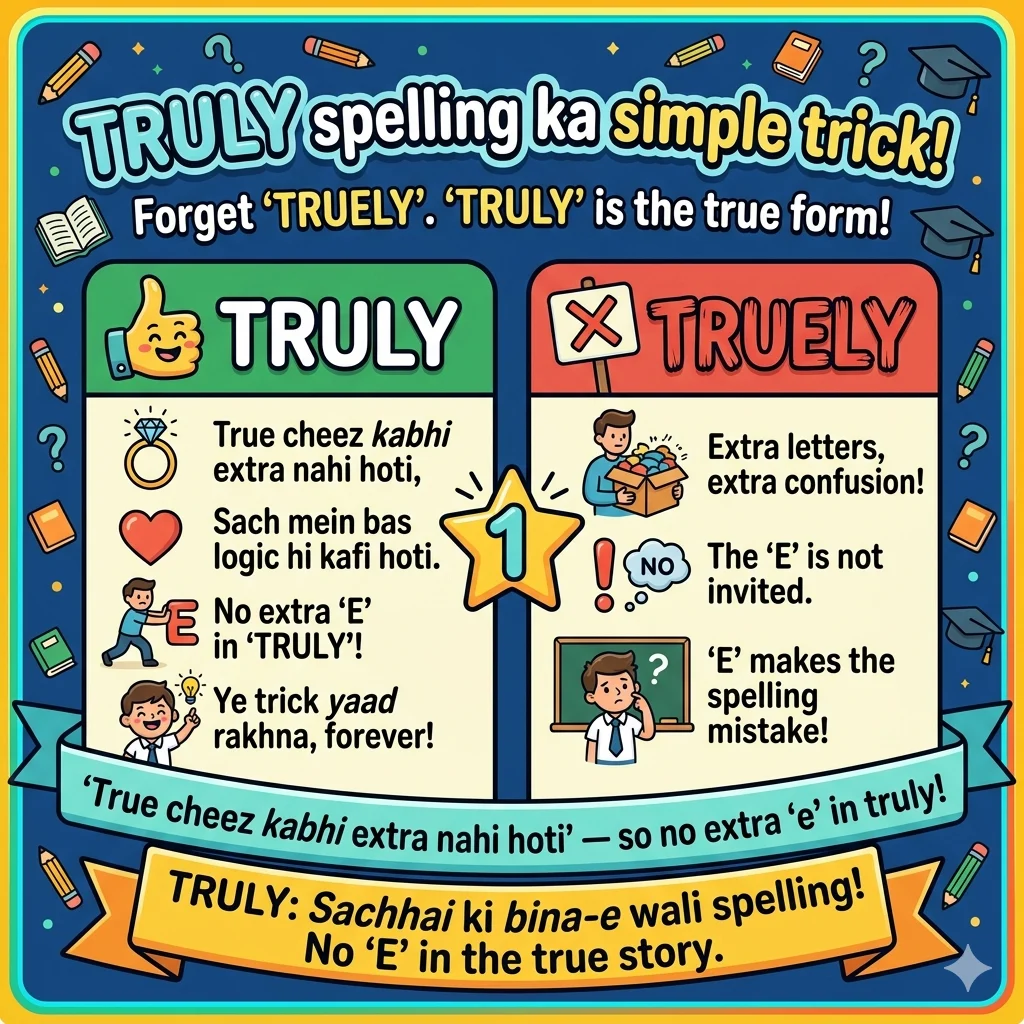
Trick 1 — Subtraction method: TRUE → remove the E → TRU → add LY → TRULY
Trick 2 — Count the letters: Truly has exactly 5 letters: T, R, U, L, Y
- trully = 6 letters ❌
- truely = 6 letters ❌
- truelly = 7 letters ❌
- truly = 5 letters ✅
Trick 3 — Say it out loud: TROO-lee. Two syllables. The sound guides the spelling.
Trick 4 — Rule reminder: Silent e at the end? Drop it before -ly. true (silent e) → drop e → tru + ly = truly
Truly — Full Dictionary Definition
truly (adverb)
- In a truthful, sincere, or genuine way. “I truly appreciate your kindness.”
- To a great or exceptional degree. “This is truly remarkable work.”
- Used to emphasize genuineness. “She is truly one of a kind.”
- Used as a formal letter closing. “Yours truly, Robert Adams.”
- Used to confirm or agree strongly. “Yes, truly — that is exactly what I meant.”
FAQs
1. Which is correct, truly or trully? Truly is correct. Trully is a spelling mistake — the extra l does not belong. The correct spelling is always T-R-U-L-Y.
2. Is truly grammatically correct? Yes. Truly is a standard English adverb used correctly in all forms of writing — casual, formal, academic, and professional.
3. What is the meaning of truly? Truly means sincerely, genuinely, or to a great degree. It adds emotional weight and honesty to a statement.
4. Why do we drop the e in truly? Because of the silent e rule. When a word ends in silent e like true, we drop the e before adding -ly. So true becomes truly, not truely.
5. Yours truly or truely — which is correct? Yours truly is always correct. This is a fixed formal phrase and the spelling never changes.
6. Truely or truly — British spelling? Truly is correct in British English. Truely does not exist in British, American, Australian, or any other form of English.
7. Truely or truly UK Oxford Dictionary? The Oxford Dictionary lists only truly. Truely is not a real word in any English dictionary anywhere.
8. Truely or truly grateful — which is correct? Truly grateful is always correct. Example: I am truly grateful for your continued support.
9. Is truly an adverb of manner? Yes. Truly is an adverb of manner describing how something happens or to what degree something is genuine.
10. Is truly an adverb? Yes. Truly is an adverb, not an adjective. The adjective form is true.
11. How do you spell truly correctly? T-R-U-L-Y. Five letters. One l. No e between u and l.
12. Truly vs really — what is the difference? Truly emphasizes sincerity and genuineness. Really is more casual. Both mean “to a great degree” but truly carries deeper emotional weight.
13. Truly or truthfully — which should I use? Use truly for genuine feeling. Use truthfully for factual honesty.
14. What type of word is truly? Truly is an adverb that modifies verbs, adjectives, and other adverbs.
15. Is truely a word? No. Truely is not a word in any form of English. The correct spelling is always truly.
16. What is a synonym for truly? Synonyms include sincerely, genuinely, really, honestly, absolutely, deeply, wholeheartedly, and indeed.
17. She truly is — is this correct grammar? Yes. “She truly is remarkable” is completely correct. Truly modifies the verb is, emphasizing sincerity.
18. Is truly a word? Yes. Truly is a real standard English word listed in every major dictionary.
19. How do you spell truly in English? T-R-U-L-Y. This spelling is identical in all varieties of English worldwide.
20. What is the correct spelling of truly? The correct and only spelling is truly — five letters, one l, no e after the u.
21. What does turly mean? Turly has no meaning in English. It is simply a typo of truly.
22. What does gruly mean? Gruly has no meaning in English. It is a typing error where g is accidentally typed instead of t.
23. What is “yes truly” meaning? “Yes, truly” strongly confirms that something is genuine or real. Example: “Was it really that stunning?” — “Yes, truly. I was speechless.”
24. What is “truly right” meaning? “Truly right” means something is completely and genuinely correct. Example: “You were truly right about everything.”
25. What is t r u l y meaning? T-R-U-L-Y spells the word truly, which means sincerely, genuinely, or to a great degree. People search the letters individually to confirm the correct spelling.
Conclusion
The confusion between trully vs truly is completely understandable — English spelling patterns can feel inconsistent and unpredictable. But the answer is always clear: truly is the one and only correct spelling. One l. No e. Five letters. T-R-U-L-Y.
The word comes from true, and the silent e rule explains everything. We drop the e from true before adding -ly, giving us truly — not truely, not trully, not truelly, not turly, not gruly. This rule applies in every country and every style of English. British spelling, American spelling, Australian spelling — all the same: truly.
Whether you are writing yours truly at the end of a formal letter, saying I am truly grateful in a professional email, confirming with yes, truly in a conversation, or posting this is truly amazing on social media — the spelling never changes.

Nina Allan, a visionary storyteller at SimileHub.com, explores emotion through vivid imagery, helping readers unlock deeper creative expression through language.